
 Search Articles


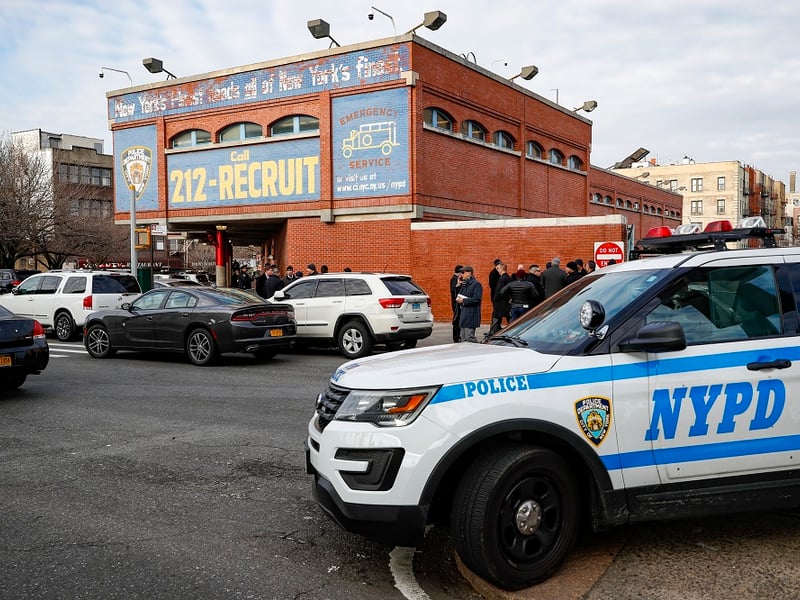
MANHATTAN (CN) — A well-known YouTuber on Wednesday asked the Second Circuit to uphold a lower court’s ruling that barred the New York Police Department from arresting him for trespassing after he filmed inside the public lobbies of NYPD precincts.
SeanPaul Reyes, known by his social media name “Long Island Audit,” has more than 800,000 subscribers on YouTube, where he frequently posts videos of himself confronting police officers over supposed First Amendment violations. One of those encounters got Reyes arrested for trespassing after he entered two Brooklyn precincts while filming in 2023.
Reyes sued over his arrest, arguing that the NYPD’s ban on filming in precinct lobbies violates his constitutional rights as well as a New York City law that protects the right to film police officers. A Southern District of New York judge issued a temporary injunction prohibiting the NYPD from enforcing the recording ban against Reyes, finding his claims likely to succeed under the Right to Record Act, a law approved by the New York City Council in 2020 to counter the NYPD’s ban on filming in precincts.
Police are still allowed to stop someone from recording in a precinct lobby if they violate restrictions in the Right to Record Act.
On Wednesday, Reyes’ attorney urged a trio of circuit judges to uphold the lower court’s injunction, arguing that Reyes would suffer irreparable harm if the recording ban is enforced against him.
“This rule, the trespass rule, operates as follows: If you are recording in a precinct, you will be asked to stop. If you do not stop, you will be asked to leave,” Reyes’ attorney Andrew Case of Latino Justice said. “If you do not leave, you will be arrested for trespassing.”
Case said that’s exactly what happened to his client in an arrest that violated state trespass law precedent.
Reyes is not seeking to prove that the Right to Record Act provides total and unfettered right to record in any police precinct lobby at any time, he said.
“We are simply challenging the trespass rule, and the trespass rule says that you cannot record in the New York City police precinct lobby at any time and under any circumstances,” Case said. “And this is an improper use of the trespass law.”
U.S. District Judge Reena Raggi, a George W. Bush appointee, pushed back slightly when she expressed concern about having to weigh in on NYPD operations.
“My concern is whether we need to have consideration of whether an injunction that affects how the New York City Police Department operates its precincts implicates the administration of state government,” Raggi said.
Case replied that the injunction doesn’t change how precincts fundamentally operate.
Still, New York City seeks to overturn the lower court’s ruling that granted Reyes that injunction. Chase Mechanick, assistant corporation counsel for the New York City Law Department, argued Wednesday that Reyes’ recordings created “a permanent and public record of who visited a police precinct and what precinct they visited.”
“He has hundreds of thousands of followers, and any person who wants to know whether their spouse or their acquaintance has gone to a precinct on a certain date would simply have to access his social media channels,” Mechanick said. “So there are concerns with allowing Mr. Reyes to continue to record.”
Mechanick acknowledged that Reyes is “not just a random citizen,” but in fact, “arguably the most prominent First Amendment auditor in the country,” giving him reach that raises privacy risks.
The three-judge panel didn’t immediately issue a ruling on Wednesday. Joining Raggi at the bench were U.S. Circuit Judge Amalya Kearse, a Jimmy Carter appointee, and U.S. Circuit Judge Maria Kahn, a Joe Biden appointee.
Reyes has fought similar legal battles over his activities as a First Amendment tester. Last week, he was found guilty of trespassing for filming in Schenectady City Hall in upstate New York.
He was fined $370 for the violation.
 Follow @Uebey
 Follow @uebey.bsky.social
Subscribe to our free newsletters
Our weekly newsletter Closing Arguments offers the latest about ongoing trials, major litigation and rulings in courthouses around the U.S. and the world, while the monthly Under the Lights dishes the legal dirt from Hollywood, sports, Big Tech and the arts.