
 Search Articles


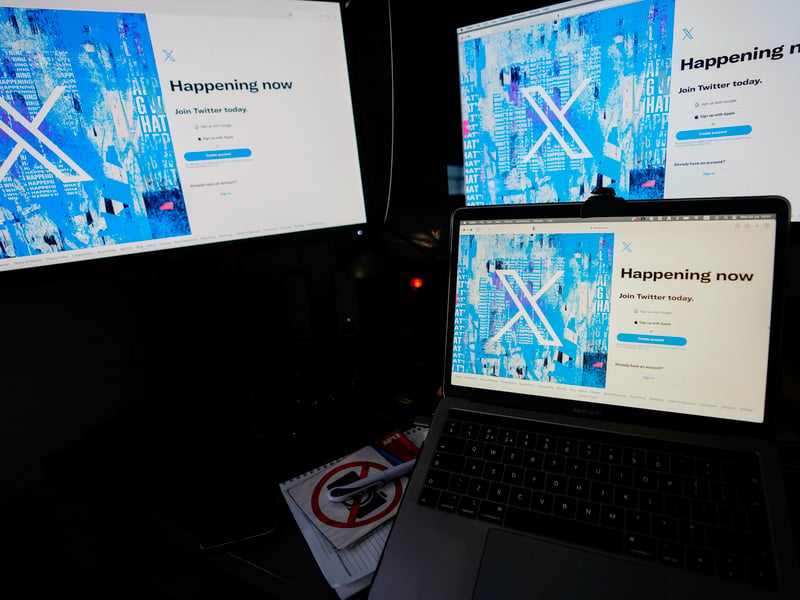
BRUSSELS (AFP) — Elon Musk’s X has offered to make changes to its blue check for “verified” accounts, a European Commission spokesman said Friday, after the platform received a 120 million-euro ($138 million) fine.
The European Union slapped the fine in December on X for breaking its digital rules including through the “deceptive design” of its blue check.
“X has submitted remedies in relation to its blue checkmark. The commission will now carefully assess the proposed remedies,” EU spokesman for digital affairs Thomas Regnier said.
He did not provide details about what X had submitted.
X risked periodic financial penalties, had it not submitted any remedy.
“We have to value the fact that after a constructive exchange with the company, the company has taken its obligation seriously and has submitted us remedies,” Regnier told reporters in Brussels.
When contacted by AFP, X did not provide comment immediately.
Blue checkmarks, long free of charge at what was previously known as Twitter, were intended to signal the identity of certain users — such as celebrities, journalists and politicians — had been verified in an effort to build trust in the platform.
But after Musk bought the platform, he allowed users to pay to get one.
X in February announced it had filed an appeal with the EU’s top court against the fine, which was the first ever under the bloc’s Digital Services Act.
But Regnier said the commission still expected X to pay it by Monday, and to provide further remedies on other breaches by April 28.
The fine came under a probe started in December 2023.
That investigation continues as EU regulators study how X tackles the spread of illegal content and information manipulation.
X has often been in the EU’s sights.
EU states back ban on AI generating sexualized deepfakes
EU nations on Friday backed a ban on AI systems generating sexualized deepfakes, after an outcry over such images produced by Elon Musk’s AI chatbot Grok.
European ambassadors agreed to prohibit “practices regarding the generation of non-consensual sexual and intimate content or child sexual abuse material,” a spokesperson for Cyprus, which holds the EU’s rotating presidency, said.
EU member states and the European Parliament introduced the ban as part of the proposals to amend the bloc’s comprehensive rules on AI.
EU lawmakers are set to approve the ban during a vote by committees Wednesday.
“It’s not just about individual scandals like Grok. It’s about how much power we are willing to give AI to degrade people,” EU lawmaker Sergey Lagodinsky, one of several members of the Parliament pushing for the ban, said.
X, the platform on which Grok is available, in January said it had “zero tolerance” for sexualized deepfakes of children and women, and implemented measures it said would stop such image creation after the global outrage.
The European Commission, the bloc’s digital watchdog, in January kickstarted an investigation into Grok under the EU’s online content rules.
The ban will become law after negotiations on a final text including the changes to the AI rulebook between the EU Parliament and member states.
Ambassadors on Friday also approved a fixed timeline for the delayed application of high-risk AI rules: December 2027 for stand-alone high-risk AI systems and August 2028 for high-risk AI systems embedded in products.
Rules on high-risk AI are due to come into effect in August 2026 and August 2027 unless the delay becomes law.
—
By Agence France-Presse
Subscribe to our free newsletters
Our weekly newsletter Closing Arguments offers the latest about ongoing trials, major litigation and rulings in courthouses around the U.S. and the world, while the monthly Under the Lights dishes the legal dirt from Hollywood, sports, Big Tech and the arts.