
 Search Articles


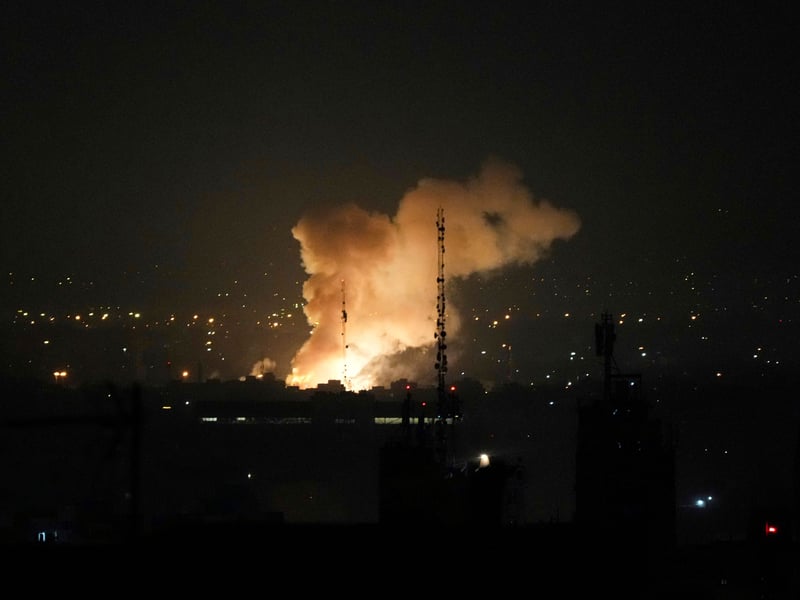
(CN) — Israel launched a massive attack against Iran and its nuclear program on Friday, plunging the Middle East into an even deeper crisis and bringing the region to the brink of a full-scale war.
On Friday night, Iran retaliated by launching volleys of missiles against Israel with at least one missile penetrating Israel’s robust air defense system and striking central Tel Aviv. Israeli officials said at least 21 people were injured and that a building was in danger of collapse. There were reports of strikes elsewhere in Israel. The U.S. said it helped intercept Iranian missiles.
Following Israel’s attack, U.S. President Donald Trump praised Israeli Prime Minister Benjamin Netanyahu’s strikes against Iran, calling them “excellent” in light of Iran rejecting U.S. demands that it give up all uranium enrichment. Tehran and Washington have been in talks over its nuclear program, but the prospect of further negotiations any time soon are extremely slim. Iran dropped out of a round of talks scheduled for Sunday.
Iran does not possess weapons-grade uranium, but the U.S. and Israel accuse Tehran of seeking to obtain nuclear weapons and have vowed to stop it from doing so. Israel is the Middle East’s only nuclear-armed state. Iran insists its nuclear program is limited to civilian use.
“I think it’s been excellent,” Trump told ABC News about the attacks. “We gave them a chance and they didn’t take it. They got hit hard, very hard. They got hit about as hard as you’re going to get hit. And there’s more to come. A lot more.”
Israel’s multi-pronged missile and drone assault struck Iranian nuclear and military facilities and assassinated about 20 top military commanders and at least six nuclear scientists, including several inside their homes in high-rise buildings in Tehran. The strikes also caused civilian deaths, injuries and destruction, according to Iranian media.
The first bombs struck around 3 a.m. and the attacks carried on into Friday evening. Netanyahu vowed to continue striking Iran for “as many days as it takes” to remove the Iranian nuclear threat.
In an initial response, Iran launched more than 100 drones against Israel, which were reportedly intercepted in Jordanian air space by Israeli and Jordanian fighter jets, according to Israeli and Western media.
Global reaction was mixed with Western powers urging deescalation, though they stopped short of condemning Israel and castigated Iran for seeking to expand its nuclear program. Arab nations condemned the attack, as did China, Russia and other allies of Iran.
Iran’s Supreme Leader Ayatollah Ali Khamenei warned that Israel “must expect severe punishment” following the “crime” of attacking Iran. Until late Friday night when it launched attacks on Israel, Iran appeared unwilling or unable to respond to the attacks as it reeled from what was seen as a highly successful and devastating blow by Israel.
During an emergency U.N. Security Council meeting Friday, Vasily Nebenzya, Russia’s U.N. ambassador, said Israel’s strikes “cannot be justified in any way.”
“The international community cannot, and should not, stand idly by when such a provocation presents itself,” Nebenzya said. “Tolerating such actions is a sure way to large-scale war and a serious threat to global security.”
In a video message in English, Netanyahu sought to portray the attack as fundamental to Israel’s survival because, in his words, Iran was close to developing a nuclear weapon. Netanyahu has made this warning for years and his critics saw his attack on Iran as a cynical way to deflect attention away from growing condemnation over Israel’s onslaught in Gaza and his domestic political and legal problems.
Friday’s attack effectively collapsed negotiations between the United States and Iran over its nuclear program, which had largely faltered even before Friday’s strikes. On Thursday, the International Atomic Energy Agency reprimanded Iran for not allowing United Nations inspectors full access to its uranium enrichment program.
Netanyahu said striking Iran was meant to prevent it from obtaining nuclear weapons and that such strikes were in the interests of the region and the United States. He described Tehran as a “brutal dictatorship” determined to destroy Israel with a “nuclear Holocaust” and attack the U.S.
He characterized his military campaign as opening the way for regime change in Iran.
“I believe that the day of your liberation is near, and when that happens, the great friendship between our two ancient peoples will flourish,” Netanyahu said. “Once again, I want to assure the civilized world, we will not let the world’s most dangerous regime get the world’s most dangerous weapons, and Iran plans to give those weapons, nuclear weapons, to its terrorist proxies. That would make the nightmare of nuclear terrorism all too real.”
Experts described the strikes on Iran as a successful operation to decapitate Iran’s military leadership. Among those killed were Hossein Salami, commander-in-chief of the Islamic Revolutionary Guard Corps, and Mohammad Bagheri, chief of staff of the Iranian military. Also killed was Ali Shamkhani, a top aide to Khamenei and a high-level figure in negotiations with the U.S. who had expressed optimism over a deal with Trump.
Israel hit Natanz, an exposed uranium enrichment facility, and Tabriz, the site of a nuclear research center. By late Friday, there were reports that Iran’s key nuclear facility deep underground at Fordow had come under attack.
The IAEA said there were no reports of nuclear contamination caused by the attacks as of late Friday. The U.N. agency said it is illegal under international law to strike nuclear facilities.
Targets were struck across Iran in Tehran, Isfahan, Arak and Kermanshah. Israel’s military said more than 200 sites were struck and about 200 fighter jets were involved in what was dubbed “Operation Rising Lion.”
The attack also involved covert actions inside Iran by Mossad, Israel’s spy agency, Israeli media reported. Mossad reportedly smuggled in drones and stored them inside Iran before launching them against Iranian officials, air defense sites and ballistic missile launchers. The operation was reminiscent of Ukraine’s recent drone strikes against Russian nuclear bombers on airfields far inside Russia. Israeli officials claimed the drones took out Iranian air defenses, giving Israel fighters air supremacy. Iranian air defense systems were operating Friday night, media reported.
The extent of U.S. involvement remained unclear. Initially, U.S. Secretary of State Marco Rubio called it a “unilateral” act by Israel. But throughout Friday, Trump made it clear that he was informed about the pending attack and that the strikes came as a result of Iran not complying with U.S. demands over its nuclear program.
“Two months ago I gave Iran a 60 day ultimatum to ‘make a deal,’” Trump wrote on Truth Social, his social media platform. “They should have done it! Today is day 61. I told them what to do, but they just couldn’t get there. Now they have, perhaps, a second chance!”
Trump threatened that unless Iran agreed to U.S. demands it faced even more strikes because “the United States makes the best and most lethal military equipment” and “Israel has a lot of it, with much more to come.”
He chided top Iranian military brass.
“Certain Iranian hardliners spoke bravely, but they didn’t know what was about to happen,” he wrote. “They are all DEAD now, and it will only get worse!”
He said “the next already planned attacks” would be “even more brutal” unless Iran “make a deal, before there is nothing left, and save what was once known as the Iranian Empire.”
European Union leaders appeared ready to back the hard-line approach of the U.S. and Israel, though they appealed for restraint.
German Chancellor Friedrich Merz said Israel had the right “to defend its existence,” as did British Prime Minister Keir Starmer, who also called for “restraint” and a “return to diplomacy.”
French President Emmanuel Macron struck a pro-Israeli tone too, telling reporters that Iran bore “a lot of responsibility” for the instability in the region.
“France has repeatedly condemned Iran’s ongoing nuclear program,” Macron wrote on social media. “In this context, France reaffirms Israel’s right to defend itself and ensure its security.”
He added: “To avoid jeopardizing the stability of the entire region, I call on all parties to exercise maximum restraint and to de-escalate.”
Iran, a country of 88 million people, may have the military capacity to hit back hard. It has been spending heavily on building up its military and preparing for conflict. But its economy has been crippled by Western sanctions and its regime may be fragile.
Before launching missiles on Friday night, in a televised speech Khamenei said Iran would leave Israel “helpless” and that his country would “not go for half measures in its response.”
With U.S. military bases in the Middle East at risk of attacks, the U.S. positioned warships and other military assets toward the region. Iran’s allies in the region, including the Houthis in Yemen, Shia militias in Iraq and Hezbollah in Lebanon, may also get involved.
In response to the attack, Iran’s leadership may consider dropping out of nuclear non-proliferation treaties altogether and seek to move the country’s nuclear program even deeper underground.
Without doubt, Tehran will see little reason to resume talks with Trump over its nuclear program, especially after media reports emerged with Israeli officials saying Trump engaged Iran in negotiations with the goal of deceiving its leadership into thinking an attack was not imminent.
Courthouse News reporter Cain Burdeau is based in the European Union.
 Follow @cainburdeau
Subscribe to our free newsletters
Our weekly newsletter Closing Arguments offers the latest about ongoing trials, major litigation and rulings in courthouses around the U.S. and the world, while the monthly Under the Lights dishes the legal dirt from Hollywood, sports, Big Tech and the arts.