
 Search Articles


WASHINGTON (CN) — After a resounding loss nearly two years ago, the Supreme Court appeared resigned that Wednesday’s attempt to define last-mile delivery drivers would be another pit stop in a Georgia bakery’s road to limit employment suits.
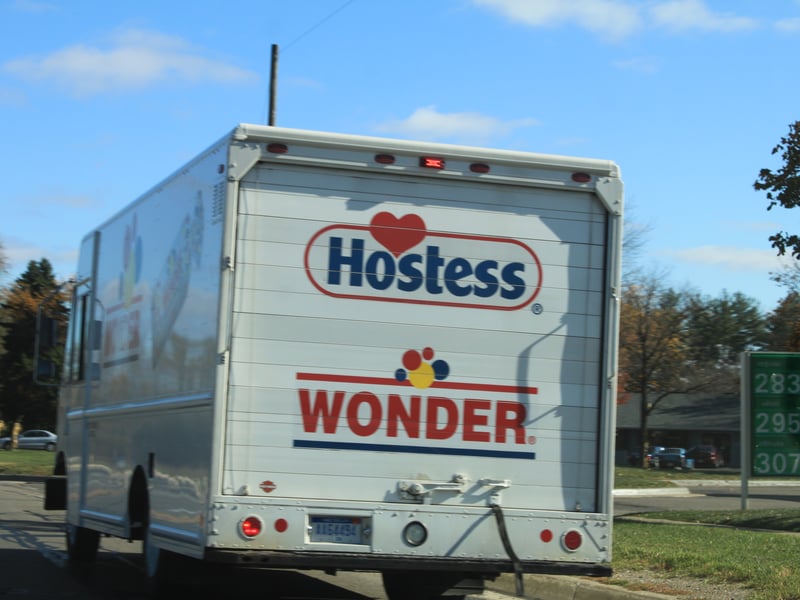
Flowers Foods, the maker of Wonder Bread, asked the justices to reverse a lower court ruling classifying a commercial truck driver as “engaged in interstate commerce” when he delivered the company’s goods throughout Colorado.
Although his deliveries were purely intrastate, the court said Angelo Brock belonged to a class of workers that hauls goods on the final legs of interstate journeys.
The distinction matters under the 1925 Federal Arbitration Act, which enforces arbitration clauses in employee contracts unless the worker is a seaman, railroad employee or any other class of workers engaged in foreign or interstate commerce.
Flowers warned the lower court’s ruling would lead to unlimited chaos, exempting a broad swath of workers from arbitration clauses even if they’re far removed from the cross-border transportation of goods.
“Workers who deliver The New York Times in the state of California have been deemed section one exempt workers by the Ninth Circuit because The New York Times is printed in another state and arrives in California in boxes from another state,” Traci Lovitt, an attorney with Jones Day representing Flowers, said. “Under that logic, the store clerk who unpacks boxes from another state and transports them to the shelf should also be exempt.”
Flowers argued the key question under the FAA must be related to the work the employee performs. Since Brock’s duties include transporting goods solely within Colorado, the company says he isn’t participating in interstate commerce.
Brock sued Flowers over claiming that truck drivers were independent distributors to avoid minimum-wage laws and employment taxes. He argued the drivers are really Flowers employees, requiring the company to comply with a host of state employment laws.
Flowers tried to force Brock into arbitration based on the distributor agreement he signed. Brock told the justices that the lower courts correctly looked at the goods being transported to classify him as engaged in interstate commerce.
The Supreme Court seemed interested in a narrow solution, leaving both parties with additional arguments to make in the lower courts.
Justice Neil Gorsuch, a Donald Trump appointee, suggested the court reject Flowers’ bright-line rule requiring a direct connection to vehicles that cross state lines. However, he predicted the justices would have to intervene again at a later date.
“We just need to answer that question and be done in this case,” Gorsuch said. “And we will get to see you back here again and again and again.”
In 2024, the Supreme Court unanimously ruled that two similarly situated Wonder Bread truck drivers were transportation workers under the FAA’s exemption. Two years prior, the justices unanimously held that a Southwest Airlines ramp supervisor was also exempt from arbitration.
The high court seemed concerned its ruling in Brock’s case could trickle down to more small-scale last-mile delivery services like Uber drivers.
Justice Amy Coney Barrett, another Trump appointee, suggested the court avoid any automatic rules.
“It may not always be the case that these 1925 cases you’re pointing us to answer the question in the modern complicated world with different kinds of distribution chains, livestock; maybe there’s some good analogies to be drawn between livestock and, you know, computer equipment, but those are pretty complicated questions,” Barrett said.
Jennifer Bennett, an attorney with Gupta Wessler representing Brock, saw a connection between ride-hail drivers and horse and buggy transport but noted that drawing those lines wasn’t necessary for the present controversy.
“The only thing this court has to say to answer the question presented is there is no absolute requirement that you physically cross a state line or interact with a vehicle that does, whatever it might mean to interact with a vehicle,” Bennett said.
 Follow @KelseyReichmann
 Follow @kelseyreichmann.bsky.social
Subscribe to our free newsletters
Our weekly newsletter Closing Arguments offers the latest about ongoing trials, major litigation and rulings in courthouses around the U.S. and the world, while the monthly Under the Lights dishes the legal dirt from Hollywood, sports, Big Tech and the arts.