
 Search Articles


WASHINGTON (CN) — More than 30,000 U.S. employees are not protected by civil rights statutes. Unlike millions of other Americans, they aren’t shielded by the Civil Rights Act of 1964, or whistleblower protections; instead, their rights and recourse are limited to workplace policies — at the whim of their employers — to resolve reports of discrimination or sexual harassment.
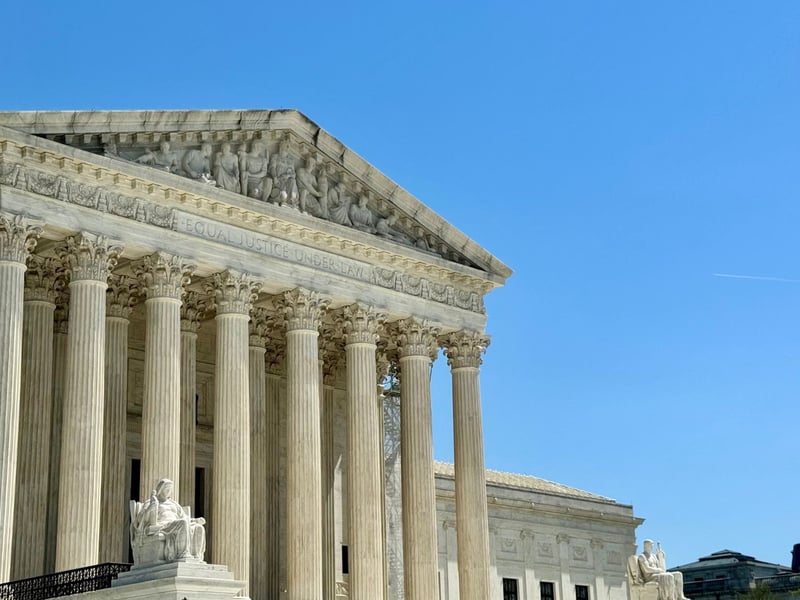
These employees work in the very system that demands justice of private employers: the judicial branch.
They work for circuit and bankruptcy courts, U.S. district courts, specialty courts — all the way up to the Supreme Court. But if the system fails them, they have no legal recourse, and cannot sue.
In 2017, Caryn Devins Strickland started a job as a research and writing specialist at the federal defenders office for the Western District of North Carolina.
From the beginning, Strickland says, the office’s first assistant, who worked directly under its top brass, took an interest in her. Several of her coworkers called the assistant’s interest in her “lustful,” “fixated” and “smothering.” He asked her out for drinks, offered to give her rides home and demanded she participate in mentor “shadowing” activities with him that interfered with her other work, Strickland says in her complaint. Searching for resources, Strickland began talking to the fair employment office at the Administrative Office of the U.S. Courts.
She spoke to the top federal public defender, Anthony Martinez, who initiated a dispute resolution process and moved Strickland to telework. Shortly after, Strickland says she was warned against talking to the administrative office.
Strickland applied for a promotion; she was not invited to interview. Then, the office reclassified her work duties right before she was due for a raise, and botched paperwork resulted in a nearly 15% pay cut — all part of retaliation by Martinez, she claims.
The judiciary’s investigation into her claims of sexual harassment and retaliation dragged on for months. Eventually, she secured a temporary clerkship with the Fourth Circuit, and left in March 2019, claiming she was constructively discharged.
Most employees who are unsatisfied with how their employer handled an internal complaint can file suit under Title VII of the Civil Rights Act, which prohibits employment discrimination based on race, religion or sex. But Strickland couldn’t. The Equal Employment Opportunity Commission dismisses civil rights claims by judicial branch employees outright for lack of jurisdiction.
Instead, she was forced plead constitutional claims when she filed suit in March of 2020, claiming that her rights to due process and equal protection were violated because of unlawful sexual harassment, retaliation and discrimination.
Several years of litigation later, a federal judge, while sympathetic, dismissed all of Strickland’s claims.
U.S. District Judge William Young also issued recommendations for the judiciary to revise its internal dispute resolution plan, criticizing it for taking four months to conduct an investigation into Strickland’s claims.
“Where sexual harassment is claimed, no accused judicial employee ought find solace in long years of exemplary service and an understanding boss,” wrote Young, a Ronald Reagan appointee. “The issue is that important.”
Toward accountability
In July, the U.S. Government Accountability Office reported that the judiciary aligned with only 65% of the Equal Employment Opportunity Commission’s recommendations and practices — and less than 24% of the judiciary’s training materials aligned with federal standards.
The Administrative Office of the U.S. Courts did not fully cooperate with the audit and only allowed researchers to talk to one current employee, which the accountability watchdog said severely limited its ability to evaluate policy implementation.
And the judiciary hasn’t investigated the effectiveness of its internal policies, nor does it issue training for how investigations into misconduct should run, according to investigators.
In 2021, Hawaii Senator Mazie Hirono introduced the Judiciary Accountability Act. The bill, which died in committee in 2022, would have granted judicial branch employees civil rights and employee protections — including whistleblower protections — and established a commission to oversee a program to prevent misconduct. It also would have created an office to create training programs and oversee reporting systems.
Representative Hank Johnson, who introduced a companion bill that met a similar fate in the House, said he plans to reintroduce it in the coming weeks and hopes to garner bipartisan support.
“Although the federal judiciary claims to self-police these issues, scandal after scandal has shown this is simply not true,” he said during a Sept. 9 roundtable discussion at Congress.
The judiciary made changes to its internal policiesin 2019 following the #MeToo movement and the downfall of renowned U.S. Circuit Judge Alex Kozinski. The Ninth Circuit judge came under scrutiny for emailing law clerks and colleagues sexually explicit jokes in 2008, and though judicial misconduct investigations were opened against him, continued serving as a federal judge. He resigned in 2017 after law clerks went public with new allegations that he made explicit comments and showed them pornography at work.
In July, U.S. District Judge Joshua Kindred resigned in Alaska after an internal investigation found that he treated his law clerks in an abusive and hostile manner. He also had a sexual relationship with one of his clerks, the council found, and lied to the chief judge about that relationship.
“Judge Kindred’s misconduct was pervasive and abusive, constituted sexual harassment, and fostered a hostile work environment that took a personal and professional toll on multiple clerks,” the investigating judicial council wrote.
Had he not resigned, the council’s only other recourse for removing him would have been recommending impeachment.
The judiciary as a whole lacks the ability to unseat a judge based on bad behavior. Although fellow judges may conduct other disciplinary actions, only Congress can remove a judge, through the impeachment process.
Ally Coll is the founder of the Purple Method, a company that works with employers to improve harassment prevention policies and training. She worked with lawmakers to draft the Congressional Accountability Reform Act, which expanded protections against sexual harassment for Congressional staff to include unpaid staff and interns.
When Coll was 18 years old she was sexually harassed while working as a Congressional intern, and did not have civil rights protections under federal law.
Coll thinks the path forward for judiciary employees is the Judicial Accountability Act. The judiciary has resisted legislation, she said, despite the fact that civil remedies would return to the courts’ jurisdiction.
“That doesn’t take away the need for there to be still civil rights statutes that give people the right to sue in case those processes fail,” she said.
Granting court employees the ability to sue when the process goes wrong gives them recourse, and also incentives their employer to resolve problems before they escalate, she said. Judges have recognized the need for external accountability in the private sector, but not when it comes to federal judiciary employees, and so employees are left without options, the fate of their outcome completely in the hands of their employers.
“It does feel sometimes like both the judiciary and lawmakers need more proof of the problem before they’re willing to act on it,” Coll said. “And yet, there’s so much evidence out there that this is a problem in the judiciary.”
Benjamin S. Weiss in Washington contributed to this report.
 Follow @SKHaulenbeek
 Follow @shaulenbeek.bsky.social
Subscribe to our free newsletters
Our weekly newsletter Closing Arguments offers the latest about ongoing trials, major litigation and rulings in courthouses around the U.S. and the world, while the monthly Under the Lights dishes the legal dirt from Hollywood, sports, Big Tech and the arts.