
 Search Articles



LAS VEGAS (CN) — The Athletics are moving to Las Vegas. At the site of the former Tropicana casino on the Vegas Strip, a future home for the baseball team — the New Las Vegas Stadium — is currently under construction.
But the move has been controversial, and not just for Oaklanders sad to have lost their home team. In Sin City, critics say public funds could be better spent on services like education. Add to that the rising price tag for the stadium, which will make it harder for the project to break even. Originally pitched as a $1.5 billion project, team owner John Fisher now says it’s “up in the $2 billion range.”
“In order to remain profitable, team leadership is implying we need to sell out 81 games for 30 straight years,” said Alexander Marks, spokesperson for the Las Vegas nonprofit Schools Over Stadiums. Those rosy projections “would be laughed out of every economics class.”
Before Oakland, the Athletics were based in Philadelphia and Kansas City. But the team has long been associated with the Bay Area city, where they were based for more than 50 years, from 1968 until 2024.
The storied team has won nine World Series titles, including three in a row from 1972 to 1974, becoming a source of pride in Oakland in the process. Reggie Jackson, Mark McGwire and Jose Canseco are just some of the legendary figures who emerged from Oakland Coliseum.
But there were problems with the Coliseum, including rat infestations and sewage backups entering the dugout. In 2021, MLB approved the team for relocation.
The A’s searched for a permanent home for years but struck out lots along the way.
They almost moved to San Jose, with a planned ballpark called Cisco Field that would’ve cost roughly $400 million, according to Bleacher Report. However, the San Francisco Giants blocked the move over territorial rights.
The A’s tried pitching a $12 billion stadium near the Howard Terminal in Oakland, labeling it “state-of-the-art.” That plan also fell through. The team’s lease on Oakland Coliseum ran out in 2024, and the A’s ended up basically homeless. They’ve temporarily moved to West Sacramento, where they’re slated to be through 2027.
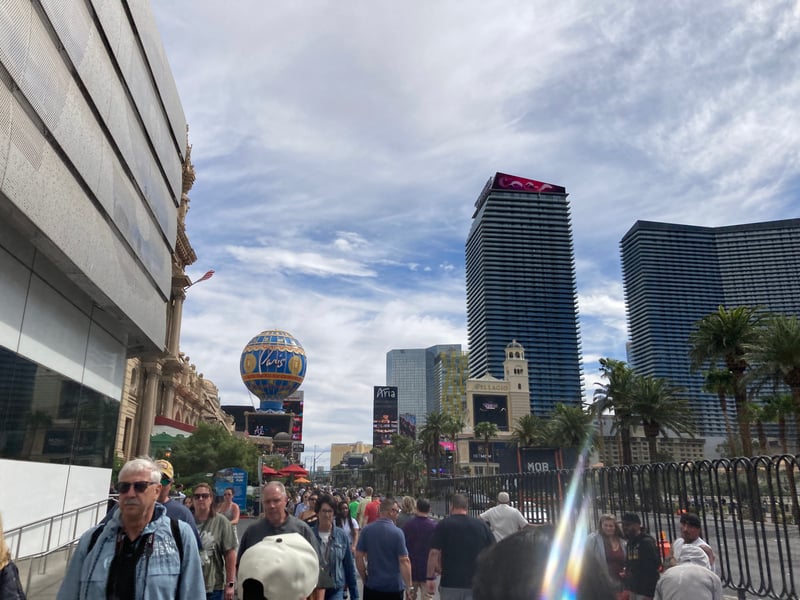
That’s where Las Vegas came in. Securing a stadium at the location of the old Tropicana Hotel, the Athletics are getting ready for life in Sin City by 2028.
The move wouldn’t have been possible without MLB Commissioner Rob Manfred’s assistance. He waived the relocation fee and sought unanimous approval from all 30 MLB owners on the move.
It’s easy to see why John Fisher and the Athletics were dead-set on moving to Las Vegas, a city that’s quickly gaining a reputation as a sports attraction.
Sin City has seen a number of sports firsts in recent years, including its first hockey team (the Stanley Cup-winning Vegas Golden Knights, formed in 2017) and first Super Bowl (Super Bowl LVIII in 2024). The A’s aren’t even Vegas’ first Oakland team: That distinction goes to the Raiders football team, which moved to the city in 2020.
The appeal of Vegas has also caught the attention of MLB leadership. “Manfred wanted to move a team from the San Francisco/Oakland market after seeing how attractive the Las Vegas market was,” said Ed Edmunds, sports business professor at the University of Notre Dame.
“Manfred wants to see this through, since that’s where his legacy lies,” Edmunds added. “It’s a huge opportunity for Manfred and the owners.” But is it an opportunity for everyday Vegas residents? Amid growing concerns over using public funds on private sports teams, the response from the city has been more ambivalent.
Of course, some Las Vegas locals are excited to see the A’s make their way to town.
For some, it’s an opportunity to see (one of) their favorite team(s) play. That’s especially true as many Californians move to the Silver State, drawn by a lower cost of living and no state income tax.
“I used to watch the A’s in Oakland back in the mid-70s,” said Kimberly Correia, a San Francisco Giants fan who’s also an administrator at University of Nevada, Las Vegas. “I think it’d be cool seeing them come to Vegas. That way, I can watch the San Francisco Giants play the A’s.”
“I’ve been a fan since 1977 and will follow them anywhere,” said Paul Morse, an A’s fan who works as a truck driver and lives in Reno.
But the move has drawn criticism, and not just among Las Vegans.
“Virtually every economic study of public funding finds no net benefit to the community” from new stadiums, said Richard Sheehan, a Notre Dame professor of finance who specializes in sports economics. “In fact, virtually every chamber of commerce-type study finds the opposite.”
A study by Stateline, a news nonprofit, showed that public funding for sports teams benefited the team ownership more than communities. Yet stadium subsidies continue to rise, going from a median of $350 million in 2010 to $500 million in 2024. And the subsidy for the A’s new stadium is among the biggest yet.
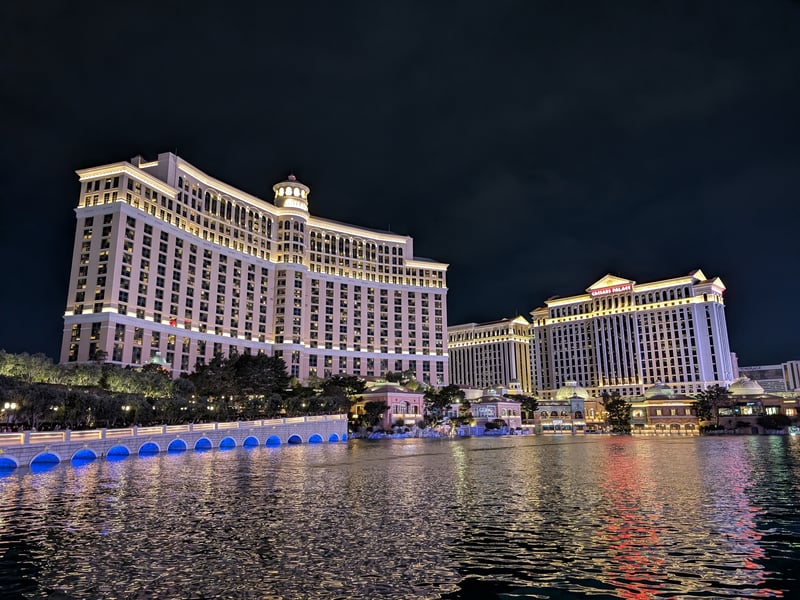
Marks, the Schools Over Stadiums spokesperson, believes the money used for the new stadium could’ve been better spent on public services in Clark County. That includes the educational systems, which have struggled in recent years.
“A transferable tax credit and $36 million in allocated money could’ve saved educator positions and could’ve saved a reading center from closing,” says Marks. “You’re looking at $700 per student. Two dollars isn’t enough; $72 isn’t enough.”
“They kept saying, ‘stadiums keep bringing in so much money,’" he added. “Look at the Raiders. Has that changed?”
Try telling that to die-hard sports fans, though. For many, the love of the game can’t be put in purely economic terms. They want to support the teams they love, even if it does require public money.
Polling on the issue, including a recent survey from the research group Ipsos, reflects this conflicted reality. Although most Americans would like to see legal limits on sports subsidies, a majority still believe against the evidence that stadiums are good investments. Unsurprisingly, that proportion is even higher among sports fans.
“I will check it out just to see a game,” says Mo Morales, an A’s fan who left Las Vegas for North Dakota. “I have so many other friends and family in Vegas to visit.”
 Follow @IceColdWJacob
Subscribe to our free newsletters
Our weekly newsletter Closing Arguments offers the latest about ongoing trials, major litigation and rulings in courthouses around the U.S. and the world, while the monthly Under the Lights dishes the legal dirt from Hollywood, sports, Big Tech and the arts.