
 Search Articles


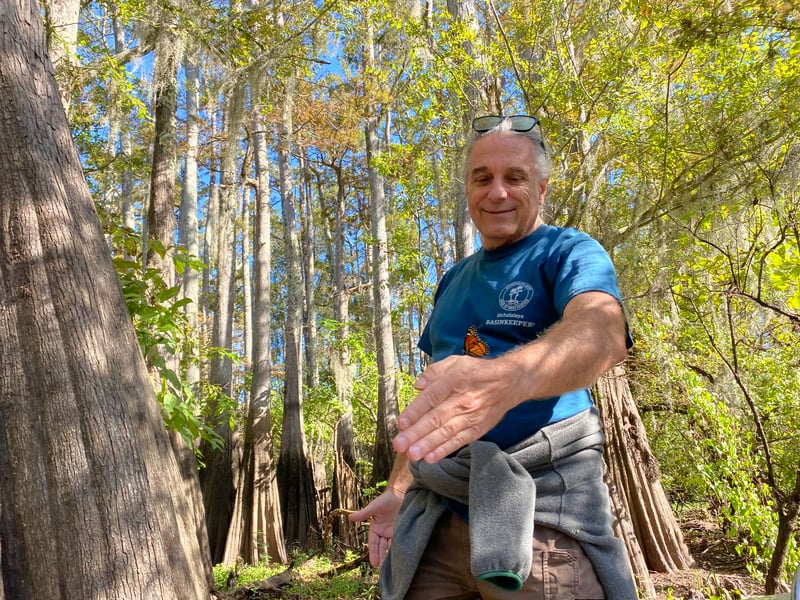
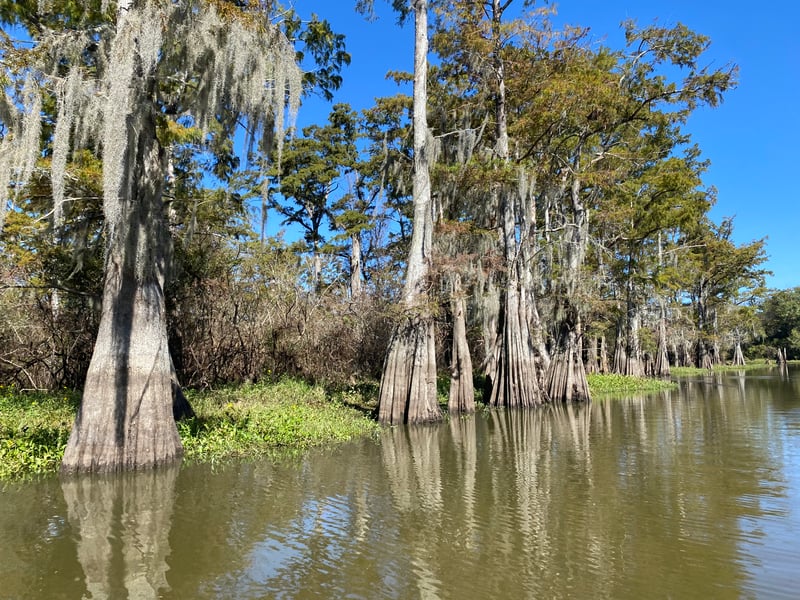
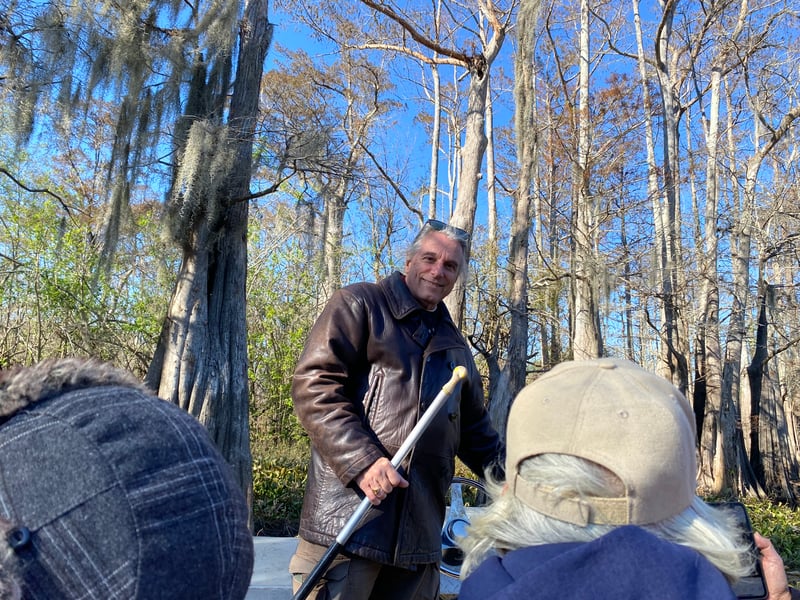
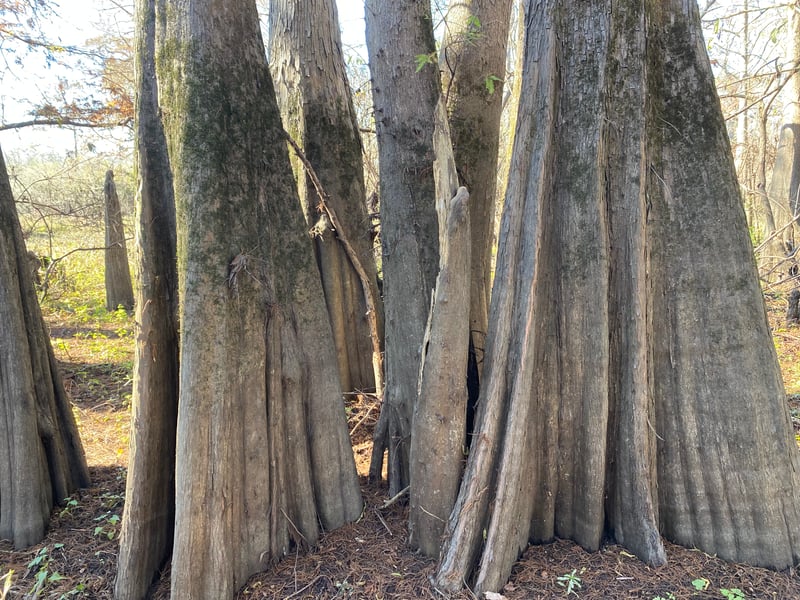
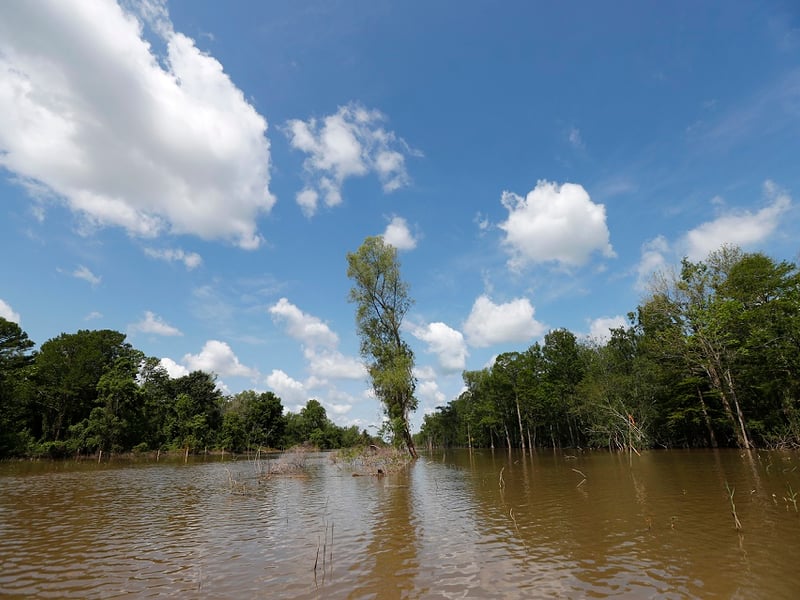
BAYOU SORREL, La. (CN) — On a warm Saturday in October, conservationist Dean Wilson guided his boat through a channel in the Atchafalaya Basin, pointing out hollowed-out Bald cypress trees where minks, raccoons and otters nest during high water.
The basin is the largest remaining contiguous track of wetland forest in North America — and a place Wilson knows well.
He moved here as a young man in the 1980s, surviving along its banks for four months with only his bow, arrows, a spear and a few hooks. His goal was to acclimate to the heat before moving to the Amazon, but he fell in love with the basin and stayed, ultimately finding work as a fisherman. Nearly 40 years later, he now runs Atchafalaya Basinkeeper, a member ofWaterkeeper Alliance.
Located in south central Louisiana, the basin — a combination of wetlands and river delta where the Atchafalaya River meets the Gulf of Mexico — spans 1.4 million acres. It supports 300 bird species and yields 23 million pounds of crawfish annually, making it the most productive swamp ecosystem in the world.
Now, though, conservationists like Wilson say the beloved swamp is facing a new threat.
The unlikely culprit: state restoration projects.
Largely funded by money from BP following the British oil company’s 2010 oil spill, these projects ostensibly aim to boost water quality and improve water flow into the wetlands. The problem, critics say, is that such projects introduce sediment in the sensitive ecosystem, ultimately causing more harm than good.
“It’s being done under the name of improving water quality,” Wilson said, “but really, these projects are aimed at filling the wetlands.”
Recently, the state’sCoastal Protection and Restoration Authority has started preliminary work on yet another river diversion project. Supported by research from The Nature Conservancy, the U.S. Army Corps of Engineers issued a permit for it in December 2023.
Known as the East Grand Lake Project, the project aims to bring river water into parts of the Atchafalaya Basin and Bayou Sorrel with the goal of improving water flow. But it’s faced intense public opposition, including from crawfishers worried about their livelihoods and an array of environmental groups, who see it as a land grab for the oil and gas industry.
For some critics, East Grand Lake was the last straw. Joined by Sierra Club, Healthy Gulf, Waterkeeper Alliance and Louisiana Crawfish Producers Association, Atchafalaya Basinkeeper sued in May in an effort to halt the project.
In their suit, the groups said there was no scientific basis for the diversion and that rather than conducting their own review, the Corps simply copied and pasted “pages and pages” of CPRA documents.
“The loss of flood carrying capacity will be irreversible,” the conservationists write. “There will be no second chance to reverse this damage once begun.”
The conservationists warned that the East Grand Lake Project will have the same disastrous effects as prior projects — the Beau Bayou and Buffalo Cove projects — that were carried out under the same stated purpose of water quality and ended up filling in thousands of acres of wetlands.
As with the other projects, instead of improving water quality, the conservationists and fishers say the East Grand Lake Project will introduce vast quantities of sand, silt, pesticides and fertilizer from agricultural areas along the Mississippi River Watershed. This they say will fill wetlands, cause harmful algal blooms, deplete oxygen levels and kill aquatic life.
They argue that at least since 1979, the feds have known about the damage of projects like this one. In a document that year, focused specifically on Atchafalaya, the U.S. Environmental Protection Agency warned about the high sediment carrying capacity of river water entering through cuts made in elevated banks, as the East Grand Lake Project is designed to do. The document said such sediment will enter the swamp in dangerous volumes.
“Loss of overbank storage relative to a fixed datum plain, however, is considerable and represents a major loss of floodway capacity,” the document noted.
Wilson, commercial fishermen and others say in their lawsuit that one way to improve flow and water quality would be to simply remove the elevated spoil banks . Critics of that plan, however, say it would be expensive.
Louisiana’s Coastal Protection and Restoration Authority did not respond to repeated requests for comment for this story, including requests to see a management plan and supporting scientific data.
Ricky Boyett, a spokesperson for the Corps’ New Orleans District, declined to comment directly on the project, citing the ongoing litigation.
Still, Boyett emphasized that wetlands are strictly protected by federal regulations.
“Deliberately filling in the swamp, from the government side of it, would violate more laws than you could possibly digest,” he said.
Wilson was emphatic during the October Atchafalaya tour that the East Grand Lake Project will fill in the wetlands. He said that’s what the project was designed to do.
“They’re actually falsifying science,” Wilson said during that trip.
“They’re saying, ‘This used to be all land. Now it’s become open water. We need to get more sediment because it’s become open water.’ When, really, it’s completely the opposite–it used to be all water. Now it’s becoming land. They’re falsifying science to justify the final project.”
But The Nature Conservancy is standing behind the research.
That includes a 2017 thesis from the University of Louisiana at Lafayette, written with its support. The thesis focused on five tracts purchased by The Nature Conservancy in 2015 and appears to show that sediment is necessary to counter the natural sinking of land.
“There just has never been much water there,” Joseph Baustian, a senior ecologist with the nonprofit, said in a phone interview. Bryan Piazza, a wetland ecologist with The Nature Conservancy, argues much the same. “All of this work — what we call hydrologic restoration — is getting water to flow more naturally into these wetlands that were created by the river and that need some river interaction to be healthy,” he said. He said the group had studied the issue “very closely” and had “very high confidence” it would improve the Atchafalaya’s ecology.
“I don’t know if you know much about The Nature Conservancy,” Piazza added, “but we’re not in the business of wrecking our land.”
Piazza explained that the nonprofit would like to bring more nutrient-laden water into the basin, ostensibly to filter it of nitrates and other impurities before sending it into the Gulf of Mexico.
In a December phone call, Ivor van Heerden, a marine expert who has been researching the basin since the 1970s, said The Nature Conservancy’s plan to increase river water into the basin in large quantities would effectively choke out all the oxygen in the basin, clogging the water with algal blooms, ultimately filling the wetlands, thereby killing fish and rendering the landscape unable to support birds and other wildlife. The plan, van Heerden said, would ruin the Atchafalaya Basin.
The Nature Conservancy has a history of receiving land and grants from the oil and gas industry in exchange for allowing the companies to continue to operate on them. It works in partnership for instance with Dow Chemical “demonstrating that building nature’s value into business strategy could lead to better outcomes for companies and conservation.”
The 5,000 acres of land the East Grand Lake Project is situated on was purchased by the nonprofit with a $1.6 million grant from Shell. Critics say the oil company gave the money to The Nature Conservancy specifically so it could carry out the East Grand Lake Project.
Baustian explained in a phone call that Shell was looking to give a donation to any entity in the basin at the time because it wanted to put in a pipeline. No one else took the money, so Shell offered it to The Nature Conservancy.
Wilson called this claim patently untrue.
“I worked with Shell on the pipeline for one year, and they never offered any money to us,” he said.
The Atchafalaya Basin is a heady mix of topography. Some of it is open water. Some of it is land, formed through Mississippi River sedimentation in much the same way that lava can slowly create new ground.
Human intervention has further blurred the lines. After theGreat Flood of 1927 broke levees, swamped houses and left thousands homeless, the U.S. Army Corps of Engineers began a series of engineering projects aimed at turning the Basin into a spillway for flood protection.
For groups like Atchafalaya Basinkeeper, East Grand Lake is just one more example of corporate influence in government. “Many of these projects are supported by oil and gas companies and large land corporations,” the group says on its website, “who benefit from these changes in the Basin that frustrate commercial fishing and public access and pave the way for further privatization of wetland forests for private benefit from logging and other uses.”
Fishers and communities surrounding the basin say they’ve witnessed firsthand the basin’s waterways drastically shrink from purported river diversion projects.
A 2022 resolution from Iberville Parish in opposition to the East Grand Lake Project says that loss of the basin’s “flood capacity is already responsible for a record flood in 2021.”
The document says the basin is essential to protecting communities throughout Louisiana, including the entire industrial corridor.
These communities “will have no future if we keep filling the Basin’s wetlands,” the resolution says.
Tensions over who really benefits have long spilled out at public meetings on such projects. At one in Morgan City in November, an official involved with the CPRA said the agency was forming three steering groups to study future projects like East Grand Lake. But she stressed there would not be transcripts or recordings and didn’t explain why.
“We’re not recording them,” that official, Denise Reed, said. “We’re not taking notes.”
Monica Fisher, a development director for Basinkeeper, pressed Reed on why groups like hers weren’t included in the committees. After all, she noted, Basinkeeper has over 2,000 members, including people who live and work in the basin.
“I’m curious why Atchafalaya Basinkeeper isn’t a part of this process,” Fisher said at the meeting. Reed said that not everyone can be in an engagement group but stressed that “you’re not missing out on conversations” and “everything that we decide and do moves forward in the public eye.”
A week later, at another meeting in Plaquemine, Fisher asked again for information on entities involved in CPRA steering committees. But Brian Lezina, chief of planning for CPRA, said he had decided against making that information public, stating privacy concerns.
“We haven’t discussed that with those entities on there to see if they’re comfortable or not about us giving out their names,” Lezina said. “These are not public entities — they are advisory committees.” But such explanations have done little to assuage concerns that projects like East Grand Lake prioritize special interests over residents. These committees will “help decide how to spend taxpayer money,” Wilson retorted at the forum. “We should at least know who’s meeting.”
During a phone call after that meeting, Wilson said he didn’t think he’s a controversial figure.
“I’m not against industry, I’m not against oil and gas. I fell in love with the land. I don’t think that’s controversial. I think controversial would be the fact the Corps isn’t doing what they’re supposed to do.” He said that by issuing permits like East Grand Lake for projects that destroy wetlands, and in not enforcing laws, the Corps is ruining the Atchafalaya Basin.
“They kill the fish; they fill the swamps. That should be controversial,” he said.
 Follow @SabrinaCanfiel2
Subscribe to our free newsletters
Our weekly newsletter Closing Arguments offers the latest about ongoing trials, major litigation and rulings in courthouses around the U.S. and the world, while the monthly Under the Lights dishes the legal dirt from Hollywood, sports, Big Tech and the arts.