
 Search Articles


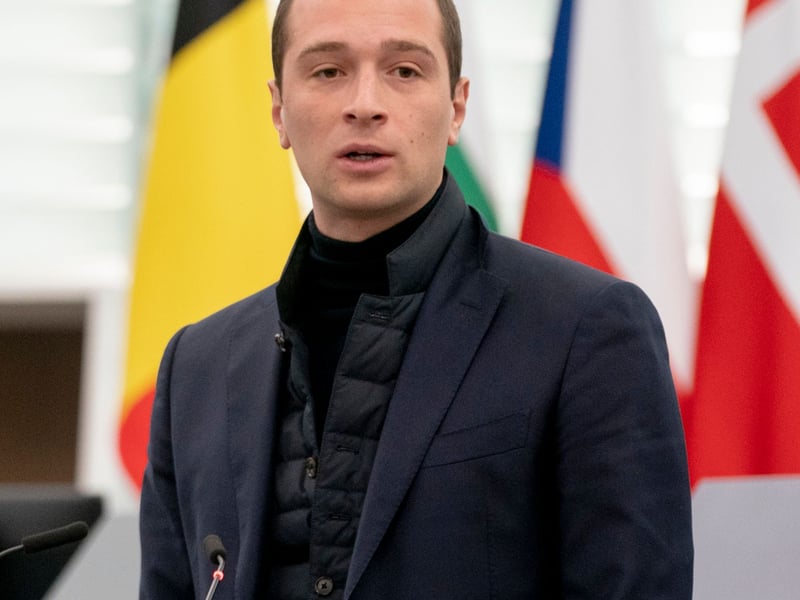
MARSEILLE, France (CN) — France’s extreme-right National Rally party is gaining ground in the run-up to the European elections on June 9. Recent polls project the so-called RN will win around 32% of the vote; in comparison, French President Emmanuel Macron’s party, Renaissance, is expected to take second place with 17%.
Jordan Bardella is the head of the list of the RN, meaning he will certainly earn a seat. He has remained largely silent on the campaign trail, but this hasn’t seemed to negatively impact the group’s numbers. Experts argue that while multiple factors are at play — a general feeling of insecurity amid the Russia-Ukraine war on the continent, unpopular reforms and controversial immigration policy — this vote ultimately reflects voters’ displeasure with Macron.
“It’s basically a choice against Macron, against Macronism,” Luc Rouban, a researcher specializing in the transformations of democracy in France and Europe with CEVIPOF-Sciences Po, told Courthouse News. “It’s a way to signal their dissatisfaction after the retirement reforms, a certain number of reforms, unemployment benefits, or a certain number of positions regarding Ukraine."
Every five years, European Union countries hold elections to determine who will act as one of the 720 members of the European Parliament, or MEPs. France elects 81, the second-highest number after Germany. Ahead of the elections, political parties assemble a list of members that will be sent to parliament in order of preference. Turnout decides how many delegates will be sent proportionally from each list.
The 28-year-old Bardella is credited with polishing the image of a party that has suffered from scandals tied to the Le Pen family, which has led the party since its founding in 1972. The family has been widely criticized as promoting xenophobic policies, and the RN is officially classified as extreme right, a label it has fought to shed. Bardella, who is young and charismatic, has helped to normalize the party.
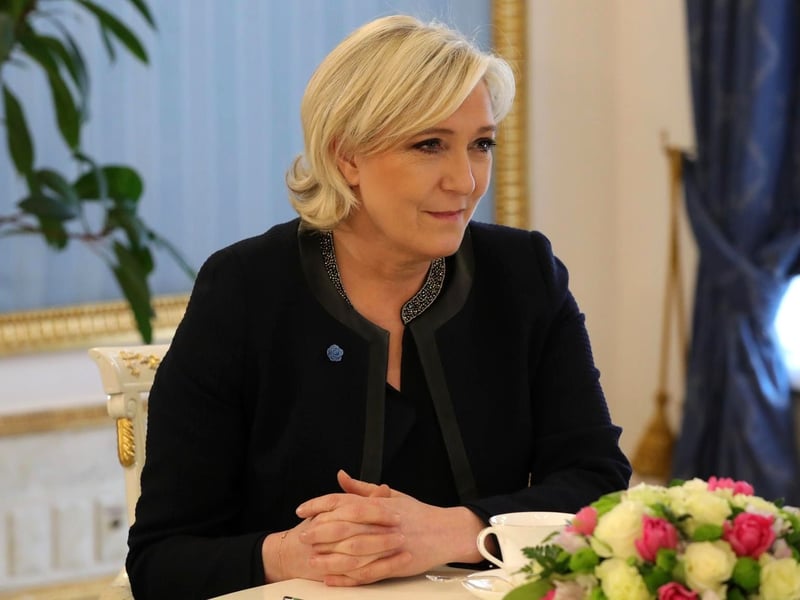
Not everyone is convinced that the RN has evolved. Sylvianne S. was having a coffee in central Marseille on Wednesday, reflecting on Bardella and the party.
“I’m opposed, anti-fascist, to Bardella and Le Pen,” she told Courthouse News. “There’s a lot of insecurity at the moment.”
But Bardella is one of the most popular politicians in France. With over 1 million followers on TikTok, he is the third most-followed French politician on the platform, underscoring his connection to younger voters.
Despite being the face of his party’s campaign, Bardella has been noticeably silent as elections draw near. As someone with a reputation for punchlines — the sharp jabs that have drawn comparisons to Donald Trump — his silence is palpable. In April, he left a news conference without taking questions from journalists; he has also avoided debates, although he’s scheduled to debate Prime Minister Gabriel Attal on May 23.
“It’s certainly a tactic that consists of avoiding embarrassing questions because the weak point of the RN is still the technical mastery of issues, European issues, agricultural issues, financial and economic issues, international issues" Rouban said.
“They’re relatively weak because they don’t necessarily have well-constructed arguments that are supported with real expertise and social resources and experts behind them,” he went on. “So they prefer to say nothing, which allows them to avoid saying nonsense, so they’re less vulnerable to criticism and attacks … . They live in this space of having a favorable image in the public opinion, even if their program is pretty vague.”
Pierre-Stéphane Fort is an investigative journalist who has spent years researching Bardella, and will release a book on him, Le grand remplaçant, on May 17. His theory on the recent silence follows a similar line of thinking.
“He has 30% to lose by participating in debates or responding to the media … . When we look at the public debate, it gives off a bit of a bizarre image of his campaign, because we don’t hear a lot from him, we have the impression that he’s not actually campaigning,” Fort explained. “Despite everything, he’s doing well in the polls, so I imagine that he’ll continue to do this.”
Traditionally, the RN has been against the idea of the European Union; Bardella and Le Pen were once for Frexit, the campaign for France to leave the bloc, according to Fort. He argues that the European elections are an opportunity for the party to assert dominance ahead of the 2027 French presidential elections more than a chance to put forth a comprehensive plan for European action.
“For Jordan Bardella, it’s not an issue of European construction at all, they’re against Europe, always have been,” Fort said. “I really think the challenge for the French electoral landscape is for the RN to achieve the best possible score to launch a political and electoral dynamic for 2027, and for Jordan Bardella in particular, it’s getting a good score to assert his status as leader of the RN.”
As far as the impact goes at the European level, opinions differ. While Sylvianne S. thinks the effects will be big, Rouban argues the election outcome will have more of a psychological impact on domestic French politics. People are taking this as an opportunity to express discontent with Macron, he says, and since the EU is a relatively distant institution that the average person doesn’t know well, they’ll vote to make their unhappiness known.
Fort thinks Europe’s position on the Russia-Ukraine war could be affected if the French and European far right make big gains in the parliament.
“We know the votes of the far right, French and European in general, are pretty favorable toward Putin," Fort said. “In any case, the RN has always been favorable toward Putin and Russia. For example, Bardella and the RN deputies never voted on resolutions that condemned the conditions of [Alexei] Navalny’s detention, so there’s still an issue in the European Parliament, I think, regarding Russia and Ukraine and a potential conflict in years to come.”
 Follow @lilyradz
Subscribe to our free newsletters
Our weekly newsletter Closing Arguments offers the latest about ongoing trials, major litigation and rulings in courthouses around the U.S. and the world, while the monthly Under the Lights dishes the legal dirt from Hollywood, sports, Big Tech and the arts.