Search Articles


WASHINGTON (CN) — The Supreme Court deviated from its carefully choreographed process for handing down opinions this week as the justices sought to stymie concerns about how an expansive ruling on presidential power could impact financial markets.
High court rulings are typically released one by one, allowing the justices time to explain each decision in a statement from the bench before the next opinion is announced. But on Monday, Chief Justice John Roberts, a George W. Bush appointee, issued Trump v. Slaughter and Trump v. Cook simultaneously.
In the press room, the unusual move was demonstrated by paper copies of the two separate rulings being distributed as a pair, with the two booklets held together by a rubberband. But on the bench, Roberts issued separate bench statements for each decision, interrupted by a dissent in Slaughter by Justice Sonia Sotomayor, a Barack Obama appointee.
While joint releases are typical for consolidated appeals, Slaughter and Cook were not classified as such. In fact, the cases were heard nearly a month apart and one was a merits ruling while the other a stay denial on an emergency application.
The cases are connected, however, by a common theme: the limits on President Donald Trump’s influence across the federal government. As the conservative majority massively expanded presidential power over independent regulatory boards in Slaughter, the justices carved out a distinction for the Federal Reserve Board in Cook.
And some court watchers attributed the rulings’ unusual release format as a safeguard against any questions that could have been posed about the central bank’s independence if the opinions had been published nearly a half-hour apart under the court’s normal processes.
“Chief Justice Roberts may well have been concerned that markets could have reacted negatively if there had been a half-hour gap of uncertainty between Slaughter and Cook being published,” Thomas Berry, the director of the Cato Institute’s Robert A. Levy Center for Constitutional Studies, said.
Those concerns were echoed in the Cook opinion, where Roberts went out of his way to weigh in on the merits of the appeal — against the objections of some of his colleagues — despite only ruling on Trump’s application for a stay.
“We see no reason to leave the public in limbo, or to sow doubt as to the status of one of our nation’s (and the world’s) most important financial institutions,” Roberts wrote in Cook.
The case stemmed from the president’s push to remove Federal Reserve Board Governor Lisa Cook in a bid to exert greater control over the nation’s central bank.
In Slaughter, the majority held Trump had authority to fire commissioners on regulatory agencies because such entities exercised executive power owed to the president. The ruling specifically concerned members of the Federal Trade Commission, but its holding will likely also apply to the National Labor Relations Board, Merit Systems Protection Board, Consumer Product Safety Commission and others.
Members of these agencies are appointed by the president but require Senate confirmation. Before Slaughter, commissioners were thought to have protections against at-will termination, insulating them from partisan influence. But now, the president has authority to replace board members who act against his wishes.
“I think [the court is] very attuned to the fact that people are watching closely for how the justices define presidential powers,” Michael Sozan, senior fellow at the Center for American Progress, said. “This is a court where the conservative justices for several years now have been issuing a string of decisions that really helped President Trump build a more imperial presidency, and I think here the court again knew that it was about to take a massive additional step in giving Trump more powers over the government.”
Sozan said Roberts’ decision to issue Cook simultaneously made clear that the court wasn’t giving Trump unlimited authority.
“They’re aware of the criticism that they’ve come under for vastly expanding executive branch powers, and they knew especially that people were very concerned and nervous about what powers they were going to allow the president to have to dismiss Federal Reserve governors,” Sozan said.
The Federal Reserve wields vast authority over the U.S. and international economy. Aside from setting interest rates and managing price inflation, the board regulates financial conglomerates, maintains the financial system and provides services such as acting as a lender. Economists worried that partisan influence could destabilize markets and lead to a recession.
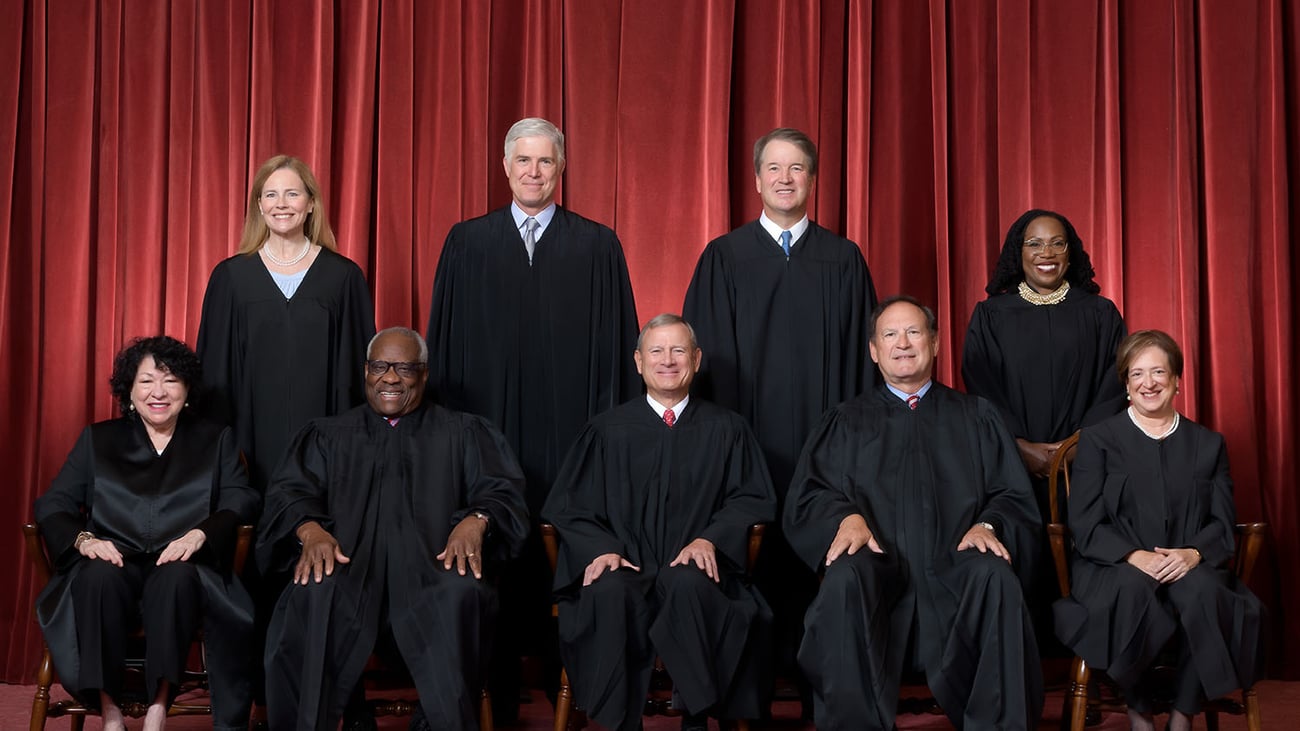
But soothing economic concerns created a rift with almost all of the justices who joined Robert’s majority opinion in Slaughter. Justice Clarence Thomas, Justice Samuel Alito, Justice Neil Gorsuch and Justice Amy Coney Barrett joined Roberts’ majority in Slaughter but dissented in Cook. Thomas is a George H.W. Bush appointee, Alito is a George W. Bush appointee, and Gorsuch and Barrett are Trump appointees.
In contrast, Justice Sonia Sotomayor, Justice Elena Kagan and Justice Ketanji Brown Jackson dissented in Slaughter but joined the majority in Cook. Sotomayor and Kagan are Barack Obama appointees, and Jackson is a Joe Biden appointee.
Thomas said the legal rationales between the two rulings are contradictory. He also claimed the carveout in Cook wasn’t based on any principle of law, but instead the court’s view of the Federal Reserve.
“There is certainly tension between the reasoning and emphasis of Chief Justice Roberts’ opinions in the two cases, but in the majority’s view, it is history, not politics, that distinguishes the Fed from other independent agencies,” Berry said.
According to Roberts, the Federal Reserve’s unique history separates it from other similarly created regulatory bodies. Unlike the FTC and others, Roberts said the Federal Reserve “operates at a deliberate remove from the ordinary political process.”
But critics who see the court’s jurisprudence as results based noted the carveout was in line with the Roberts court’s tendency to rule in favor of business and corporate interests.
Brian Frazelle, the Constitutional Accountability Center’s deputy chief counsel, said corporations fared even better than Trump before the court this term.
“The U.S. Chamber of Commerce wanted to block the president’s tariffs, and the court agreed,” Frazelle said. “The Chamber advocated giving presidents free rein to fire the leaders of independent agencies, and the court agreed. The Chamber urged the court to exempt the Federal Reserve Board from that ruling, and the court agreed there too. The through-line in this term’s most significant cases was the success of the big business agenda.”
The Supreme Court did not provide an explanation for why Slaughter and Cook were released together or respond to a request for comment for additional information on the release.
 Follow @KelseyReichmann
 Follow @kelseyreichmann.bsky.social
Subscribe to our free newsletters
Our weekly newsletter Closing Arguments offers the latest about ongoing trials, major litigation and rulings in courthouses around the U.S. and the world, while the monthly Under the Lights dishes the legal dirt from Hollywood, sports, Big Tech and the arts.
Additional Reads


 Trump sues Virginia over assault weapons ban July 1, 2026