
 Search Articles


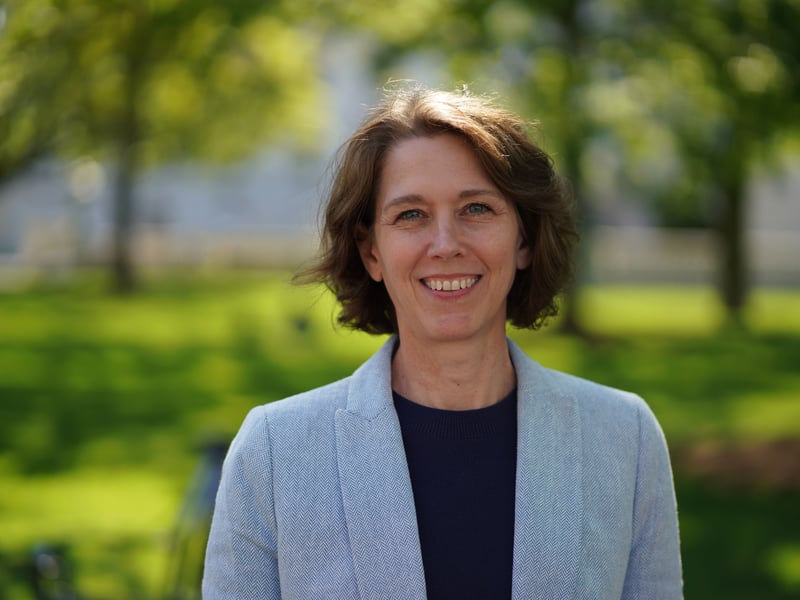
MADISON, Wis. (CN) — In April, the Wisconsin Supreme Court made national headlines once again when Judge Susan Crawford defeated conservative Judge Brad Schimel for a vacant seat, solidifying a liberal majority and sending a strong message to billionaire Elon Musk and President Donald Trump.
The ostensibly nonpartisan spring election became tremendously politicized — largely propelled by Musk’s backing of Schimel — blowing previous spending records out of the water with a whopping $100 million price tag.
“On my side of the race, people did not like the fact that Elon Musk was coming in, not just spending the millions that he spent on things like door-to-door canvassing and, you know, these horrible, untrue attack ads that they were running against me, but also waving million dollar checks in front of people to get them to vote in a certain way,” Crawford said. “I think people saw through that.”
The nation watched Wisconsin’s spring race as Musk funneled tens of millions of dollars in an attempt to swing the court’s majority to the right and continue Trump’s campaign against “activist judges.” Crawford said he uses the term to mean whichever judge he disagrees with in that moment.
In a repeat of the 2024 presidential election, Musk’s super PACs offered cash rewards for voting and produced brutal attack ads.
It wasn’t the administration’s first clash with Wisconsin’s high court. The justices rejected Trump’s bid to overturn the 2020 election when Joe Biden won the state by a slim margin. The court is expected to take on several high-profile cases involving abortion rights, voting maps and separation of powers in the next session.
Crawford defeated Schimel, taking 55% of the vote and solidifying a liberal majority on the court until 2028.
Now, with the race in the rearview, Crawford is setting the record straight about politicization of the court, the “activist judge” scarlet letter and her goal to maintain public trust in the courts by issuing clear opinions that serve people.
COURTHOUSE NEWS: I have to start with your Instagram, and the sheer number of vanilla custard cones featured there. It’s extremely relatable to Wisconsinites, but how much of that was strategy?
Crawford: Full disclosure, sometimes it was normal ice cream for sure. I was on the road a lot and often not getting the opportunity to have a full meal, so when I was starving, I would grab a quick cone between events every chance I got. It’s kind of a meal replacement at times, I’m sad to say.
I love ice cream and frozen custard. This is America’s Dairyland, after all. So, I wanted to give props to all the dairy farmers out there and show voters that behind my resume and all the work I’ve done is a real person.
During your campaign, we heard a lot about what you called “commonsense justice.” Can you expand on what that really means, and how you’ll apply it on the bench?
The fancier word for common sense is pragmatism. In terms of my legal philosophy, I really do consider myself a pragmatist, which just means that I’m always going to pay close attention to the context of every decision I’m making and how the law is going to play out.
And I don’t just mean for the parties involved in the case — on the Wisconsin Supreme Court, that ruling is going to be applied in different factual contexts, so we need to think about what a ruling is going to mean for real people in their real lives.
We all know that our society changes and evolves, so rules that might have been effective or reflective of social conditions 50 or 100 years ago may necessitate some adjustment or just an explanation for how a rule should apply in this new factual context that has never come up before. To me, that’s a big part of the common sense.
So what I hear you saying is that things are changing, and the established precedent needs a refresh. Am I getting that right?
Yeah, I think that’s part of it. It’s important for courts, particularly the state Supreme Court as a precedent-establishing body itself, to follow its own precedent whenever it is possible and principled to do so. But we also must recognize when there may be circumstances that call for those precedents to be modified or even overturned.
The example that I like to point to is Brown v. Board of Education . In that case, the United States Supreme Court overturned what was then a 70-year-old precedent established in Plessy v. Ferguson . In Plessy , the court said that it was okay to have separate but equal social systems in our country. That is what allowed the Jim Crow era to exist.
In Brown , the court was confronted with all this evidence showing that separate was not equal, and, as a result, it overturned the Plessy precedent and started a new era in which the court demanded that we have true equality over segregation in the country.
Your opponents constantly referred to you as an “activist judge” and claim you will always side with the liberal majority. What do you have to say to that now?
I would say point to one decision that I have made that does not faithfully apply the law to the facts of the case. That’s all I would say.
You know, there’s a quotation by former U.S. Supreme Court Justice Anthony Kennedy who said that an activist judge is one whose decisions you disagree with. It’s not a judicial philosophy. It is just another term that is weaponized by politicians to criticize the decisions by judges they’re unhappy with.
I do not believe I ran a partisan campaign. Did the race become politicized? Absolutely it did. But I was always true to my position that we need to have an independent judiciary in Wisconsin, and that I would decide every case based on the facts and the law. I won’t allow partisan considerations to color my decisionmaking. As a judge, I never have up to this point and I don’t intend to start as a justice on the Supreme Court.
That’s interesting. Your election does solidify a liberal majority on the court, though. How will that affect the system, and Wisconsin?
I do think there are differences in the approach that some of the justices take to decisionmaking or differences in how the justices view the role of the courts in our political system. Those different values can impact how they will decide in cases, but all the justices on the court try hard to just get it right.
The Wisconsin Supreme Court is taking up cases that are sharply contested, cases that often have a persuasive legal argument on both sides and that is why we need to have one court to make the final judgement. Really, I think disagreement on the bench is healthy and necessary for good decisionmaking on these tough cases. It makes us work harder.
When I was a lawyer, facing a strong lawyer on the other side of a case really forced me to do better and make sure I had a full grasp of the facts and was making my best arguments. I think it’s the same for the Supreme Court. Vigorous debate will lead to stronger decisions as long as it’s based on legal principles.
What about when it isn’t? Justice Rebecca Bradley recently wrote a **dissenting opinion naming your campaign and including references to Justice Janet Protasiewicz’s social media as evidence of partisanship.**
That is inappropriate. I don’t like is to see personal attacks in dissents or in judicial decisions. All the justices should really focus on the legal doctrines of the case and should not be out there accusing another justice of bringing in some type of extra-judicial or extra-legal consideration unless they have pretty darn good evidence of that. I have not seen any such evidence.
In that same vein, do you think that the politicization of the spring election affects the public’s trust in nonpartisan courts? Your campaign was sometimes more about Elon Musk than your actual opponent — do you think Democrats have certain expectations of you now?
Well, people often asked me like, “What do you think about this issue? What do you think about that issue? How will you decide on this case or that case?” And I would just say, “Look, I’m not going to tell you.”
I got a lot of practice saying that. I decide cases based on the facts that are presented in court and the law after I’ve heard the lawyer’s arguments, and I have never prejudged cases. So, I’m not going to tell you, and if that doesn’t sit well with you then maybe I’m not the right candidate for you.
So, my hope is that the people of Wisconsin will trust me — or if they disagree with a conclusion I reach in a particular case, they will understand that I’ve done what I believe the facts call for in my heart of hearts and that I’m sincere about that. Because I really am.
With the president lobbing insults and threats of impeachment at judges he disagrees with, are you at all nervous going into this high-profile role? How can judges stand up for judicial independence in this moment?
I think any judge or justice, whether they’re in the state court system or the federal court system, can use their voices and speak out about the role that our courts play in both the federal government and the state government. I think judges should be standing up for each other and for the judiciary in general and defending it against those kinds of political attacks. I hope I’ll have the opportunity to speak out publicly about how important that is.
The courts need to stay the course and continue to do what we are charged to do by the Constitution and not be swayed by political whims. We are seeing a great effort being made to get the courts to change direction due to political forces, and it’s imperative that the courts do not bend.
 Follow @desdev5
Subscribe to our free newsletters
Our weekly newsletter Closing Arguments offers the latest about ongoing trials, major litigation and rulings in courthouses around the U.S. and the world, while the monthly Under the Lights dishes the legal dirt from Hollywood, sports, Big Tech and the arts.