
 Search Articles


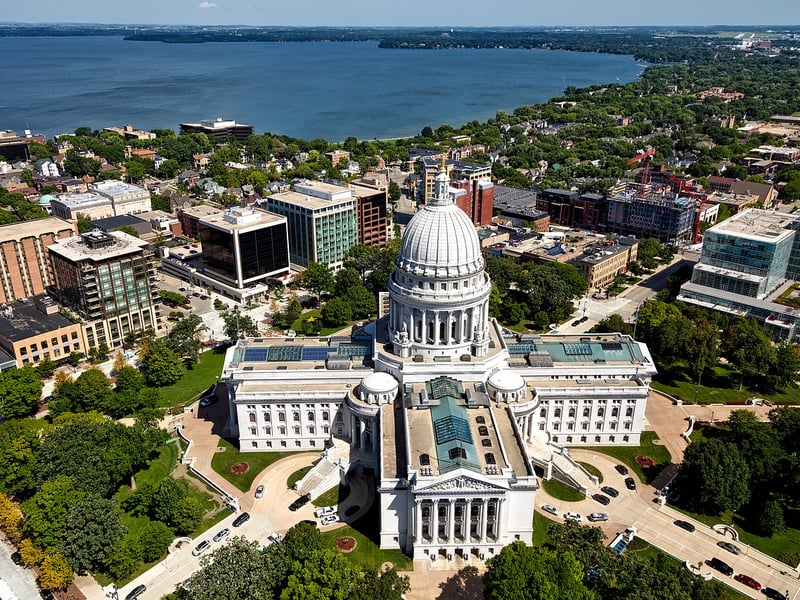
Madison, Wis. (CN) — The justices of the Wisconsin Supreme Court on Tuesday weighed the state government’s interest in protecting human health and the environment against the interests of property owners to know which contaminants they are responsible for cleaning up.
Leather Rich Inc., a family-owned dry cleaning business based in Waukesha County for 43 years, sued the Department of Natural Resources in 2021 after the agency told the company that not only would it have to clean up hazardous contaminants found on the property, but it also must look for PFAS — or polyfluoroalkyl substances, so-called forever chemicals that don’t easily break down in the environment — before it could be approved for a liability waiver.
Leather Rich claimed, and Wisconsin trial and appeals courts affirmed, that the environmental department is required by law advertise newly discovered hazardous contaminants before it may enforce the Spill Law, which makes property owners strictly liable for harmful environmental contaminants.
On Tuesday the respondents, an influential business association and the dry cleaning company, altered their argument slightly to focus on the department’s vague definition of hazardous materials and how that affects property owners’ ability to obey the Spill Law.
Although Justice Rebecca Bradley was sympathetic to the regulated community’s interest in understanding exactly what materials are considered hazardous, the court overall seemed to find the companies’ argument unconvincing at best, and dangerous at worst.
Presently, the Spill Law defines a hazardous material broadly. In his oral argument, Assistant Attorney General Colin Roth argued for the state that this was a purposeful maneuver by the Legislature to allow the department to swiftly intervene when contaminants are spilled.
“This happens all the time,” Roth said. “The Legislature writes a broad statute with enough weight to be enforceable, and the agency must interpret that. If agencies were required to promulgate a rule every time new facts come to light that change how the statute should be applied, it would be too late.”
A sticking point in his argument for some of the justices was a point that attorney Lucas Vebber, who represents Wisconsin Manufactures and Commerce Inc., made in his brief before the court: What if a shopper drops a gallon of milk as they leave the grocery store? Without defining hazardous materials, and the quantities at which they become a threat to the environment, the department could arbitrarily punish any property owner for any spill of any kind, Vebber argued.
Justice Jill Karofsky asked Roth if buying a gallon of milk would indeed make someone subject to the Spill Law.
“Well, only if they spill it, Karofsky,” Bradley quipped as she laughed and leaned forward to see Karofsky on the opposite end of the bench.
To this point, Roth asked the court to apply some common sense: “Of course those examples would not be spills requiring intervention. We have to look at the plain text of the Spill Law, which clearly defines a hazard as having substantial negative impact.”
In Wisconsin, making an administrative rule requires notifying the public and offering time for citizens to comment on the proposed rule. The process can take months, which Roth claimed would hamstring the department’s ability to protect the environment.
He went on to quote Justice Brian Hagedorn who, in a previous case on rulemaking, compared the process to a canoe attempting to traverse the ocean.
Karofsky pressed attorney Delanie Breuer, who represented the dry cleaner, on the consequences of her view that without a list of hazards, there can be no legal enforcement.
“If we find in your favor, parties would no longer have to alert the DNR or clean up emerging contaminant spills promptly unless or until a rule is created, and no cleanup would ensue. Isn’t that right?” the judge asked.
Breuer’s answer in the affirmative, Karofsky said, ignores the severity of PFAS.
Karofsky went on to list the damage that PFAS can cause to humans, including increased risk of many cancers, reduced immune system responses, decreased fertility and increased infant mortality, among others.
Under the Spill Law, a property owner has the right to take the issue to court if they believe they should not be liable for a spill or if the material spilled is not actually hazardous. In these enforcement action cases, the department points to the statute and the decision ultimately lies with the presiding judge.
Justice Rebecca Dallet pointed this process out to Breuer, who then doubled down on her argument that the department must make its rules widely known when enforcing the Spill Law because it could enforce consequences including a daily fine until the spill is remediated.
“So because DNR has the ability to enforce the law, they cannot do anything without first promulgating a rule? Wow,” Dallet said, shaking her head in apparent disbelief.
Besides Bradley’s sentiment that the regulated party cannot function without a clearer understanding of the letter of the Spill Law, the other justices seemed to agree that the companies’ view of how the department should enforce the law poses too much risk to the environment and to public health.
Tuesday’s hearing ended without a decision from the panel of judges.
 Follow @desdev5
Subscribe to our free newsletters
Our weekly newsletter Closing Arguments offers the latest about ongoing trials, major litigation and rulings in courthouses around the U.S. and the world, while the monthly Under the Lights dishes the legal dirt from Hollywood, sports, Big Tech and the arts.