
 Search Articles


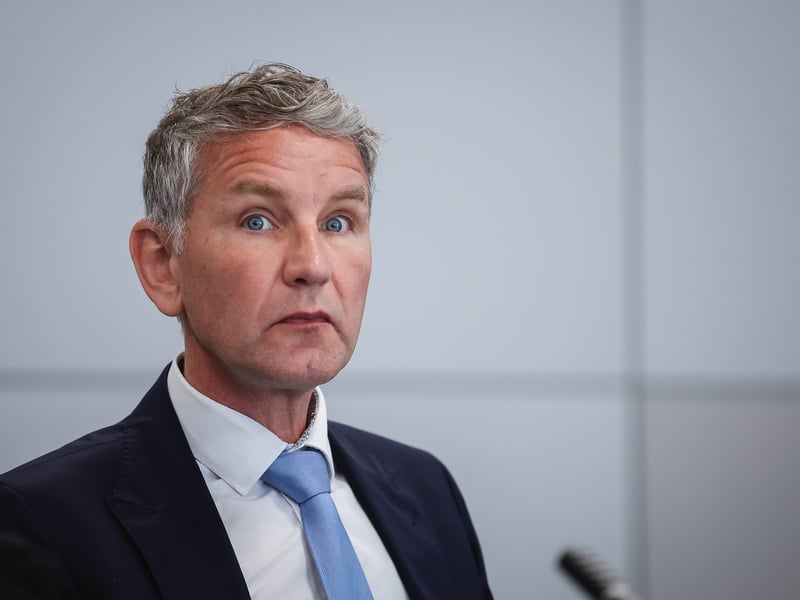
BERLIN (CN) — Though polling has long made the rise of Germany’s far right feel inevitable, September’s regional elections in the eastern German states of Saxony, Thuringia and Brandenburg served as a grim confirmation, particularly in the country’s east.
The far-right Alternative for Germany locked up a set of historic results, winning roughly one-third of the seats in all three legislatures. The party commonly known as AfD took in the most votes in Thuringia and achieved a ‘blocking minority’ in both Thuringia and Brandenburg, which guarantees it a measure of legislative power.
The party has forced Germany’s democratic parties into a complicated set of awkward coalition negotiations, which seem more likely to produce strange bedfellows than effective politics.
The AfD’s success now has it within striking distance of shifting democratic processes at the regional level — as demonstrated by a half-baked attempt by the party in Thuringia to circumvent electoral rules and insert its own parliamentary speaker. After more than a decade of talk about democracy being on the line, it’s truly being tested.
“Living in a democracy is a little bit like breathing oxygen. It’s obvious when it’s there, you only have a problem when it’s gone. So it’s very difficult for a lot of people to explain the necessity of something that was obvious until very recently,” John Morijn, a law and public policy expert at Berlin’s Hertie School of Governance, told Courthouse News.
Germany’s far right has been ascendant for years, taking advantage of tumultuous times to broaden its base.
“You can almost call it nonstop crisis mode. We had the pandemic, the war in Ukraine, inflation, etc. And these were all situations the far right effectively instrumentalized for their mobilizations,” Christoph Lammert, a counselor at MOBIT, a Thuringia based organization providing counseling and education against the extreme right, told Courthouse News.
“A milieu that readily shifts topics of interests has developed, and there’s a spectrum of people that are ready to take to the streets in protest almost regardless of what the specific issue may be,” he continued.
A long-brewing storm
In Germany’s east, AfD has proven particularly adept at mobilizing people. According to Maximilian Kreter, a political scientist at the Technical University of Dresden, many of the roots of the party’s regional success lie in resentment and inequalities born from Germany’s reunification in 1990.
“The west was always portrayed as the norm. It was expected that the East Germans would become like West Germans within a few years. This is also reflected economically in the promise of then-Chancellor Helmut Kohl that we’d see ‘flourishing landscapes’ in the east. That never happened,” Kreter told Courthouse News.
Workers in former East German states earn roughly 15% less than their western counterparts. The east is also significantly more sparsely populated than western Germany, and the 12.6 million easterners (compared to about 70 million in the west) often feel overlooked by national political parties.
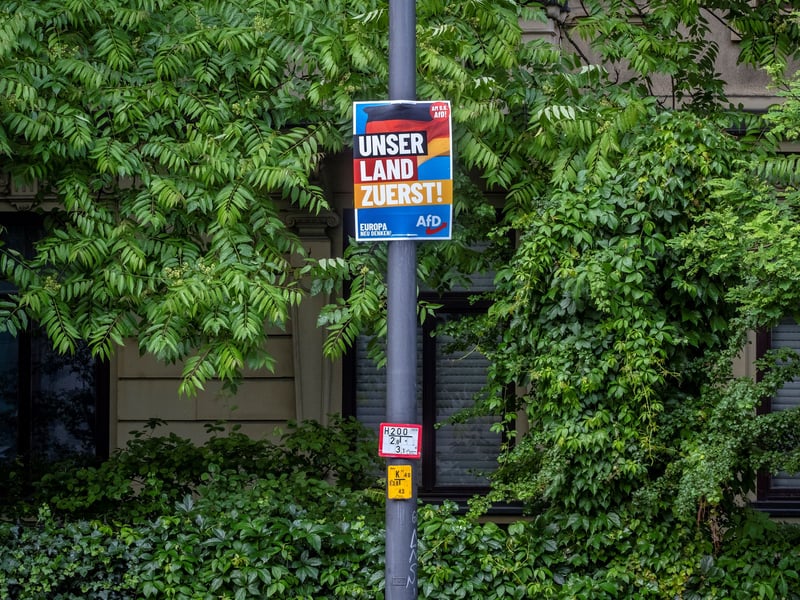
The AfD has asserted itself as a party rooted in the east, and has seen success even among groups not typically associated with far-right politics.
This includes young people. The AfD, which focused heavily on social media advertising during the campaign, was the most popular party of 16-34 year olds in Brandenburg.
“Young people grew up with the AfD in parliament. I think in this case we don’t have the classic political affiliations of right and left. And we’ve seen both a change and normalization in how the AfD is perceived,” Björn Schreiber, the head of a Brandenburg federation of youth-focused organizations, told Courthouse News.
And though the majority of young people in Brandenburg — as in Saxony and Thuringia — did not vote for the AfD, the political realities of the election, which saw a number of established parties fail to earn the required votes to stay in parliament and will make forming a coalition without the AfD difficult for the parties that did, will severely limit legislative options.
Germany’s far right hits postwar highs
“The state parliament election results are in part positive in that the AfD aren’t the strongest power in parliament. But the big picture demonstrates we have to talk about real challenges. We now only have four parties in Brandenburg’s parliament. Progressive parties like the Greens or the Left aren’t represented, and so we do worry that some of the progressive voices and goals of young people won’t be heard in the legislature,” said Schreiber.
The AfD’s blocking minority status also enables the party to influence budgetary debates, meaning funding for civil society organizations — like those of Schreiber or Lammert — is at risk, just as democratic programs are most vital.
For many though, the further success of the far-right represents an even closer threat.
“I also have a certain set of privileges, but as a minority, you also think that the consequences are going to be personal. I’m not belittling anyone who comes out to protest and show solidarity, but for many of them, it’s just a political outcome,” an international student of Indian origin at the University of Erfurt who preferred to remain anonymous for his own safety told Courthouse News.
The student arrived in Thuringia in 2021. The state’s branch of the AfD is led by Björn Höcke, one of the party’s most radical members. Höcke was fined earlier this year for using an illegal Nazi slogan in a speech.
“I didn’t know much about Thuringia before coming here. I maybe was a bit naive, I did not expect right-wing populism in Germany and thought it would be a place where immigrants are welcome,” he said.
While the student says hostility toward immigrants had “not been subtle” before, the elections serve as a confirmation that a significant minority of the state share these views.
Germany’s democratic parties have long maintained a ‘firewall’ against the far-right, refusing to work directly with the AfD. Though the center-right Christian Democratic Union of Germany has increasingly adopted anti-immigrant rhetoric that is reminiscent of the AfD, it is still unlikely to form a coalition the party at the state level. Things look different on smaller stages.
“The so-called ‘firewall’ does not really exist anymore. At the local level, for example, the AfD and The Third Path, a small extreme-right party, and the CDU have voted together against a pro-democratic project in the city council of Plauen (in Saxony). And it happens quite frequently that the CDU and AfD work together on the local level,” said Maximilian Kreter.
State votes could have far-reaching ramifications
The AfD’s electoral success, normalization and the rightward drift of other German parties will all put further pressure on the ‘firewall.’ On the national level, its looking increasingly unlikely that democratic parties will take last month’s elections as a serious wakeup call.
“If the reaction is paralysis, that’s very dangerous because none of the three governing parties are on the rise. So they’re sort of holding on to each other because they want to avoid falling harder than the others,” Hertie School’s Morijn said.
Germany’s ruling coalition, an often-awkward constellation of left-leaning Greens and Social Democrats and liberal Free Democrats, were all dealt harsh blows in state elections. The parties, already prone to infighting, appear more downtrodden than invigorated headed into next year’s federal elections.
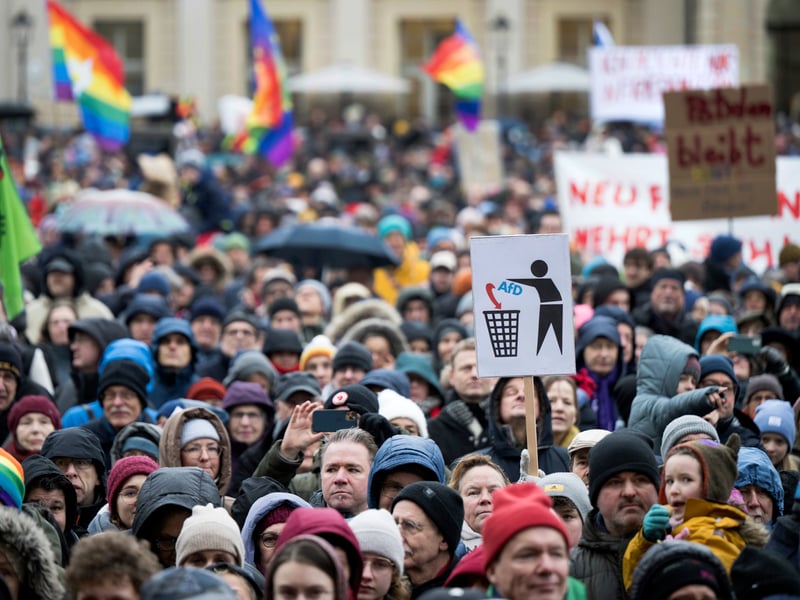
And though Germany’s established parties have struggled to hold the right’s rise, popular rejection of the AfD goes further than the roughly two-thirds of the electorate that voted against them last month. The beginning of this year was marked by a wave of mass pro-democracy protests following a January report about a secret meeting between members of the AfD, neo-Nazis and other elements of the far right that planned the forced migration of millions living in Germany.
“If you look at the political consequences of the mass pro-democratic demonstrations, which were the biggest protests in postwar German history, there was essentially no reaction. Or you even saw the opposite, a pivot towards AfD politics — which means ‘our people’ have the feeling they’re not being heard or really represented,” said Lammert, the MOBIT counselor.
If democratic parties continue to struggle to convert widespread rejection of the AfD into concrete political action, it could have repercussions that far outstrip Germany’s borders.
“If Germany continues to struggle democratically, if the right does come to power, we could see real international repercussions from this, given Germany’s economic and political influence. It would be dramatic,” said Morijn.
Instability in Europe’s biggest economy could spell trouble for much of the continent. But more immediately, there are plenty in Germany that already have to reckon with an emboldened far right.
“In my circles, at least, there’s a growing sense of wanting to move out of Thuringia, and as soon as possible,” the student said. Just how far the AfD can expand might dictate what part of the country still seems viable for those already feeling unsafe in the east.
 Follow @braneck
Subscribe to our free newsletters
Our weekly newsletter Closing Arguments offers the latest about ongoing trials, major litigation and rulings in courthouses around the U.S. and the world, while the monthly Under the Lights dishes the legal dirt from Hollywood, sports, Big Tech and the arts.