
 Search Articles


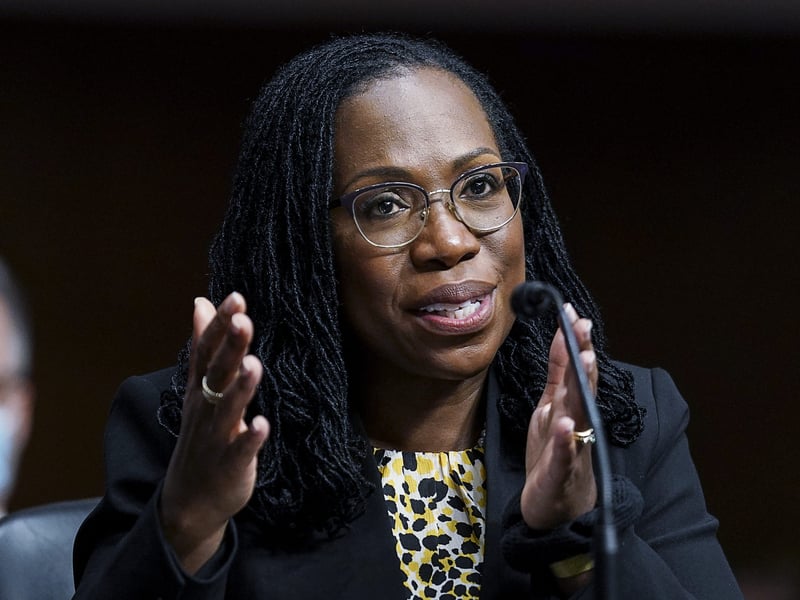
WASHINGTON (CN) — Two potential frontrunners for President Joe Biden’s nomination to the high court are getting attention for their union-related work leading to a possible split on the importance of adding a pro-union justice to the bench.
Since the Supreme Court’s oldest member Justice Stephen Breyer announced his plans to step down from the bench at the end of the term, widespread speculation has placed two women among the frontrunners for the coveted seat: Judge Ketanji Brown Jackson and Judge J. Michelle Childs.
Jackson — a current federal appeals court judge and Breyer’s former law clerk — appeared to some as a shoo-in as she was recently confirmed to the D.C. Circuit with some bipartisan support.
However, much discussion in Congress is focused on Childs who Biden nominated to the D.C. Circuit in December.
Childs’ support has in large part been driven by South Carolina Democrat Representative Jim Clyburn who was central to Biden’s commitment to nominating a Black woman to the court and helped him secure the presidency.
Clyburn argues that Childs will offer more diversity to the court besides her race and gender: her blue-collar background.
“We run the risk of creating an elite society,” said Clyburn, a graduate of South Carolina State University. “We’ve got to recognize that people come from all walks of life, and we ought not dismiss anyone because of that.”
Childs has also garnered support from some Republicans, including Senator Lindsey Graham, a member of the Judiciary Committee.
“We’ve only had five women serve and two African American men,” Graham said on Sunday on CBS’ “Face the Nation.” “So let’s make the court more like America. But qualifications have to be the biggest consideration, and as to Michelle Childs, I think she’s qualified by every measure.”
While Childs is gaining support from some Senators, progressive groups are coming out against her history with anti-union employers.
Joseph Geevarghese, executive director of Our Revolution, the largest grassroots funded progressive organization in the country, released a statement on Tuesday urging Biden to not nominate Childs.
“President Biden vowed to be the ‘most pro-union,’ ever, and it is imperative he keeps this campaign promise by nominating a pro-union Justice,” Geevarghese said. “It is highly concerning that some Democrats, including Rep. Jim Clyburn, are pushing for the appointment of South Carolina District Court Judge J. Michelle Childs, a former labor and employment lawyer who repeatedly worked on behalf of employers against unionization drives. Workers do not need another anti-labor Justice actively opposing the very labor protections this administration is working to uphold and expand.”
At the same time that progressive groups were criticizing Childs’ anti-union ties, Jackson penned her first opinion from the appeals bench that happened to back unions. Jackson’s ruling favored public-sector labor unions challenging a policy used under former President Donald Trump that limited the government’s responsibility to bargain with unions over workplace changes.
Jackson said the policy statement “falls short on explaining the purported flaws of the de minimis standard” and said it was inconsistent with the when describing the problem it sought to solve.
“It is not at all clear how the de minimis standard could both lead inexorably to the conclusion that all management decisions ‘no matter how small or trivial’ must be subject to bargaining and at the same time yield unpredictable results, including, by the FLRA’s own telling, many instances in which the duty to bargain was not triggered,” Jackson wrote. “Yet that is how the FLRA’s policy statement reads: the existing standard both purportedly subjects every minor decision to review and is unworkable because it is impossible to predict.”
Jackson’s ruling was applauded by the American Federation of Government Employees who called it a victory for all federal workers.
“These two decisions are a victory for all federal workers,” American Federation of Government Employees National President Everett Kelley said in a statement on Tuesday. “They highlight the extreme lengths to which the holdover majority on the Federal Labor Relations Authority will go in its attempts to bust unions, limit collective bargaining, and run roughshod over the law.”
“Today’s ruling strikes down the FLRA’s unfounded attempt to restrict a union’s right to bargain over changes affecting conditions of employment for the employees it represents,” Kelly continued. “As the court rightly recognized, the FLRA’s decision was arbitrary and capricious from the start.”
Jackson has previously blocked executive orders from Trump limiting federal workers rights.
While labor unions are important to the Democratic constituency, it is unclear if a potential nominee’s support of the groups will be a deciding factor in Biden’s pick for the high court or if Democrats in Congress would oppose a nominee solely on those grounds.
 Follow @KelseyReichmann
 Follow @kelseyreichmann.bsky.social
Subscribe to our free newsletters
Our weekly newsletter Closing Arguments offers the latest about ongoing trials, major litigation and rulings in courthouses around the U.S. and the world, while the monthly Under the Lights dishes the legal dirt from Hollywood, sports, Big Tech and the arts.