
 Search Articles


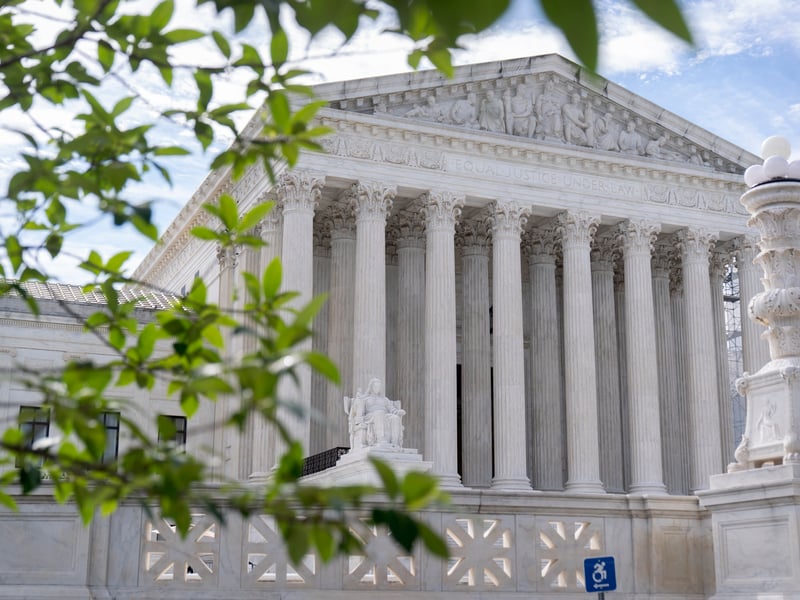
WASHINGTON (CN) — The U.S. Supreme Court appeared convinced Monday that a whistleblower could bring fraud claims against a Wisconsin telecommunications company for overcharging schools and libraries for internet services.
Wisconsin Bell tried to skirt the False Claims Act action by arguing that reimbursements under a federal assistance program for rural communities came from private funding, which is insulated from the law’s whistleblower suits but the justices didn’t seem sold on that argument.
“Everybody understands that the carriers aren’t doing this from the goodness of their hearts,” Justice Elena Kagan, a Barack Obama appointee, said. “Everybody understands that the carriers are doing it because of the U.S. government … That’s where the directive is coming from. That’s who’s responsible for schools getting what they’re getting.”
Richard Todd Heath sued Wisconsin Bell for misusing funds under the Schools and Libraries Universal Service Support program — known as the E-Rate program — which provides affordable telecommunication services to schools and libraries in rural and economically disadvantaged areas.
Under the program, providers are required to charge schools and libraries at the lowest customer rates available. In exchange, carriers can file reimbursement requests for the difference from the Universal Services Fund — which collects a percentage of telecommunication revenues for programs promoting the expansion of affordable phone and internet services.
Heath says that Wisconsin Bell overcharged hundreds of Indiana schools and libraries covered by the program for over a decade, claiming the company’s reimbursement requests amounted to false claims for payment.
A lower court initially rejected the case, but the Seventh Circuit revived Heath’s claims. Wisconsin Bell asked the Supreme Court to intervene, arguing that Heath’s suit was illegitimate because the False Claims Act only applies to federal funds and the E-Rate reimbursements came from private funding.
“The program could have been funded with public money and administered by a government agency, but the political branches chose private funding and a private administrator to prevent E-Rate money from being used to mask budget shortfalls and to avoid the Government Corporation Control Act,” Allyson Ho, an attorney with Gibson Dunn representing Wisconsin Bell, said.
Justice Amy Coney Barrett, a Donald Trump appointee, compared the E-Rate program reimbursements to a proctor distributing pencils for a test. The school provided the pencils, and the proctors acted as a conduit to get the pencils to students.
Justice Elena Kagan, a Barack Obama appointee, said the same would apply to sending food to a sick friend through Uber Eats.
“I think my friend would understand that the Uber guy was a kind of conduit it went through but I ordered the soup,” Kagan said. “And, here, the mandate is coming from the federal government in the same way.”
Kagan said without Congress and the Federal Communications Commission, the E-Rate program wouldn’t exist.
Heath said the E-Rate program administrator paid reimbursements on the government’s behalf, using money the government collects and controls to advance a federal program that the government created.
“FCC mandates, which the administrator must follow, specify who must be paid and how much they must be paid,” Tejinder Singh, an attorney with Sparacino representing Heath, said. “So, when the administrator paid Wisconsin Bell, that was the government providing money through its agent.”
The federal government said that Congress has used the Universal Service Fund like a bank account — something that wouldn’t be possible if the funds were private. Chief Justice John Roberts, a George W. Bush appointee, however, questioned how much weight should be given to Congress’ opinion.
“You’re asking us to put a lot of weight on the fact that Congress did something when the question is whether or not they had the authority to do it,” Roberts said.
Vivek Suri, the assistant to the solicitor general at the Justice Department, said the question before the court was statutory, and asked how to classify these funds to determine if they can be claimed under the False Claims Act. When Roberts still seemed unsure of his argument, Suri offered a more comfortable authority for the high court.
“Even if you think that what Congress has said isn’t good enough, I’ll turn to an even higher authority, this court’s precedents,” Suri said, resulting in laughter across the bench.
It didn’t appear that Suri’s humor would get the government everything it wanted, however.
“I understand you’d rather win big than win little,” Barrett said.
Heath and the government wanted the court to rule that all of the money in the Universal Services Fund belonged to the United States, but the justices seemed to prefer a narrower ruling on a portion — $100 million — that was more easily traced back to government coffers.
“If we go beyond the $100 million argument to the broader argument, there are potentially larger and a lot of potentially unintended consequences we have no idea about,” Justice Brett Kavanaugh, a Donald Trump appointee, said. “Just to save [the government] from doing the briefing on an argument that you think you’re going to win anyway, it seems pretty aggressive to me to go beyond the $100 million.”
 Follow @KelseyReichmann
 Follow @kelseyreichmann.bsky.social
Subscribe to our free newsletters
Our weekly newsletter Closing Arguments offers the latest about ongoing trials, major litigation and rulings in courthouses around the U.S. and the world, while the monthly Under the Lights dishes the legal dirt from Hollywood, sports, Big Tech and the arts.