
 Search Articles


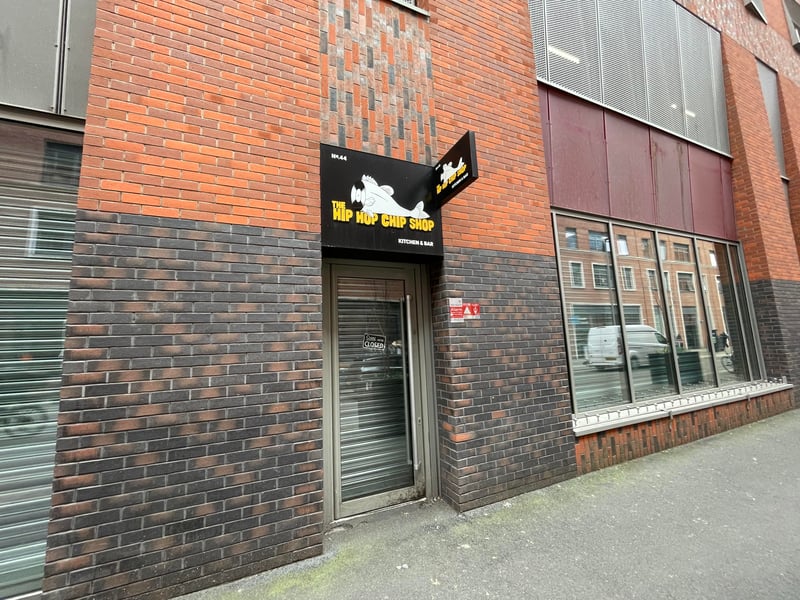
MANCHESTER, England (CN) — When local rapper and poet Conduit first heard about the Hip Hop Chip Shop, he thought it was a gimmick, just another case of gentrification and cultural appropriation.
“I honestly couldn’t have been more wrong,” said Conduit, who asked to go by only his stage name.
He realized his mistake when he stepped into the shop for the first time. “All my senses were just taken aback,” he said in an interview. “Seeing all the posters and pictures on the wall. The collections, photographs, custom designs. All the merch pieces and magazine covers.”
When Conduit first started releasing music around four years ago, he found it difficult to find venues that aligned with his old-school take on hip-hop. Other newer genres, like grime and drum and bass, dominated much of the British music scene.
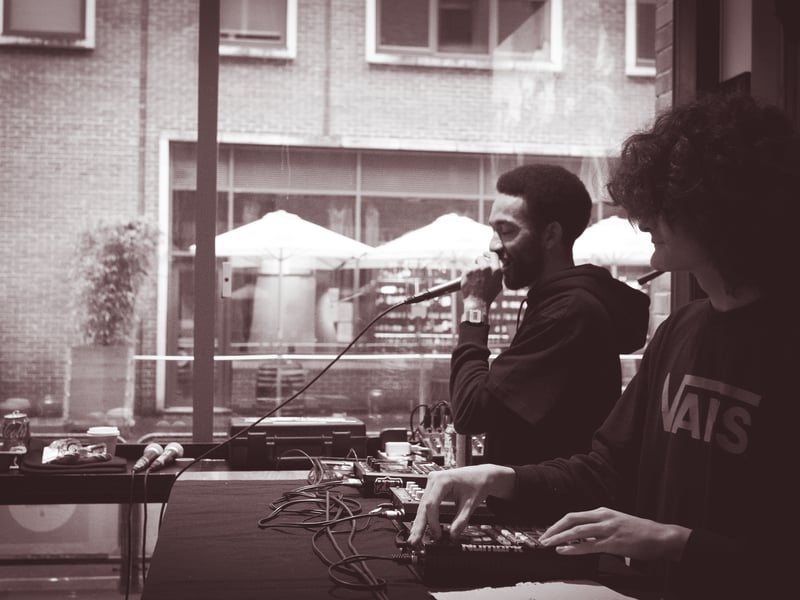
The Hip Hop Chip Shop was different. “When I walked into the shop, I said, ‘Where has this been all my life?’” he recalled. He started hosting a monthly event for beatmakers there, called WORKINONIT in honor of the late great Detroit beatmaker J Dilla.
“I know for a fact it has given rise to loads of producers, friendships, and collaborations,” Conduit added. As for the crowds who came to shows, they were “truly appreciative, tight-knit and always engaged.”
For more than a decade, the Hip Hop Chip Shop wasn’t just a spot for hungry fish-and-chip fans. It was also a stage for DJs, beatmakers and rappers, and a meeting point for Manchester’s hip-hop community.
Now, after years of serving up old-school beats and battered fish, those days have come to an end.
“We’re unfortunately joining the chorus of independent businesses in Manchester and beyond [that are] calling it a day,” the shop said in a statement on social media in February. Citing factors like Brexit, Covid and rising costs, the shop said it’d made the tough decision to close.

On Sunday, March 2, the Hip Hop Chip Shop held its last show. A DJ dropped a beat, and a rapper began spitting verses. Heads nodded and knees bounced to the bass.
Then the beat died out, and the music stopped for good. After 11 years in the game, the shop became the latest independent business and creative space in Britain to fall victim to economic forces.
The Hip Hop Chip Shop leaves a big legacy among fish and hip-hop lovers in Manchester.
“It excluded hip-hop, it radiated community, and [it] had banging fish and chips,” Conduit said. “It didn’t try to be anything; it just was what it was. That’s British. That’s hip-hop.”
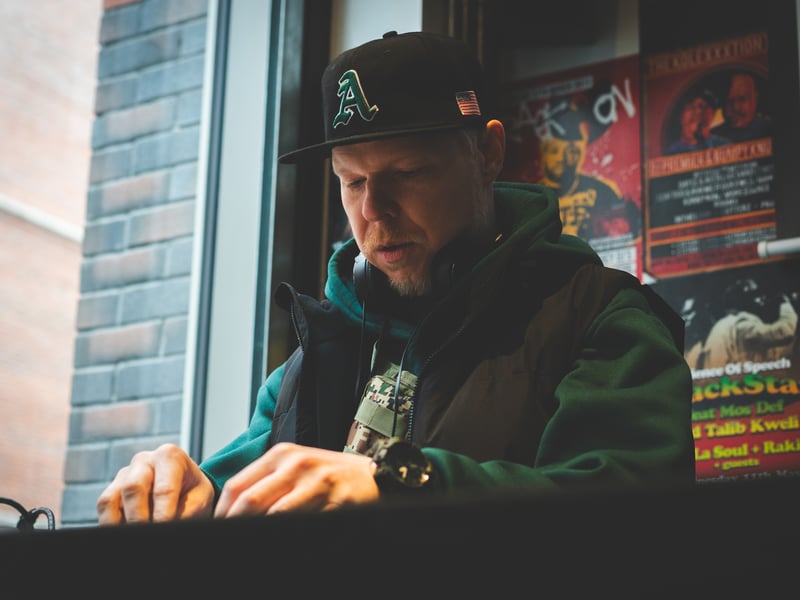
While Conduit hosted the WORKINONIT events, DJ Matt Kuartz was the main organizer. Like many, he was sad to see The Hip Hop Chip Shop close, calling it “a massive blow to the hip-hop community in Manchester.”
“It’s extremely sad, and it’s going to affect a lot of people,” Kuartz said in an interview. “It was a space where people could hang out, eat, drink and hold events such as launch parties and small gigs.”
WORKINONIT started in 2021. Coinciding with the easing of lockdown restrictions, it quickly became a success.
It “became one of those events that was equally balanced between performances, networking and building community,” Kuartz said. “I’ve met so many talented individuals that I now call friends.”
The Hip Hop Chip Shop wasn’t just renowned among hip-hop fans. In 2023, it was declared the second-best chip shop in the U.K. Oddly enough, the distinction came from gambling firm Betway, which analyzed data from Google, TripAdvisor and Instagram to make its rankings. A year later, Adam Richman, former host of the show “Man v. Food,” visited the shop to try the country’s national dish.
Even the accolades and loyal following weren’t enough to protect The Hip Hop Chip Shop from economic pressures driving closures across the country. British retail is in crisis, one industry study found, with almost 14,000 British retail shuttering in 2024.
That’s a 28% increase from 2023 — and researchers at the Centre for Retail Research expect 2025 will be even worse. Independent stores were hit the hardest by far, making up 84% of all closures last year.
From inflation to food insecurity, the U.K.’s current economic woes are hardly news. But while most attention has focused on bankruptcies of big chains like Ted Baker, WHSmith, and Homebase, the closure of small businesses don’t always make even the local paper.
In fact, as the Centre for Retail Research study shows, the loss of these businesses is central to the national retail crisis.
“Our independent retail businesses have seen dramatic change over the decades, with the growth of chain stores, the introduction of out-of-town retail and supermarkets, and the arrival of the internet all making their mark,” said Tina McKenzie, a policy expert at the Federation of Small Businesses, the country’s largest small-business trade group.
High Street — that is, the British version of Main Street — is up against a range of challenges, McKenzie explained in an interview, including “falling consumer spending, decreasing footfall, the effects of crime and antisocial behavior, as well as long standing impacts of things like rent and business rates.” Confidence levels were particularly low when it came to accommodation and food services, two categories that encompass the Hip Hop Chip Shop.
“Our retail centers are continuing to evolve, adapting to current challenges and our future needs,” McKenzie said. She called for “forward-looking and robust policy interventions” to address the issues, such as improving infrastructure around retail spaces.
When small businesses like the Hip Hop Chip Shop close, communities stand to lose more than jobs and tax revenue.
The chip shop and its events were a positive force in the lives of many Manchester residents, said Kuartz, the DJ.
“When we announced our last event, my inbox began to fill up with messages from people that attended regularly, thanking me and saying how it has had a massively positive impact on their mental health,” he said.
Beatmakers, Kuartz noted, can be introverts at heart. But “at WORKINONIT, it was amazing how extroverted the introverts become.”
“For some people, it gave them a sense of belonging,” he said. “It’s probably the first time they’ve gotten to meet other people that are just like them.”
Kuartz credits the shop’s founder, Jonathan “Ozzie” Oswald, for creating a welcoming space for hip-hop creators and fans.
“A lot of people got the opportunity to put on events at the shop that other venues wouldn’t have given the time of day,” he said. “It’s all because of Ozzie.”
It all started with a simple dream to create a space for Manchester hip-hop. That, plus satisfying the British public’s voracious appetite for fish and chips. When it came to the hip-hop fans who flocked here, “he was extremely accommodating,” Kuartz said of Oswald. That’s “something seldom seen with venue owners.”
The Hip Hop Chip Shop began as a street food stall in 2014, serving up fish and chips from a food truck shaped like a retro-style boombox. In 2017, it won its first award: “Food Trader of the Year” from the Manchester Food and Drink Awards.
In 2018, it opened a brick-and-mortar in Ancoats, a formerly industrial neighborhood in eastern Manchester. From those modest beginnings, the shop soon became a hub for hip-hop artists, fans and foodies.
The Hip Hop Chip Shop was hardly the first small business to become an unexpected cultural hub. “Shops, cafes, clubs, pubs and restaurants have been integral to formulating and shaping youth subcultures and subcultures more generally,” Matthew Worley, a professor of modern history at the University of Reading who specializes in British culture and politics, said in an interview.
In London, venues like The Flamingo Club popularized ska, and Rough Trade pushed the post-punk scene. In the north of England, Wigan Casino promoted Northern soul. Ditto for U.S. landmarks like Wax Trax! in Chicago and CBGB in New York. Such businesses “provide meeting places and connecting points, spaces for communicating, befriending and plotting,” Worley said. “They also serve as conduits for people — portals to discovering news things. They’re also safe harbors.”
Like Detroit or Nashville, Manchester is a city defined by its music. This drab industrial city in northern England has seen more than its fair share of world-class talent, including The Smiths, Joy Division and Oasis.
Through it all, venues like the Hip Hop Chip Shop have played an integral role in the rise of new artists. “I think of them as spaces for experimenting, be it with a band, a style of dress, or a way of being.” Worley said. “They enable human interaction, from which ideas spark and things happen.”
Case in point are musicians like Conduit, who became a mainstay at the Hip Hop Chip Shop’s events. In 2024, he launched his first EP at the venue.
“People came to support me who I hadn’t seen in ages,” he said. “It was a huge milestone for me that I could never, ever forget. I’ll be telling my kids, nieces and nephews about that night.”
Conduit got wistful as he reflected on his early days at the shop. “It was nothing but vibes, man,” he said. “I saw the wider community come together.”
With the closure of the Hip Hop Chip Shop, hip-hop fans and musicians in Manchester have been left without a meeting place.
Kuartz is looking for a new venue to host beatmaking events. “It needs to still have that same community foundation, but with a new format,” he said. “I just don’t want to leave people hanging, especially if it might potentially have a negative effect on their mental health.”
As small businesses across the U.K. continue to struggle, it remains to be seen if and when another Manchester shop can take on the Hip Hop Chip Shop’s mantle.
If one can, Conduit knows where he’ll be.
The legacy of the Hip Hop Chip Shop “became bigger than itself,” he said. “It brought people out of home by making them feel at home.”
“In terms of culture and community, you can’t ask for more than that,” he added. “We have to actively keep these things alive, as no one is going to do it for us. If anything, it looks like they’re doing the opposite.”
 Follow @jayfranklinlive
Subscribe to our free newsletters
Our weekly newsletter Closing Arguments offers the latest about ongoing trials, major litigation and rulings in courthouses around the U.S. and the world, while the monthly Under the Lights dishes the legal dirt from Hollywood, sports, Big Tech and the arts.