
 Search Articles


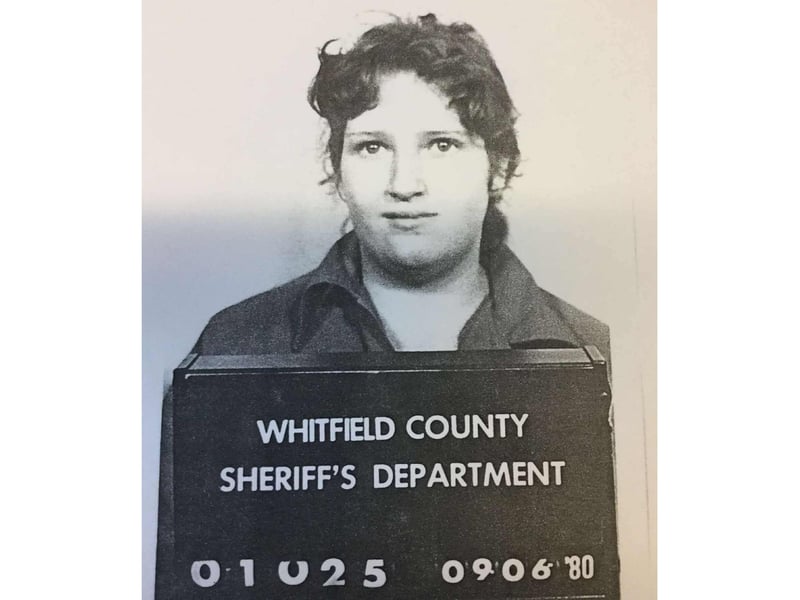
(CN) — Janice Buttrum got married at just 15.
Her groom was Danny Buttrum, a 26-year-old divorced dad with several prior convictions and a reputation as a violent drunk. He beat her on multiple occasions, court records would later show.
In 1980, when Janice Buttrum was 17, she joined her husband in a violent murder.
It happened at a motel in rural North Georgia. The victim was a young woman whom Danny Buttrum had assaulted. While accounts of the chaotic crime scene vary, Janice Buttrum admitted to stabbing her at least once. Initially sentenced to die, her sentence was commuted to life with the possibility of parole in 2017 amid watershed court rulings on juvenile offenders and a growing scientific understanding of how young brains work.
Fast forward more than 40 years, and Janice Buttrum is still in prison.
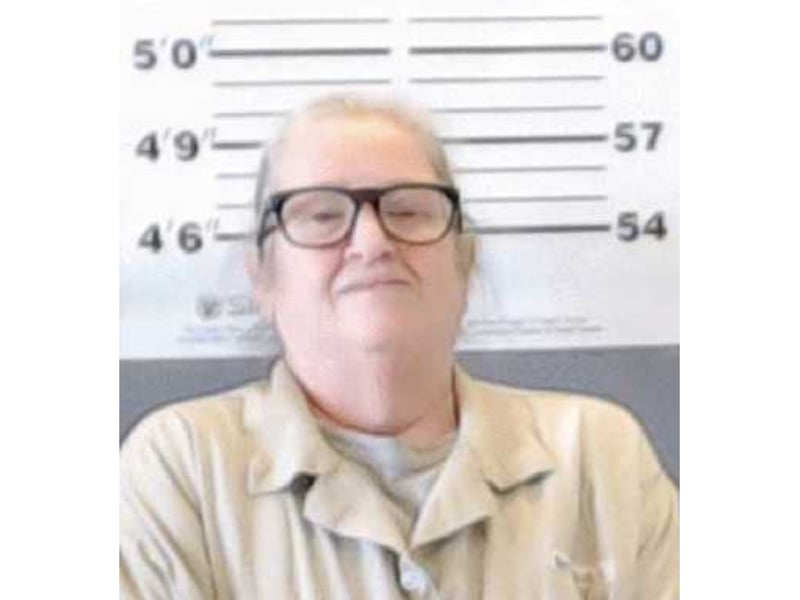
With greyed hair, blurred vision and labored breathing, the 62-year-old can no longer move around without the assistance of a walker. Although eligible for parole, she fears her cell may soon become her grave.
In March, Buttrum sued Georgia’s parole board. She argues board members are violating the due process and civil rights of juvenile lifers by not giving them meaningful opportunities to show they’ve matured since their crimes.
The parole eligibility of inmates like Buttrum has become “label-only,” said Mark Loudon-Brown, an attorney from the Southern Center for Human Rights who has represented Buttrum through the parole process.
“It’s hard not just on her, but hard on other people,” he said. “People who deserve parole all over the state are getting these arbitrary denials.”
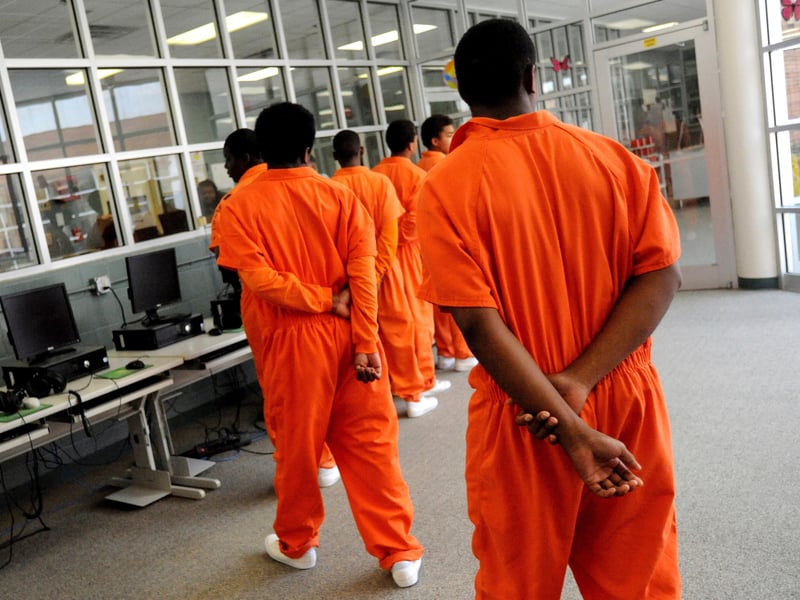
Buttrum is far from alone. Across the country, around 8,600 defendants are still serving decadeslong or even life sentences for crimes they committed as children. Advocates argue that’s not just wrong but a direct affront to Supreme Court rulings.
For more than 20 years, the Supreme Court has repeatedly stressed that juvenile defendants should be treated differently than adults. In the landmark ruling Roper v. Simmons in 2004, the justices banned the death penalty for juveniles.
In Graham v. Florida in 2010, the court ruled that juveniles couldn’t be sentenced to life without parole except in the case of homicides. In Miller v. Alabama two years later, they extended that rule for homicides as well, citing findings from neuroscience and developmental psychology. Finally, in Montgomery v. Louisiana in 2016, the court held that these sentencing rules should apply retroactively. Of young inmates, the justices wrote in Montgomery that “their hope for some years of life outside prison walls must be restored.”
The parole process can be notoriously opaque and political regardless of a defendant’s age. Board members often have little incentive to release inmates, as each new release provides potential fodder for political attack ads if that parolee reoffends. Prisoner rights groups have long complained that even with years of good behavior, parole often remains out of reach.
Advocates say that when it comes to juvenile prisoners, all this feet-dragging has left young offenders to die in prison even when they’re entitled to an opportunity for release.
“The enforcement of the Supreme Court mandates are uneven,” said Marsha Levick, co-founder and chief legal officer at the Juvenile Law Center, an advocacy group focused on child welfare and justice.
Levick co-authored amicus briefs in all four of the Supreme Court rulings that paved the way for greater juvenile protections.
These prisoners “should have the opportunity to demonstrate growth and maturity,” Levick said in a phone interview. And when parole boards and judges find reasons to keep them locked up — for example, by noting the violent nature of crimes committed as kids — she says “they are flouting exactly what the Supreme Court said they had to do.”
Levick acknowledges it’s a tough issue. “We’re dealing with people who killed people,” she said. “So, I am very much aware of the harm that they’ve caused.” But even when the circumstances of the crime are awful, she argues young offenders should still get a chance to mature and rehabilitate.
“With the notion[s] of justice and mercy, I think we need to rethink what those terms mean,” she said. “I think we can do better.”
As for Buttrum, she’s not let herself be defined by a life spent behind bars.
She’s stayed committed to self-improvement, taking advantage of virtually every opportunity made available to her by the Georgia Department of Corrections. She’s completed hours of on-the-job training and gained a spot in the Honor Dorm of Pulaski State Prison. She’s focused on her education, earning college credit towards a bachelor’s degree with a spot on the dean’s list at Mercer University.
The Georgia’s Board of Paroles has denied Buttrum release five times, citing her homicide conviction as the sole reason. “There’s nothing else she can do,” her attorney Loudon-Brown said. “She’s helpless, and it feels very arbitrary.”
Now in her 60s with her health in decline, Buttrum fears that despite decades of good behavior, she’ll die before she ever gets free. “Prison ages you differently than the free world,” Loudon-Brown said. “You grow older a lot faster.”
The United States is the only country in the world that permits sentences of life without parole for juvenile offenders. Twenty-two states still allow it, including Michigan, the state with the largest juvenile lifer prison population in the country.
Some states have passed reforms. Court decisions, including those from the U.S. Supreme Court, have also led to the release or resentencing of more than 1,000 prisoners. Still, advocates say that work remains.
In Georgia, where Buttrum is incarcerated, the juvenile lifer population has continued to grow as use of life without parole sentences has more than doubled since the 2012 Miller v. Alabama ruling. That’s according to data collected by the Campaign for the Fair Sentencing of Youth, a nonprofit working to end lengthy prison sentences for children.
The slow pace of progress puts into context “how punitive our criminal justice system is,” Levick said.
“We are addicted to incarceration,” she said. “I think for many people in America, no sentence is too long.”
Those who oppose life sentences for juvenile offenders argue they have plenty of evidence on their side.
For one thing, long sentences are not what most crime victims want. In polling by the reform group Alliance for Safety and Justice, crime survivors consistently say they prefer rehabilitating prisoners over punishing them. That’s true across gender, racial and political lines, and the margins only drop slightly for violent crime.
Rehabilitation is not only possible but likely. One study from Montclair State University in New Jersey found that juvenile inmates have exceptionally low recidivism rates, supporting the idea that the typical young offender “ages out” of crime. That tracks with current understandings in psychology, which holds that minors’ brains are impulsive, immature and still developing. In another study, researchers at Cornell University found that teenagers are particularly receptive to rehabilitation and early intervention.
For prisoners themselves, the incentives around parole work about the same for kids as adults.
“If you think you’re never getting out, you could potentially behave very differently than if there’s some opportunity for release,” explained Monique Khumalo, a child clinical psychologist and owner of Youth Trauma & Justice Solutions, a consulting firm that works with child-facing agencies.
Like Levick, she thinks reforms have been held back by Americans’ fixation with punishment. Juvenile experiences in the prison system are often highly correctional. They don’t get a chance to learn better behavior, let alone “to see the fruits of that,” she said. That limits the ability of young inmates to process trauma, grow beyond their crimes and become better people.
“Ultimately, we have to recognize that if we really want this to be a better system, we have to be able to consider when people can safely reenter communities," Khumalo said.
When judges and juries hand down stiff sentences to young people, they may feel they are giving justice to victims.
Often, they’re perpetuating a cycle of trauma and violence. As many as 90% of juvenile offenders have been victimized themselves, experts say. That includes Janice Buttrum, who endured abuse even before she got married at 15. According to one social worker who testified at her trial, her childhood was the most neglected they had ever seen.
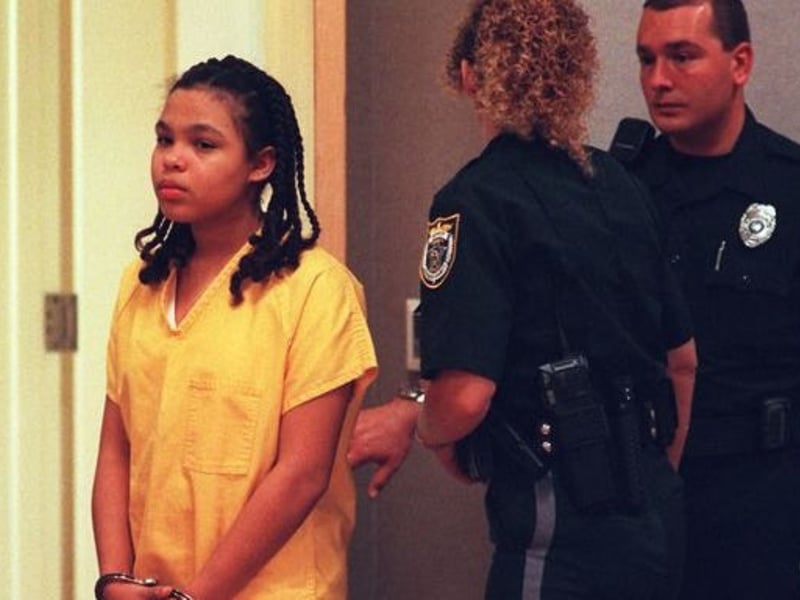
In 1999, when Catherine Jones was just 13 years old, she went to prison for killing her soon-to-be stepmother.
She now works for the nonprofit Campaign for the Fair Sentencing of Youth. In an interview, Jones described herself as a broken, abused and frightened child when she went to prison. Adults in her life had ignored clear signs of sexual abuse, she said.
“Prison was designed to break and destroy,” Jones said of her experience as a young teenager in adult prison. She questioned whether the average American has “any idea what these children experience while they’re in there.”
In prison, Jones said her abuse and trauma only continued. She credits her ability to break free from the system to mentors and the chapel at her prison. “It was their love and devotion to me, and their ability to see me and not what I had done but to see me as another human being that deserved to be loved and respected.”
Now a 40-year-old mother, Jones argues juvenile lifers could be powerful tools in the fight against youth violence — if they ever see release. She added: “I know that one person and their love and commitment to someone has the ability to transform not only that person’s life, but every person’s life that comes in contact with them.”
Buttrum is hardly the only juvenile lifer seeking justice in the courts over her continued incarceration.
In another case, from Alabama, two people serving life sentences for crimes they committed as minors have also cited good behavior to challenge their imprisonment. Levick is representing them. In a federal lawsuit filed against prison officials in April, they argued they were denied release despite clear growth and maturity.
One plaintiff, Cayce Moore, has spent 35 years in prison.
During that time, he’s taken more than 50 rehabilitation classes and educational programs and has not received a single disciplinary write-up. He helped start a literacy program for inmates, served in various leadership positions and even became an electrical instructor at the prison trade school.
The other plaintiff, Jimmy Shane Click, has also not received a single disciplinary write-up over more than 30 years in prison.
He has received more than 60 certificates for prison educational programs, including for college courses. He attended prison trade school, where he maintained a 4.0 GPA. After more than 24 years serving in the prison chapel, he even became ordained.
Both Moore and Click say they were denied parole after hearings that lasted just minutes.
In Moore’s case, he says he even showed parole board members that he had a job and home waiting for him. Meanwhile, in Click’s case, a retired judge and former commissioner of the Alabama Department of Corrections both voiced support for his release. The three governor-appointed board members purportedly based their denials on the seriousness of the murder offenses and negative input from the victims. But that explanation doesn’t hold up to scrutiny: Click says he met with the victim’s family and expressed profound remorse, while Moore says both a prosecutor and the victim’s family had explicitly agreed not to oppose his parole.
In Georgia, the state parole board is made up of five governor-appointed members serving seven-year terms.
The Peach State is one of just three states where board members do not hold hearings when considering parole. In 19 other states, parole hearings are not always open to the public, according to the Marshall Project, a criminal-justice watchdog.
Reached for comment on Buttrum’s case, a Georgia Parole Board spokesperson said they could not comment on specifics, including the ongoing lawsuit.
“Everything they do is secretive,” her attorney Loudon-Brown said. “I can’t appear in person. She cannot appear in person. All we can do is submit written materials and hope they’re considered.”
In its legal response to Buttrum’s suit, the board points to a recent ruling from the 11th Circuit, which it argues dooms Buttrum’s claims.
That April opinion followed a nearly identical suit brought by a class of 170 juvenile lifers in Florida, all of whom have served at least 26 years. A circuit panel determined that because about 1% of the juvenile-lifer population obtained release yearly, the state’s parole system was not a “sham.”
In Georgia as in Florida, the parole process involves investigators who review an inmate’s history and situation to make parole recommendations. But the decision is ultimately up to the parole board, and these investigations — like much of the parole process — are largely opaque.
All of it creates a Kafkaesque situation in which inmates and their attorneys feel helpless about release, Loudon-Brown said.
“Whether it’s Buttrum or any of my other clients, it always says the same one line,” he said: “We’ve decided you haven’t served enough time given the circumstance of your crime.”
 Follow @Megwiththenews
Subscribe to our free newsletters
Our weekly newsletter Closing Arguments offers the latest about ongoing trials, major litigation and rulings in courthouses around the U.S. and the world, while the monthly Under the Lights dishes the legal dirt from Hollywood, sports, Big Tech and the arts.