
 Search Articles



AVIGNON, France (CN) — Every day, Gisèle Pelicot walks into the Avignon Judicial Courthouse to confront the 51 men charged with raping her, including her ex-husband, Dominque Pelicot, who invited them into their bedroom after drugging her.
Dozens of strangers applaud her entrance. They offer flowers and gifts when she leaves. During the proceedings, people line up — sometimes for hours — to watch a livestream from a converted courtroom set up next door.
This week marks the end of testimony in the case that has shocked France. Judges will enter into roughly one month of deliberation before delivering a verdict Dec. 20. On Tuesday, Gisèle Pelicotspoke to the court for the last time.
“The scar will never heal,” she said. “Never, never will the scar heal.”
Gisèle Pelicot waved her right to anonymity to make this trial public. She wanted to shift the blame from the victim to the perpetrator, and as a result, the trial has become the most high-profile mass rape case in recent memory.
In previous hearings, Gisèle Pelicot has said she is “completely broken.” On Monday, her son David Pelicot said that when he found her after learning the news, he found a “lost woman.”
That’s not what people coming to the courthouse see. In their eyes, she is the opposite: an unstoppable force of immeasurable bravery with the potential to change the world.
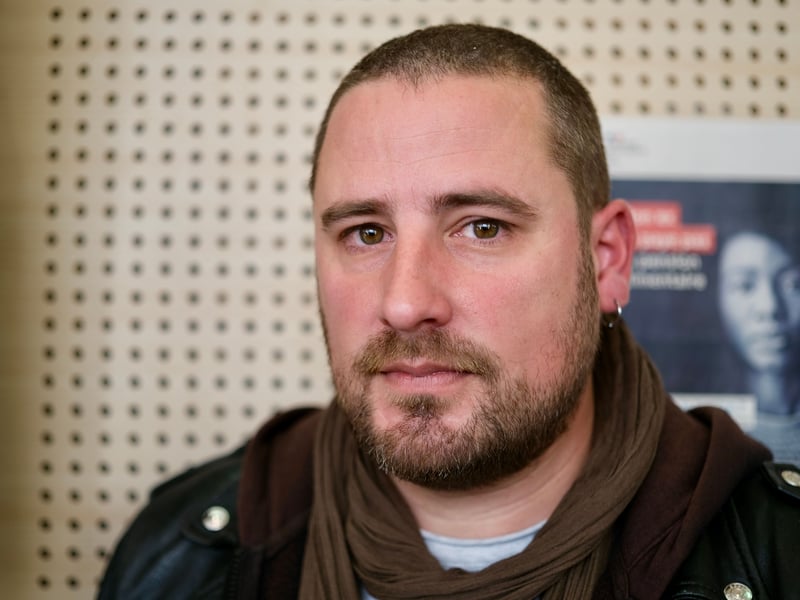
Raphael Hiessler
Age: 41
Profession: Unemployed
On Tuesday, Raphael Hiessler stood near the front of the line of the retransmission room, waiting for a space to open up inside. Spots are limited; there were only 10 available to the public. But he was one of the dozens waiting anyway.
“I want to understand who these people are and how we got here,” he told Courthouse News. “I came to show support to Gisèle Pelicot, to show she’s not alone, and to try to understand what’s happening in society.”
Throughout the course of the past few weeks, as the 51 men charged with rape take the stand, a predominant theme has been that of the “normal man.” This case has shown that a rapist isn’t necessarily armed, hooded men with criminal records, lurking in alleyways. The diverse profiles of the accused show that rape can also be, and often is, committed by normal people of all ages and professional backgrounds.
“What surprised me is that I could recognize myself in some of them; many are normal and have the same job and upbringing,” Hiessler said. “It’s extremely troubling that they’re similar to me and they could do this.”
Hiessler hopes that in the end, this case will change the definition of violence against women, and move society forward.
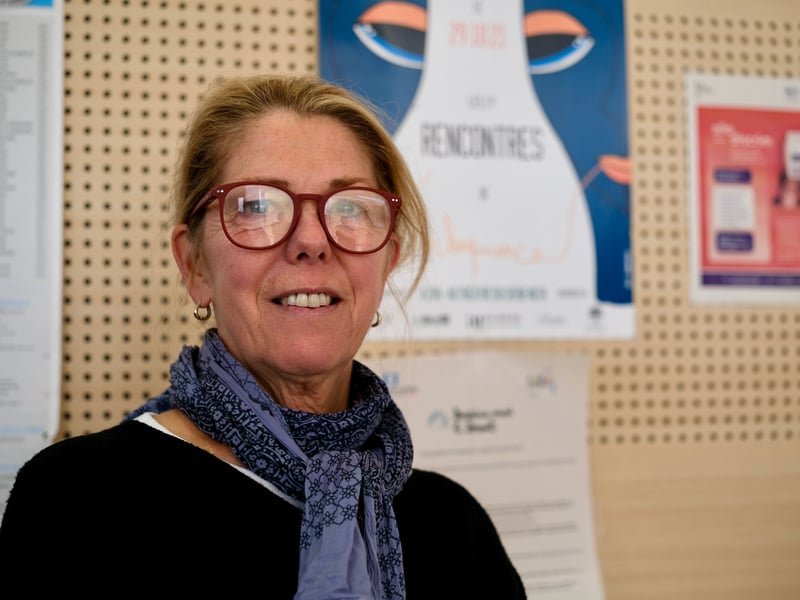
Natalie La Pointe
Age: 64
Profession: Retired
Natalie La Point and her husband, Eric Saint John, are traveling around France from Canada for an extended period. They came to watch the trial on Tuesday.
The case shocked her; especially the vastness of it, and that so many of the men thought that assaulting Gisèle Pelicot was OK because her husband had agreed.
Throughout the trial, dozens of men who took the stand argued they were manipulated by Dominique Pelicot, and maintained that they did not rape Gisèle Pelicot despite not having her consent. When questioned on why they didn’t seek consent — even in cases where Gisèle Pelicot was loudly snoring during the assaults — the response was often that her husband told them it was OK, and she was in on it. For many, that was enough.
“The sheer amplitude of the number of accused, the darkness of it all — how people do not seem to be able to control their impulses, putting everything aside for whatever they’ll get out of it that second,” La Point told Courthouse News. “The lack of control and sheer entitlement that one needs to behave like this.”
La Pointe hopes the Pelicot case encourages parents to think more deeply about how they educate their sons.
“The woman, for a person that I’ve never met, is someone that I admire — I have supported her 100%, and that’s why we’re here,” she told Courthouse News.
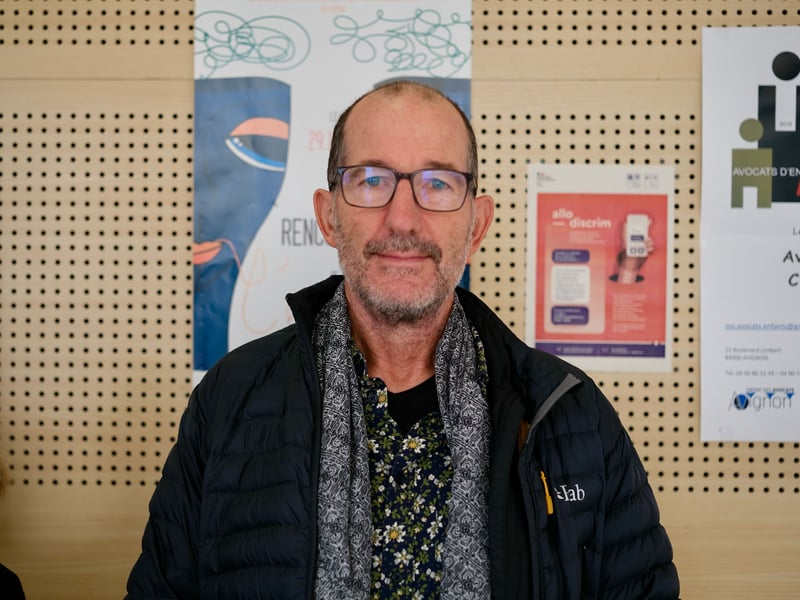
Eric Saint John
Age: 66
Profession: Retired
Eric Saint John, La Point’s husband, had a cynical view of humanity to begin with. But this case has proven shocking nonetheless.
“I have remarkably low expectations about people,” he told Courthouse News. “But what I hope is that France can sort out a better legal definition of consent.
When Dominique Pelicot orchestrated rapes of his wife, he meticulously documented them in thousands of photo and video files — ultimately leading investigators to the men charged with rape. However, there are at least 30 more who have not been identified.
“We go to Mazan regularly and it’s hard not to imagine this, and how the town has been changed,” he said, naming the nearby town of 6,000 people where the Pelicots lived. “They have Christmas markets and that’s all colored by this — I don’t know how you look at neighbors anymore.”
“I’m surprised at the number of men who, for whatever reason, think it’s an experience that you’d want to have — that, I find disturbing,” he said.
Saint John admires Gisèle Pelicot’s bravery in taking the trial public. In his view, if she didn’t, this case would have slipped under the rug, and people would have ignored it.

Isabelle Cornille
Age: 63
Profession: Retired
Isabelle Cornille has come to watch the trial four or five times to support Gisèle Pelicot. She said that it’s a completely different experience to watch the livestream of the trial in the courthouse itself, versus reading media reports of the proceedings.
“At the level of ‘what is consent,’ it’s a trial that brings up a lot of issues, and I hope it clarifies things,” she told Courthouse News.
Consent has been central to the trial. Though the vast majority of the men charged with rape have admitted that Gisèle Pelicotwas not in a state to give consent, it has still proven a gray area. Some say that Dominique Pelicot gave consent for her, and many argue that although she didn’t explicitly agree, the acts they committed were still not rapes.
“Maybe it’s a bit utopian to think that this will change things, but if it makes people think, that’s good,” she said. “To ask for it to be public was very courageous on her part.”
Cornille stood at the front of the line alongside her daughter.
“I don’t know her at all, if she’s a feminist or an activist, but I think she is a feminist activist — and not only that, but someone who can make society move forward,” she said.

Ryian
Age: 25
Profession: Law Student
Ryian, a 25-year old law student who asked to withhold his last name, traveled to Avignon from Paris specifically to watch the trial. He has been studying the case in school and wanted to see how it works from a legal perspective.
“I think it’s a way to support her and show that society has to change, and men have to support her and show that we’re not all the same,” he told Courthouse News. “We have to show that society needs to evolve, and the definition of rape needs to change faster and more severely.”
In class, Ryian has been examining the issue of chemical submission — drugging someone for a criminal purpose — and the different profiles of the men charged with rape.
“I’ve been engaged in fighting against violence on women for a long time, and on rapes,” he said. “This trial showed me that we need to work harder and be more engaged — the road is very long and there’s a lot of work to do.”
Ryian is appalled that most of the men didn’t admit their actions during testimony.
“It wasn’t credible at all what they did — they enormously minimized their acts, for me the worst is not to own up to it,” he said. “I hope they’ll all be convicted, but with serious convictions — but also that we can see society change its view on rape culture.”
“For a small courtroom, to see so many people, we see that this has made an impact,” he said. “It has impacted people’s spirits — everyone feels united.”
 Follow @lilyradz
Subscribe to our free newsletters
Our weekly newsletter Closing Arguments offers the latest about ongoing trials, major litigation and rulings in courthouses around the U.S. and the world, while the monthly Under the Lights dishes the legal dirt from Hollywood, sports, Big Tech and the arts.