
 Search Articles


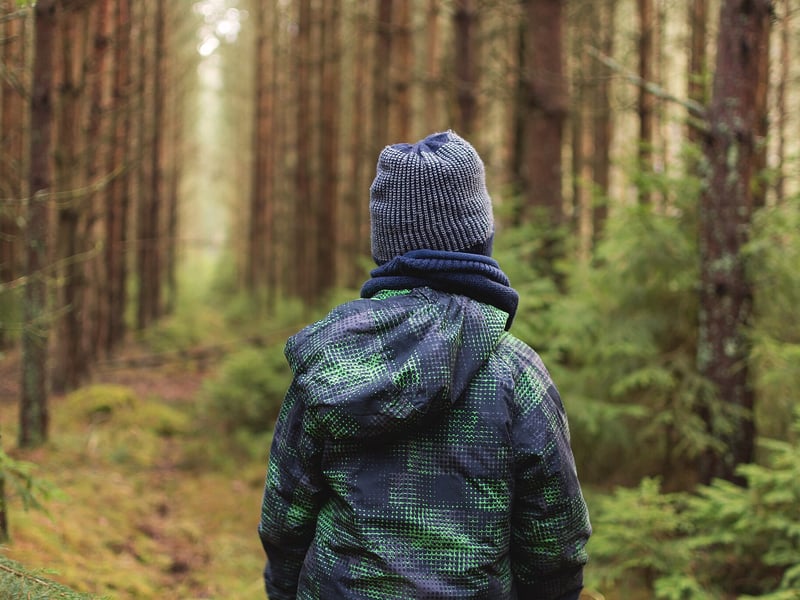
Imagine for a moment that you’re suddenly stuck in a post-apocalyptic forest. Would you be able to cobble together a car, a phone or a house?
Probably not.
If I was starving and stuck in the middle of a herd of steers, it wouldn’t occur to me to take a bite out of one of those animals. Even if it did, I wouldn’t know how to go about it. How would I kill the thing? How would I make a hamburger? Where’s the ketchup?
The more advanced society gets, the less almost all of us are capable of re-creating it from scratch.
So what happens when artificial intelligence actually gets intelligent enough to be reliable? Are we going to stop learning and thinking because we don’t have to? Is that a good thing or a bad thing?
It seems bad but AI appears here to stay, so doesn’t it make sense to use it? Why should we be scandalized if it’s used properly and the results aren’t completely wrong? Is it because we’re afraid we could get stuck in a post-apocalyptic intellectual forest?
I know — I ask a lot of questions. These popped up in my brain after I ran across a recent ruling by a federal judge in Massachusetts who denied a preliminary injunction request to raise a student’s grade in a class from a C-plus to a B.
I’m imagining a high school kid who is either extremely embarrassed by his parents or a future lawyer. I’m not sure which.
It seems the kid and another student supposedly cheated on a history project by copying stuff from an AI application. The kid’s discipline was one day of detention and a temporary rejection from the school’s National Honor Society. He also had to start over on the project.
The parents then sued the school’s teachers, school officials and the Town of Hingham School Committee claiming their child “will suffer irreparable harm” if he doesn’t get his one grade slightly up before he has to apply for college.
The result, so far, has been a 47-page ruling from the federal judge, “voluminous written evidence,” and a hearing for testimony from the kid, the teacher and the superintendent of schools.
They haven’t even gotten to the trial yet.
It didn’t help the student’s case that he didn’t review what he was copying, and the AI’s first and third footnotes cited imaginary books.
(Side note: Is it so bad that AI makes things up? Politicians do it all the time and we elect them. Perhaps reality should be a flexible concept.)
All of this, of course, would never have happened in the good old pre-AI days when we had to go to the library to copy out of books that teachers hadn’t read.
Now here’s the best part of the student’s story: He got caught because a website flagged his project as AI-generated.
A computer snitched on another computer.
We’re all on our way to becoming obsolete.
Subscribe to our free newsletters
Our weekly newsletter Closing Arguments offers the latest about ongoing trials, major litigation and rulings in courthouses around the U.S. and the world, while the monthly Under the Lights dishes the legal dirt from Hollywood, sports, Big Tech and the arts.