Search Articles



BROOKLYN (CN) — Like many dissidents, Xu Jie said he faced years of persistent harassment from the Chinese Communist Party after he was caught participating in student protests in Beijing’s Tiananmen Square in 1989.
His involvement sparked decades of abuse from the nation’s police force, causing him to be arrested more than 100 times, he told a federal jury in Brooklyn earlier this week.
“He said that in China, you can be arrested for no reason,” defense attorney John Carman said Tuesday, referencing Xu’s testimony. “Well, ladies and gentlemen, welcome to China.”
Carman’s client, 64-year-old Lu Jianwang, otherwise known as Harry Lu, is standing trial on charges that he opened a secret police station in New York City — in part to spy on dissidents like Xu on United States soil.
But Carman argued Lu was unjustly arrested by a “shocked and embarrassed” FBI, blindsided and sent scrambling by a 2022 report that found the Chinese Communist Party had been operating a network of secret surveillance stations around the world. According to Carman, Lu was simply at the wrong place at the wrong time when federal authorities raided his community center in Manhattan’s Chinatown, within spitting distance of the FBI’s own field office at 26 Federal Plaza.
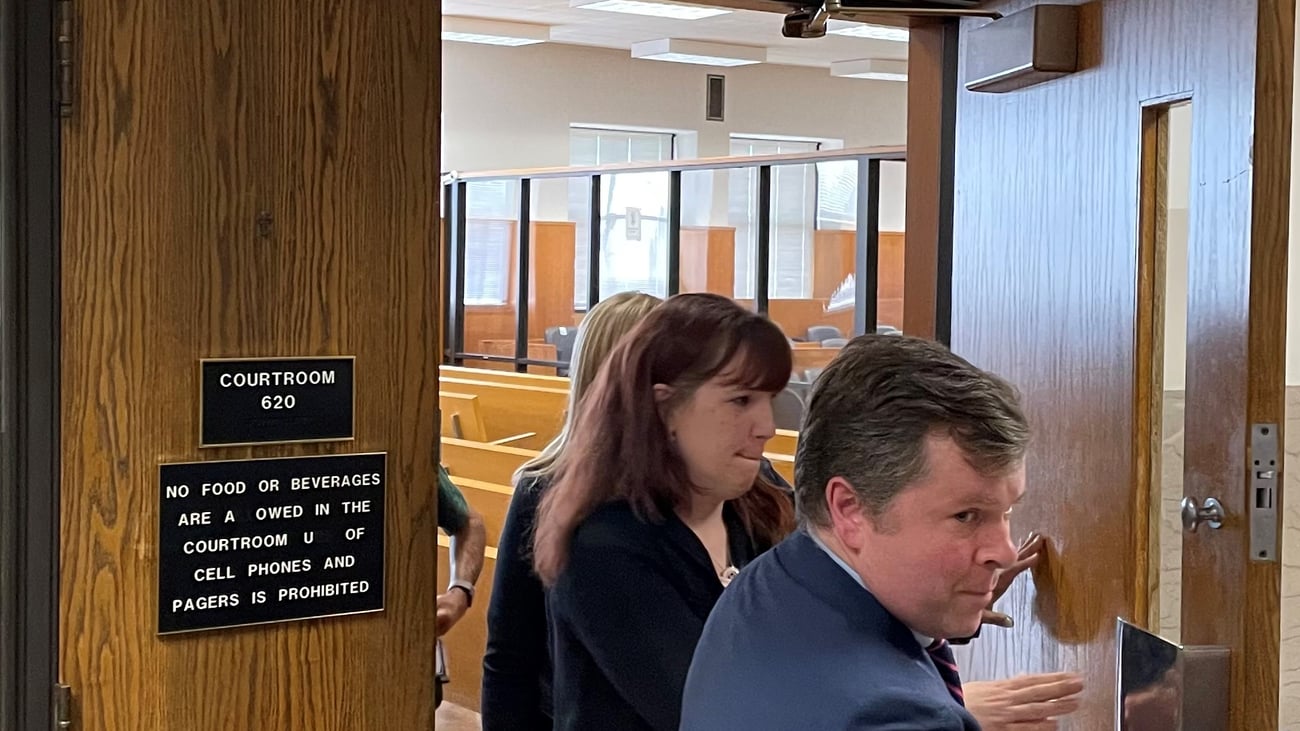
Lu is the leader of the America Changle Association, an organization that represents the interests of Chinese Americans in the city. He’s a popular man in the community; the courtroom was jam-packed with supporters.
Throughout the weeklong trial, the defense admitted Lu was communicating with Chinese officials — not to spy on dissidents, but to help Chinese citizens renew their driver’s licenses remotely. It was a social hub for people in Chinatown, Carman said; the conference table doubled as a ping pong table.
“This isn’t ‘Spy Time,’ this isn’t international espionage,” Carman said. “This is license renewal.”
Prosecutors say it was more sinister than that. They showed jurors text messages from Lu, in which he appeared to be chatting with a Chinese law enforcement official about Xu and other possible dissidents.
“Just help me verify this person exists, thanks,” the official texted Lu in 2022.
Assistant U.S. Attorney Antoinette Rangel, who delivered the government’s closing on Tuesday, argued these communications didn’t happen by accident.
Lu had more than 50 contacts from China’s Ministry of Public Security saved to his cellphone, Rangel said. He also had several photos with those officials during a trip to China, purportedly to attend a conference commemorating the opening of the so-called “Overseas Police Service Stations.”
“The defendant opened the station to bring the Chinese government’s operations to American soil,” Rangel told the jury.
Lu is charged with conspiracy to act as an agent of a foreign government and acting as an unauthorized agent of China. He also faces a charge of obstruction of justice, stemming from deleted messages on the Chinese text app WeChat between him and his supposed handler at the Ministry of Public Security.
Prosecutors say Lu did so after investigators raided the station in 2022.
“When the defendant learned that the FBI was onto him … he destroyed evidence,” Rangel said.
A 2022 report from Spain-based nonprofit Safeguard Defenders found that the Chinese government operates dozens of covert police outposts around the globe to keep tabs on dissidents.
Hofstra University law professor and Chinese government expert Julian Ku, who testified last week at the trial, suggested these stations are unofficial arms of the Ministry of Public Security, China’s “gigantic” law enforcement agency that encompasses every police officer in the country from the local level to federal.
“An estimated 2 million people work for it,” Ku said.
Lu, who has pleaded not guilty to all charges against him, was charged alongside co-defendant Chen Jinping. Chen pleaded guilty at the end of 2024 to working as an unauthorized agent of the Chinese government and has not yet been sentenced.
Jurors will start deliberating Lu’s fate on Wednesday.
 Follow @Uebey
 Follow @uebey.bsky.social
Subscribe to our free newsletters
Our weekly newsletter Closing Arguments offers the latest about ongoing trials, major litigation and rulings in courthouses around the U.S. and the world, while the monthly Under the Lights dishes the legal dirt from Hollywood, sports, Big Tech and the arts.
Additional Reads
 Fake police lights result in conviction May 12, 2026