
 Search Articles


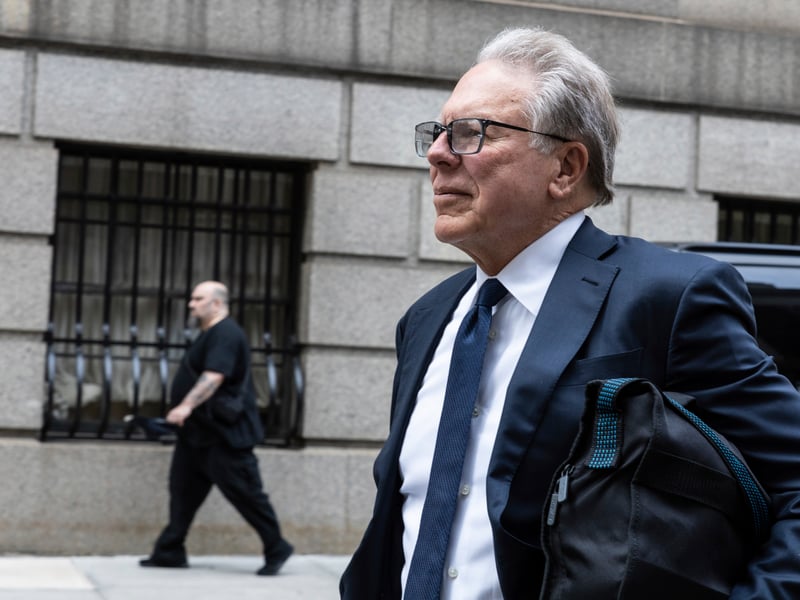
MANHATTAN (CN) — Leadership at the National Rifle Association appears to be in disagreement as to how it should move on from the legacy of its controversial former frontman Wayne LaPierre, according to testimony this week in the second phase of the NRA’s civil trial in New York.
In February, a jury ruled that LaPierre misappropriated $5.4 million of the NRA’s donor funds — which he spent on luxury trips, designer suits and other personal expenses — while the NRA did nothing to stop or punish him. He was ordered to pay back more than $4 million to the NRA for the errant spending.
But freshly elected NRA President Bob Barr testified in New York state court on Tuesday that there are currently no plans for the organization to collect the money from its former chief executive.
“That does remain a question,” Barr told the court.
It remains a point of frustration for members of the NRA board who are eager to move past LaPierre’s now-marred legacy of financial mismanagement. Board member Jeff Knox told Courthouse News last week that he was disappointed to see the NRA has failed to condemn LaPierre’s actions publicly.
“I’ve seen nothing from leadership that they’re attempting or putting the dominoes in place to try to recoup the money from him,” he said.
Knox’s grievances made it to the courtroom this week when state attorneys pulled up an article he wrote accusing Barr of kneecapping the NRA’s new chief executive, and LaPierre’s successor, Doug Hamlin.
“Doug hit the ground running with some good moves right out of the gate,” Knox wrote. “But his actions have been limited by President Bob Barr and several influential members of the board.”
Barr wrote a letter to the NRA board in response to Knox’s story, which he claimed was filled with “falsehoods and, sadly, outright lies.”
But Hamlin and Barr appear to disagree on several key issues, according to their respective testimonies this week.
The New York attorney general called each to the witness stand to show how their differences could hold the NRA back from making progress toward financial transparency — part of the state’s broader goal of having a court-appointed monitor oversee the NRA and banning LaPierre from its leadership for life.
For instance, Hamlin was more willing to criticize LaPierre’s reign during his testimony.
“Mr. LaPierre breached the trust of the NRA and its members, correct?” state attorney Monica Connell prodded.
“Yes,” Hamlin replied, adding that he agreed LaPierre’s conduct placed the NRA in a “very difficult decision” and was partly responsible for the group’s declining membership.
Meanwhile, Barr maintained that LaPierre discharged his duties to the NRA in good faith, conceding that LaPierre may have made a few mistakes along the way. He took issue with the attorney general calling LaPierre “corrupt” following the verdict against him in February.
“I believe it was, shall we say, a mischaracterization,” Barr testified Wednesday.
Hamlin and Barr also appeared to be on different pages about the NRA’s potential relocating of its headquarters, a move that Knox and other board members believe should only be done with significant input from the board.
Hamlin, who previously ran the NRA’s in-house publishing arm, testified that he wasn’t even aware of the NRA’s intent to sell its Virginia headquarters until a few weeks ago. He axed plans to sell the Fairfax property when he took the NRA’s reins earlier this year. Barr testified that he thought Hamlin’s decision was “rushed.”
Still, these disputes weren’t an issue for Barr, a former U.S. representative from Georgia, who told the court he could “absolutely” work productively with Hamlin. “It’s similar to working in the Congress,” Barr said. “You have disagreements.”
Hamlin and Barr are in rhythm on one key item: fighting the attorney general’s bid for an independent monitor to oversee the NRA’s finances. Hamlin, who said he saved the NRA millions by moving its publishing in-house, was insistent during his testimony that the group was taking all necessary steps to get its spending and compliance under control.
“We’re turning it around, sir,” Hamlin told New York Supreme Court Justice Joel Cohen.
Cohen ultimately will make the call. He’s overseeing this bench trial, the second phase of the NRA’s New York legal battle, which serves to determine the injunctive consequences for LaPierre’s and the NRA’s violations of state nonprofit law.
If the New York attorney general gets her way, the court would appoint a financial monitor for three years, which would cost the NRA between $960,000 and $1.6 million, according to Tuesday testimony from the state’s third-party oversight expert Jonny Frank.
The trial is expected to last roughly two weeks.
 Follow @Uebey
 Follow @uebey.bsky.social
Subscribe to our free newsletters
Our weekly newsletter Closing Arguments offers the latest about ongoing trials, major litigation and rulings in courthouses around the U.S. and the world, while the monthly Under the Lights dishes the legal dirt from Hollywood, sports, Big Tech and the arts.