
 Search Articles


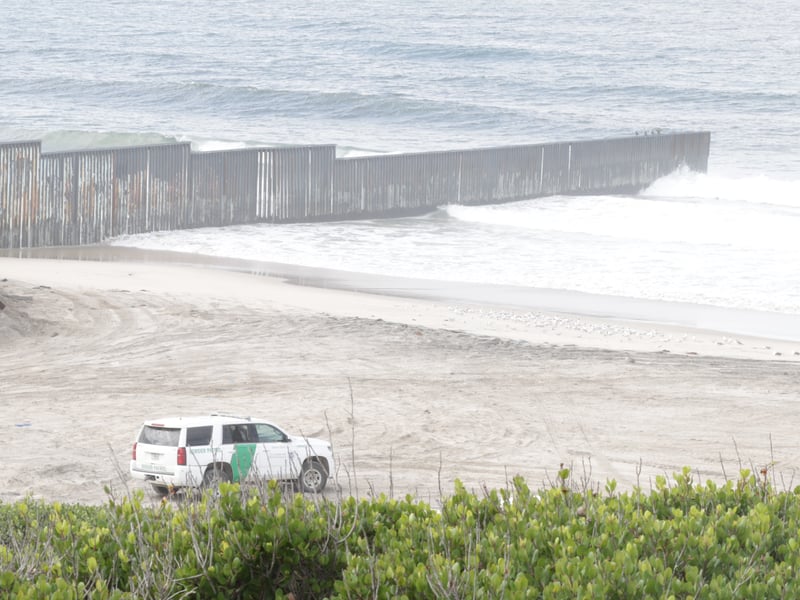
SAN DIEGO (CN) — A federal judge indicated Wednesday that he’ll allow a company operating a dysfunctional federally funded wastewater treatment plant that dumps sewage and toxic chemicals into the Tijuana River and the Pacific Ocean to duck a lawsuit brought by environmental groups in San Diego.
In a massive 637-page lawsuit filed last year, San Diego Coastkeeper and the Environmental Rights Foundation claim that Veolia Water North America-West and the U.S. section of the International Boundary and Water Commission have discharged billions of gallons of raw sewage, pesticides, sediment and heavy metal industrial pollutants like DDT and PCBs into southern San Diego County in violation of both the Clean Water Act and the sewage treatment plant’s operating permit.
The International Boundary and Water Commission was created in 1944 to resolve water and pollution issues in rivers and streams shared by the U.S. and Mexico. Under the treaty, the plant is supposed to treat wastewater from Tijuana and then dump it into the Pacific Ocean.
But decades of underfunding and deferred maintenance have led to escaped sewage that has caused ecological disaster in the Tijuana River and coastal wetlands and devastating health effects to people living nearby in Imperial Beach and San Ysidro because of aerosolized bacterial pathogens from the sewage, the plaintiffs claim.
Veolia moved to dismiss the case, citing the lack of specific factual claims, the lack of a presuit notice served to the company and the fact that the San Diego Regional Water Quality Control Board — which has the authority to enforce the permit — is not a named defendant.
Although he did not make or sign an order during Wednesday’s hearing, U.S. District James E. Simmons Jr. said he intends to grant Veolia’s motion next week.
The ruling won’t “be a fatal issue” to the case, the Joe Biden appointee said, because IBWC will still be a defendant and he’ll give the environmental groups leave to amend their complaint.
San Diego Coastkeepers attorney Patrick McDonough said after the hearing that they will try to amend their complaint to add Veolia back on as defendants and try to move forward with discovery with IBWC once Simmons issues a ruling.
“It’s frustrating,” McDonough said. “Here we are almost nine months after filing the complaint we haven’t gotten a single document from either defendant.”
During that time the defendants have been making repairs to the plant and other infrastructure while local activists and politicians have been wrangling more congressional funding for it, which is what the lawsuit is about, McDonough said. But it has the potential to moot their claims in court while there are still more repairs needed, including to canyon collectors, which divert water into the plant from the canyonlands on the border.
“We think this litigation and our other efforts are spurring action on behalf of IBWC more stringent than it would be without this case,” he said.
During the hearing, Andrew Coghlan, an attorney with the Environmental Defense Section of the U.S. Department of Justice, gave an update on two out of five canyon collectors and a pump station that broke down and spilled sewage into the Pacific Ocean last week.
Even though it hasn’t rained in the region recently, a road construction project in Tijuana is causing sediment to build up and lead to the failure of the two canyon collectors and pump station, Coghlan said.
IBWC doesn’t have a target date to get the pump station back up and running, Coghlan added. When it broke last year though, it took IBWC about three times to get it back up and running.
“It’s important that we move forward with this case since it is affecting people’s quality of life,” Simmons said.
In their complaint, the environmental groups ask the court to enjoin the defendants from discharging waste and comply with their permit and a court order assessing monetary penalties against Veolia.
Last year residents of Imperial Beach filed a similar suit against Veolia. They accuse the company of negligence, public and private nuisance, trespass and battery, violations of health and safety laws, and failure to comply with the permit that allows the plant to operate.
According to the residents, Veolia’s actions caused a toxic slurry that killed a bottlenose dolphin and eradicated the river’s fish population. It also led to hundreds of days of closure of city and state beaches, foul noxious odors throughout the city and gastrointestinal diseases among residents — some who’ve ventured into the waves and others who’ve simply breathed the air, they say.
Subscribe to our free newsletters
Our weekly newsletter Closing Arguments offers the latest about ongoing trials, major litigation and rulings in courthouses around the U.S. and the world, while the monthly Under the Lights dishes the legal dirt from Hollywood, sports, Big Tech and the arts.