
 Search Articles


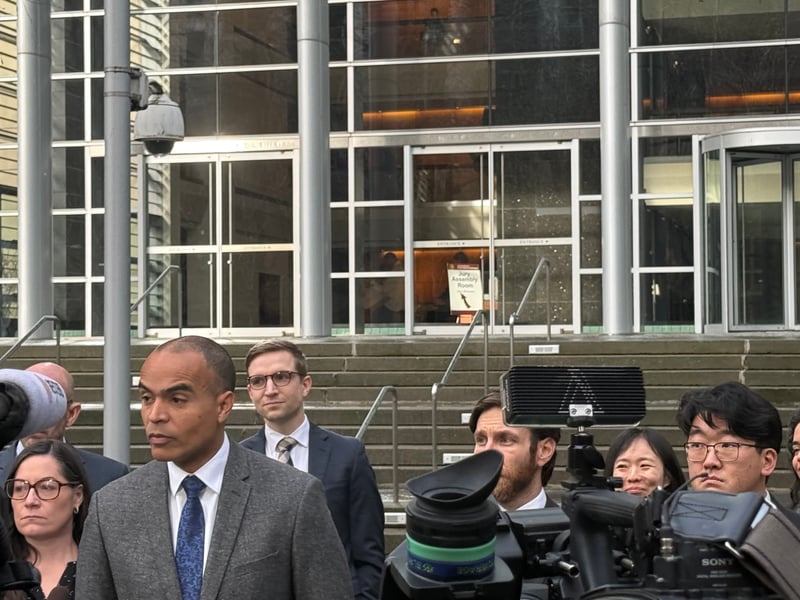
(CN) — The state of Washington sued Fidelity Information Services on Thursday to prevent the company from sharing the personal data of over 1 million Washington residents who signed up for food assistance benefits with the federal government, which it says will be used for immigration enforcement.
In its lawsuit, Washington said the government contractor plans to violate its contract with the state by disclosing “highly sensitive” information to the U.S. Department of Agriculture, which in turn will share the information with agencies like the Department of Homeland Security for deportation purposes.
“People who need food assistance for themselves and their families should be able to trust that their data will be protected and kept private,” Washington Attorney General Nick Brown said in a press release.
The state claims its contract with Fidelity specifically prohibits the company from disclosing this information without “the express written consent” of the Washington State Department of Social and Health Services.
“If a contractor fails to uphold the terms they’ve agreed to, we will hold them accountable under the law,” Brown said.
Washington asked the court for an order blocking Fidelity from potentially disclosing confidential information to the USDA and a declaration that unauthorized disclosure would constitute a breach of contract. The state is also claiming violations of the Washington Consumer Protection Act and the Washington Law Against Discrimination.
Washington’s lawsuit concerns applicants and recipients of two food assistance programs — the federally funded Supplemental Nutrition Assistance Program and the state-level Food Assistance Program — otherwise known as SNAP and FAP.
Households of mixed immigration status are common among SNAP and FAP recipients. Though there are citizenship requirements to be eligible for the program, noncitizen parents of citizen children are permitted to apply for SNAP on their children’s behalf since they are minors.
However, signing up for the program involves providing the applicant’s name, address, date of birth, Social Security number, income, employment status and other information to determine eligibility.
Washington says it is concerned that the information could expose these families to “serious harm” if disclosed to federal agencies.
Washington also criticized the USDA for supposedly attempting to bypass state-level regulations by requesting the information from its contractor instead of going through the state agency, calling it a “deliberate end-run” to obtain sensitive information otherwise protected by state and federal confidentiality laws.
The state said the government was prioritizing “deportation quotas over due process.”
Washington state first started working with Fidelity in 2015, when it contracted the company to deliver payments from its programs to beneficiaries, including SNAP and FAP payments. As a result, Fidelity was entrusted with program participants’ information, including their names, Social Security numbers, addresses, dates of birth and other personally identifiable information.
On May 6, the USDA messaged the directors of state agencies that oversaw SNAP benefits, claiming that an executive order by President Donald Trump gave it the authority to “consolidate SNAP data” from the agencies.
On May 9, Fidelity informed Washington state’s Department of Social and Health Services, or DSHS, that it intended to turn over the personal data and transaction data of SNAP cardholders to the USDA.On May 14, Washington told Fidelity that its agency did not consent to the disclosure of confidential information to USDA.
Although the state said Fidelity initially pledged that it would refrain from sharing the data until authorized, it has recently failed to respond to repeated requests from the state asking for confirmation that it would not turn over any data without express consent.
In an email sent to the state of Washington on Thursday, obtained by Courthouse News Service, Fidelity said it still valued its relationship with the state.
“As Washington DSHS considers its response options, I wanted to reiterate that FIS has not provided the requested SNAP data to USDA/FNS and does not intend to do so without your express instruction,” the email read.
The state is asking for a temporary restraining order, a preliminary injunction and a permanent injunction enjoining Fidelity from providing Washington’s food benefits data to the USDA.
In 2024, more than 1.2 million people received benefits through Washington’s food assistance programs, and at any given time, around 11.5% of the state’s population is enrolled in a food assistance program, approximately a third of whom are children.
As of July 23, 2025, the USDA has removed promises that the federal government would not use SNAP applicant information for immigration enforcement.
This case was filed in Thurston County Superior Court in Olympia, Washington.
Subscribe to our free newsletters
Our weekly newsletter Closing Arguments offers the latest about ongoing trials, major litigation and rulings in courthouses around the U.S. and the world, while the monthly Under the Lights dishes the legal dirt from Hollywood, sports, Big Tech and the arts.