
 Search Articles


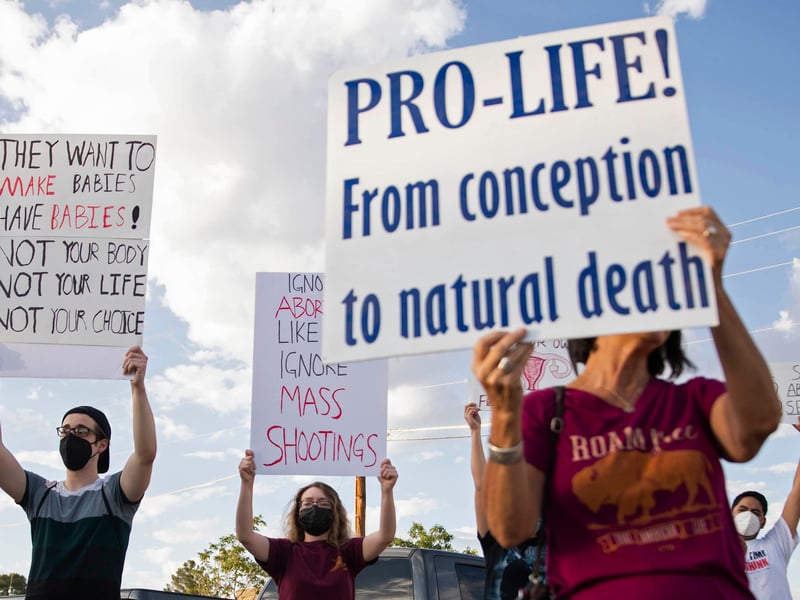
(CN) — The Cedar Park Assembly of God of Kirkland, Washington, returned to the Ninth Circuit Thursday to seek relief from a state law requiring abortion access in employer-sponsored health care plans.
“Cedar Park had an abortion-free, fully insured health plan, then Washington passed a new law,” said Rory Gray, attorney with Alliance Defending Freedom representing the church.
That law is the Washington Parity Act, or SB 6219, enacted in 2018. It requires, among other things, that health plans offer coverage for abortions if maternity care is covered and cover contraceptives. Cedar Park asserted that it hasn’t been able to find a health plan that excludes abortion coverage since the law went into effect.
Cedar Park sued the state in 2019, arguing the Parity Act violated the First Amendment and calling it “the kind of deliberate religious persecution that our country was founded to prevent.”
U.S. District Judge Ben Settle, a George W. Bush appointee, dismissed the suit, finding Cedar Park lacked standing because a different insurer had offered it an abortion-free health plan, but a Ninth Circuit panel composed of three Bush-appointed judges overturned that ruling in 2021.
Back in the lower court, Settle again ruled in favor of the state, finding the Parity Act didn’t favor secular conduct. The church challenged that ruling, landing before a three-judge panel of the Ninth Circuit in 2024. The panel — composed of U.S. Circuit Judges Susan Graber, a Bill Clinton appointee; Lucy Koh, a Joe Biden appointee; and Consuelo Callahan, a Bush appointee — determined last year in a 2-1 ruling that the church lacked standing to sue.
However, the panel withdrew its opinion four months later and scheduled a rehearing. The same panel on Thursday grilled both sides for a second time.
“Do you claim that the law burdens your religious exercise independent of any demonstrable physical impact on the cost of your health plan?” Callahan asked Cedar Park.
To the church, the religious objection centers on facilitating abortion and being involved in abortion coverage, something the church earlier described as sinful and immoral.
“This is all about what Cedar Park is required to do with this law,” Gray said.
“What are they required to do? They’re not required to do anything,” Graber remarked. “The statute governs insurers; it doesn’t directly require anything of your client.”
But Cedar Park disagrees. It currently offers a health plan through Kaiser Permanente and argues that while there is a comparable plan that excludes abortion services offered by Providence, that plan is not available to Cedar Park due to various restrictions.
Graber noted the restriction is not due to the statute, but rather simply a decision made by the insurer.
“The problem is traceable to the statute,” Gray said. “There is no evidence whatsoever that Cedar Park can access an abortion-free plan. In fact, all evidence is to the contrary.”
Also at play is a 1995 conscientious objection statute that states “no individual organization with a religious or moral tenet opposed to a specific service may be required to purchase coverage for that service or services if they object to doing so for reasons of conscience or religion.”
Regulators clarified in 2019 that Washington state employers could opt out of abortion coverage in their health plans, but the insurance companies still had to cover abortions.
Cedar Park argued the state has made exceptions to the law in situations where applying the abortion-coverage rule would violate a federal funding condition.
“The state is picking winners and losers based on whether it thinks the interests are important or not,” Gray said. “And it’s saying that Cedar Park’s religious autonomy, and its free exercise objections just don’t reach that level.”
The state rejected the premise of the church’s argument.
“Cedar Park is not required to pay for or provide insurance coverage for abortions under Washington law,” said Tera Heintz with the Washington Attorney General’s Office. “There is no coercion by the state here, either directly or indirectly, on Cedar Park.”
Koh questioned the state about how it makes exemptions to the rule based on federal funding issues. Washington argued the exemption in such cases is very narrow and limited to the minimum extent necessary to comply with federal funding conditions.
But Koh continued to prod, questioning whether those determinations include discretion.
“The point is there has been no court that has ever held that a state must be willing to sacrifice all of its Medicare funding in order to have a generally applicable law, that would be an astounding conclusion,” Heintz said. “It’s a defined exemption, it’s not a guise for religious discrimination.”
Callahan questioned whether, if the court finds Washington’s law is neutral, any state could enact legislation that “clearly adopts the secular viewpoint of a highly contested moral and religious” issue, so long as the law doesn’t mention religion.
Washington argued the answer is no. Further, it argued Cedar Park is capable of solving the problem itself by switching insurers.
“Washington law is not forcing Kaiser Permanente into offering that type of policy, and so this whole notion of the indirect facilitation that Cedar Park has talked about is really purely hypothetical to this case,” Heintz said.
But Callahan wasn’t convinced the answer was so clear-cut, noting the church has argued that there isn’t an affordable comparable option — a notion raised again by the Cedar Park.
“The idea that we have to accept a plan that is hundreds of thousands of dollars more a year or isn’t fully insured and exposes the church to millions of dollars of risk is just not a legally sound argument,” Gray said.
The Ninth Circuit panel did not indicate when it would rule.
Subscribe to our free newsletters
Our weekly newsletter Closing Arguments offers the latest about ongoing trials, major litigation and rulings in courthouses around the U.S. and the world, while the monthly Under the Lights dishes the legal dirt from Hollywood, sports, Big Tech and the arts.