
 Search Articles


WASHINGTON (CN) — While traveling to Eastern Europe on Tuesday, Secretary of State Antony Blinken made a call to Africa.
Picking up the phone for the first time in more than a year was General Abdel Fattah al-Burhan, commander of the Sudanese Armed Forces. It was their first conversation since shortly after the start of violence between Sudan’s army and the Rapid Support Forces paramilitary in an ongoing power struggle between Burhan and the RSF’s Lieutenant General Mohamed Hamdan Dagalo.
Blinken urged the general to come to peace talks that the United States and Saudi Arabia are restarting, hoping to bring an end to more than a year of violence, atrocities and ethnic cleansing.
Less than 24 hours later, Burhan’s No. 2 announced the army won’t be attending, saying: “Whoever wants us to should kill us in our country and take our bodies there.”
It was Washington’s latest failed attempt to end the conflict — a sign, experts say, of Sudan’s lack of priority on the world stage.
“We’re looking at the implosion of a country 10 times greater than what we’ve seen in Libya, and somehow we’re willing to accept that,” said Cameron Hudson, a former CIA intelligence analyst for Africa now working at the Center for Strategic and International Studies.
Sudan, a country of nearly 50 million people, has been mired in a civil war since April 2023. The conflict broke out on the cusp of a western-brokered transition to democracy between the Sudanese Armed Forces and the Rapid Support Forces, who were for a time running the country together.
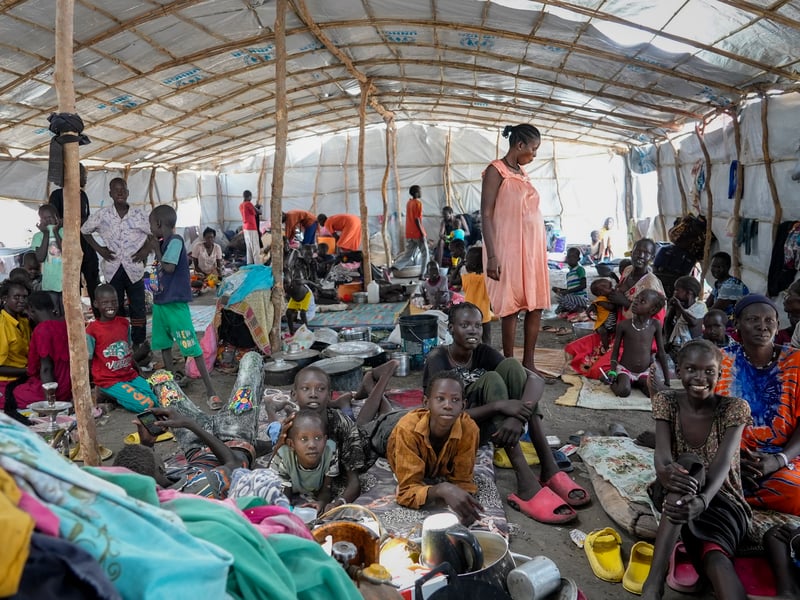
The United Nations estimates at least 16,000 people have been killed. That number is likely far too low because the country is too dangerous for international observers.
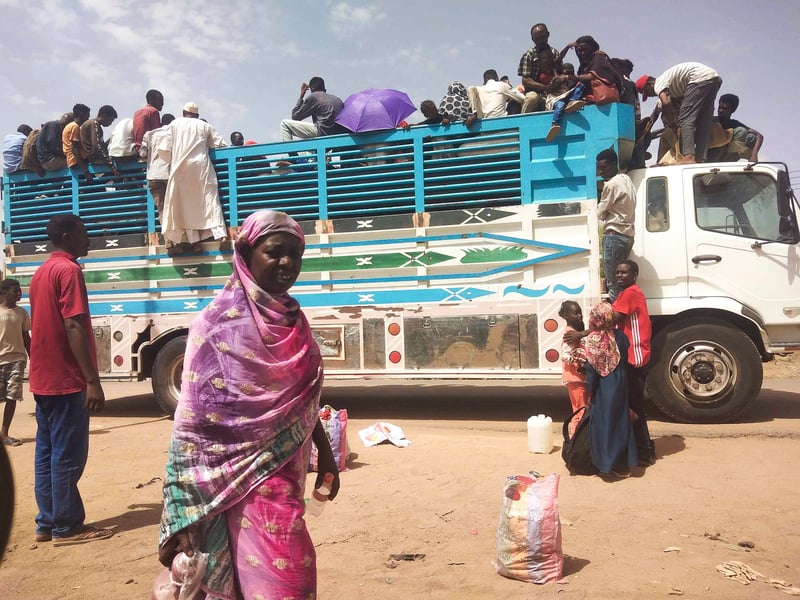
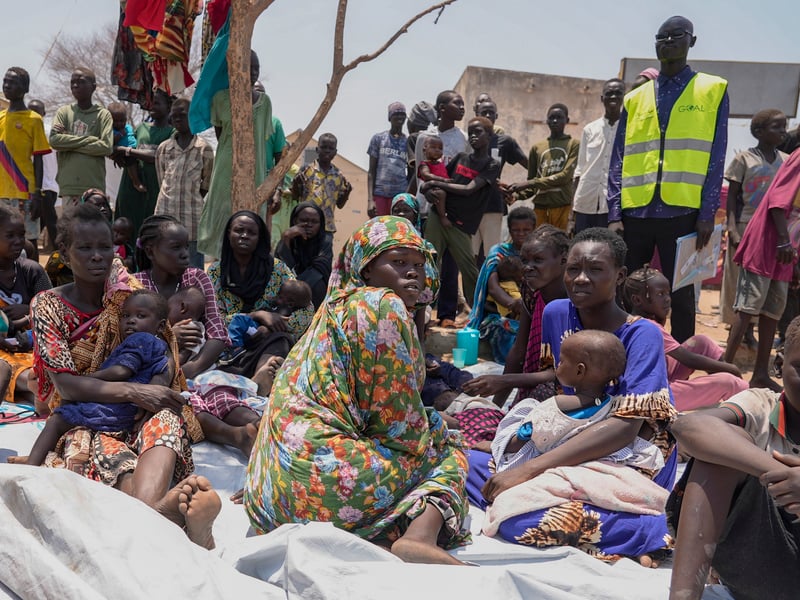
More than 9 million people have been forced to flee their home, while around 25 million people — more than half the country’s population — need humanitarian assistance. Meanwhile, there are worries of a renewed Darfur Genocide as the RSF, which evolved from militias that carried out the infamous slaughter in the mid-2000s, once again perpetuates ethnic violence in the region.
Despite the constant bloodshed, the conflict hasn’t captured the attention of the American public at large. President Joe Biden has been criticized for sidelining the crisis to put more energy toward Russia’s war in Ukraine and Israel’s operations in Gaza.
Blinken appointed a special envoy in February to direct the U.S. approach to the conflict. Otherwise, officials have simply urged the warring parties to pursue peace and issued periodic sanctions.
Those sanctions, however, haven’t really led to a noticeable change on the ground, primarily because they typically target people and entities with no ties to the United States.
Ken Opalo, an associate professor in the School of Foreign Service at Georgetown University, said the situation allows sanctioned individuals to “continue operating like nothing happened.” Hudson, the former CIA analyst, said they’re being used symbolically to try showing the Biden administration is still paying attention.
“To people on the ground, it doesn’t amount to much more than finger wagging,” Hudson said.
One major problem with the sanctions is they don’t target outside countries that are fueling the conflict by supporting either side. That includes countries like the United Arab Emirates, which is widely reported to be providing weapons and funding to the RSF.
Opalo said “the fundamental problem” is that Sudan, situated in eastern Africa with a shoreline on the Red Sea, is “an adjunct to America’s Middle East policy.”
“It can always be traded in return for deals with the United Arab Emirates, Saudi Arabia or Egypt,” he said. “Unless and until the U.S. is willing to cut the support that helps both the RSF and SAF keep fighting, there will be little movement towards cessation of hostilities.”
Michelle Gavin, a former U.S. ambassador to Botswana, said the lack of priority for the conflict shows “that none of the world’s major powers have an appetite for stopping state collapse or genocide.”
“Sudan’s suffering is simply more proof that the international mechanisms designed to address threats to peace and security are dysfunctional, that basic norms around humanitarian access and civilian protection have eroded to near oblivion, and that the shame and notoriety that should accompany support for senseless destruction elude far too many decision-makers,” she wrote for the Council on Foreign Relations.
When asked about if the White House is giving enough attention to the growing crisis, a spokesperson for the National Security Council said officials “have been unequivocable [sic] about our position towards this senseless war.”
“This is on the hands of the leaders of the SAF and RSF, and we condemn the ongoing horrific violence in the strongest terms,” the spokesperson said. “The belligerents may want war, but the Sudanese people do not.”
A State Department spokesperson said officials are using all available tools to support civilians and end the conflict.
“Along with African and regional partners, we are working every day to build momentum for a solution,” the spokesperson said.
Neither spokesperson addressed questions about the effectiveness of sanctions on people with little to no ties to the U.S. or about why outside countries like the UAE haven’t been targeted. One spokesperson directed inquiries to the Treasury Department, which didn’t return a request for comment.
The State Department spokesperson noted that the special envoy traveled to the UAE on a recent trip to Africa and the Middle East and that there is “extensive, senior level engagement with Emirati officials by Vice President Harris, National Security Advisor Sullivan, Secretary Blinken and others.”
“We will continue to raise our concerns on external support to either of the belligerents and to work with our regional states to build momentum for a solution to end the conflict,” the spokesperson said.
Hudson said the special envoy is doing his best, but isn’t getting enough support from high-ranking officials ensuring he gets top-level meetings.
“By not doing that we have implicitly sent a message that this is not a priority for us and doesn’t need to be a priority for them either,” he said.
The UAE is an important ally in the Middle East, particularly as Israel’s offensive in Gaza continues. Observers say that status lets Washington turn a blind eye, or at most give lip service, toward its activities in Africa in exchange for concessions elsewhere.
“Given that the U.S. has never considered any African country to be strategically important in its own right, Washington has been very much willing to trade away Sudan for deals with Abu Dhabi and Riyadh,” Opalo said.
Gavin and Hudson argued that while Sudan might not seem strategically important, it should have much higher priority.
Hudson noted that Russia is hoping it can broker support for access to a port on the Red Sea. Gavin said the conflict will only exacerbate political instability in neighboring South Sudan and Chad.
Hudson predicted that if the conflict doesn’t get ended, the RSF is going to cement its stronghold over the entirety of the Texas-sized Darfur region, giving it control over the borders with South Sudan, Chad, Libya and the Central African Republic.
Without an end to the conflict soon, he said, the country will be divided between RSF and SAF positions, allowing each to dig in and “freeze in place this conflict for a decade.”
“Darfur is going to become Mad Max. It’s going to become the Wild West of trafficking,” he said. “It’s going to be hell on Earth.”
Gavin, however, was a little more optimistic. “Sudan is not hopeless,” she said — but time is of the essence.
“It is difficult to read, or write, warning after warning about how bad the situation is to such little effect,” she said. “The alarm bells are becoming something more like a funeral dirge.”
Opalo isn’t surprised that the conflict isn’t receiving more attention from the U.S.
“Africa, as a region, is always last on the list and first off the list in Washington,” he said. “Sudan is low on the list of African countries that are already practically strategically useless from the U.S. perspective.”
 Follow @TheNolanStout
Subscribe to our free newsletters
Our weekly newsletter Closing Arguments offers the latest about ongoing trials, major litigation and rulings in courthouses around the U.S. and the world, while the monthly Under the Lights dishes the legal dirt from Hollywood, sports, Big Tech and the arts.