
 Search Articles


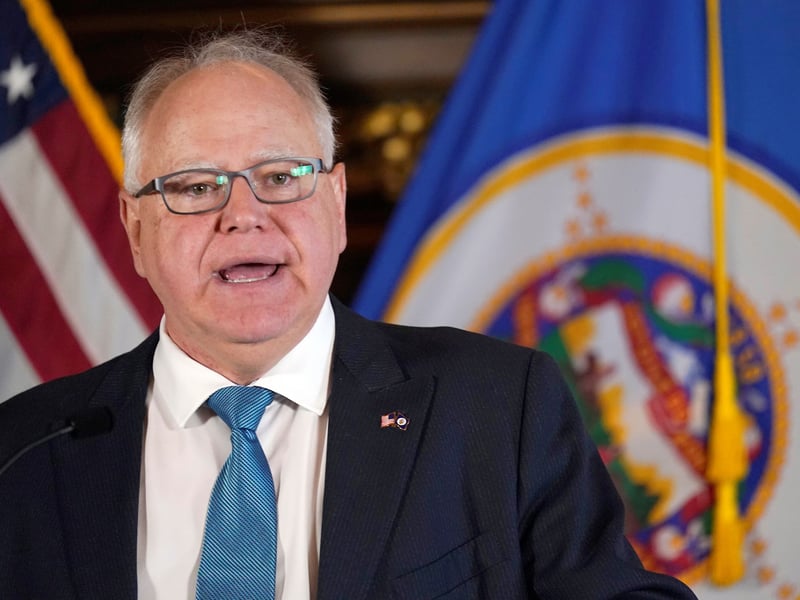
MINNEAPOLIS (CN) — Minnesota Governor Tim Walz unveiled his comprehensive anti-fraud package for the state just one day after the Trump administration halted $259 million in Medicaid payments.
The package focuses on adding better detection and oversight, strengthening investigative and enforcement authority, and increasing criminal penalties — all with the hope of calming the persistent backlash from the White House and members of the public over high-profile fraud cases in the state.
It also calls for the creation of a state inspector general’s office, the termination of the state’s Housing Stabilization Services — a program frequently investigated for fraudulent schemes — and extends the statute of limitations for fraud and fraud-related crimes.
“Any dollar of state money, especially those being used for programs to enhance people’s lives, if that goes to the wrong place, is misspent, or in the case of this, criminals are stealing it, we need to do everything possible to prosecute that,” Walz said in a press conference Thursday.
Walz’s proposal — which now moves to the Legislature for approval — comes one day after the Trump administration announced a temporary halt on $259 million in Medicaid payments to Minnesota.
Vice President JD Vance and Dr. Mehmet Oz, administrator for the Centers for Medicare & Medicaid Services, said the funding freeze announced Wednesday is part of a broader, nationwide crackdown on misuse of public funds.
Minnesota’s Medicaid payments primarily fund comprehensive health care services for low-income residents, children, pregnant women and the elderly and disabled population. Major expenditures include long-term care and nursing facilities, and mental health services.
“Trump is weaponizing the entirety of the federal government to punish blue states like Minnesota,” Walz said in a post on X Wednesday. “These cuts will be devastating for veterans, families with young kids, folks with disabilities, and working people across our state.”
The federal government’s effort comes after serious claims of fraud in Minnesota involving Somali-run day care centers, and the massive Feeding Our Future scandal over the Covid-19 pandemic.
Vance — who President Donald Trump announced during his State of the Union address Tuesday would spearhead a national “war on fraud” — said the administration had to “turn the screws on them [Minnesota] a little bit so they take this fraud seriously.”
“All we need the governor and administration of Minnesota to do is something quite simple, is to show when they’re giving Medicaid funds to somebody that you’re taking seriously the funds that you’re providing,” Vance said Wednesday. “The fact that there are so many people handing out millions and billions of dollars without confirming that they are doing the thing that they are doing, it’s a disgrace and we are stopping it.”
The Trump administration has, on multiple occasions, taken action to cut Minnesota’s finances, including attempts to withhold funding for food stamps in January, and freezing billions in child care subsides and social services this month. Both of these attempts were blocked by federal judges.
Walz, who dropped his reelection bid in January, said Thursday the Trump administration’s halt of Medicaid payments is “absolutely not serious,” and an obvious addition to the campaign of political retribution against Minnesota.
“How does taking and punishing children and elderly have anything to do with fighting fraud when that’s not where this issue is taking place?” Walz said in a press conference, adding that the pause is unprecedented and illegal.
In January, the Minnesota Department of Human Services noted the overall rate of improper payment in Minnesota’s Medicaid program is far below national averages, with an error rate slightly over 2.1% compared to the national average of 6.1%.
Walz called on his Republican and Democratic colleagues in the state, and across the nation, to support his anti-fraud package — attempting to strip the political theater away from the issue.
“We’re at a crossroads here in Minnesota. If you like talking about fraud and you think it’s an electoral issue for you, that’s gone. I’m not running. That’s gone,” Walz said in a press conference. “If you’re serious about fighting fraud, you can help us work on this package, get this package passed.”
Walz’s anti-fraud proposal already fell on deaf ears with some members of the state’s GOP, who called the announcement, and subsequent news conference “indignation theater.”
“Democrats in Minnesota are feeling the heat over the fraud they’ve enabled for years, and now they’re trying to do damage control,” Minnesota Republican House Speaker Lisa Demuth and Leader Harry Niska said in a statement. “House Republicans have been sounding the alarm over fraud for years, and we’ve been blocked from acting at every turn by House Democrats.”
Demuth and Niska added they hope Walz and House Democrats will join them in making “real strides” on fraud as soon as possible.
Walz said Thursday’s proposal builds on steps Minnesota has taken against fraud in the past several years, including the creation of the Bureau of Criminal Apprehension’s Financial Crime and Fraud Section, and a collection of executive orders empowering state agencies to combat fraud.
“Fraud steals from the people of Minnesota and undermines the programs we all rely on,” Walz said in a press release. “This package strengthens oversight, improves detection, expands enforcement, and increases penalties to protect every dollar Minnesotans depend on."
Subscribe to our free newsletters
Our weekly newsletter Closing Arguments offers the latest about ongoing trials, major litigation and rulings in courthouses around the U.S. and the world, while the monthly Under the Lights dishes the legal dirt from Hollywood, sports, Big Tech and the arts.