
 Search Articles


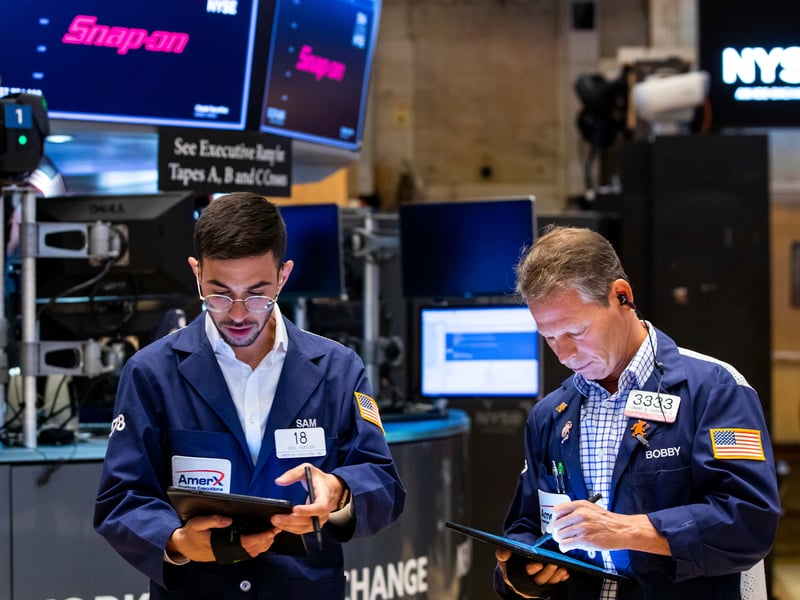
MANHATTAN (CN) — Investors recouped some, but not all, of the losses from last week’s sell-off, as easing trade tensions and increasingly dovish comments from Federal Reserve officials kept equities afloat.
It also helped that President Donald Trump backed off his previous threats to issue 100% tariffs on China, saying they were “not sustainable.” On Friday, it was reported that Treasury Secretary Scott Bessent would try to ease tensions with China, which also helped mollify investor concerns.
By the market close Friday, the Dow Jones Industrial Average gained 711 points since last week, while the S&P 500 and Nasdaq picked up 112 points and 475 points, respectively.
Investors were pleased with positive earnings from large banks such as Bank of America and Morgan Stanley. They also were buoyed by dovish comments by Federal Reserve Chair Jerome Powell, who noted in a speech in Philadelphia on Monday the central bank would likely stop reducing the size of its bond holdings and cut interest rates again when it meets later this month.
“In this less-dynamic and somewhat softer labor market, the downside risks to employment appear to have risen,” Powell said, adding the Fed’s dual mandate of reducing inflation and boosting employment seem to be in balance.
Newly ordained Fed Governor Stephen Miran also threw some red meat to investors, noting at a CNBC event on Wednesday that the newly inflamed trade war between the United States and China should spur additional rate cuts.
“There’s now more downside risks than there was a week ago, and I think it’s incumbent upon us as policymakers to recognize that should get reflected in policy,” Miran said.
Economic data is still lacking due to the government shutdown, but the Fed’s monthly Beige Book, which charts national economic trends, shows business activity has continued to decline. Only three of the Fed’s 12 districts reported slight to modest economic growth and the remainder reported no growth or economic softening.
The survey also shows the labor market remains generally stable but worker shortages and layoffs have increased. Inflation continues to play a problem, too, with tariff-induced cost increases reported among several Fed districts.
“Early on, companies reduced the pain from tariffs by pre-ordering and shifting supply channels from Chinese imports subject to higher tariffs to countries with lower effective rates,” said Eric Teal, chief investment officer at Comerica Wealth Management, noting about half of tariffs have been passed onto the U.S. consumer.
“Ultimately, it is likely the inflation-fearing consumer will bear an even greater burden of the tariff costs, particularly in consumer goods coming from Europe, India, and Japan,” Teal said.
Business sentiment has turned south once again. In the latest survey from the National Federation of Independent Business, optimism declined after three months of increases, this time to 98.8 points, just slightly higher than the survey’s 52-year average. More concerning, the survey’s “uncertainty index” increased by seven points to hit the highest mark in half a century.
“While most owners evaluate their own business as currently healthy, they are having to manage rising inflationary pressures, slower sales expectations, and ongoing labor market challenges,” NFIB chief economist Bill Dunkelberg said in a statement. “Although uncertainty is high, small business owners remain resilient as they seek to better understand how policy changes will impact their operations.”
 Follow @NickRummell
Subscribe to our free newsletters
Our weekly newsletter Closing Arguments offers the latest about ongoing trials, major litigation and rulings in courthouses around the U.S. and the world, while the monthly Under the Lights dishes the legal dirt from Hollywood, sports, Big Tech and the arts.