
 Search Articles


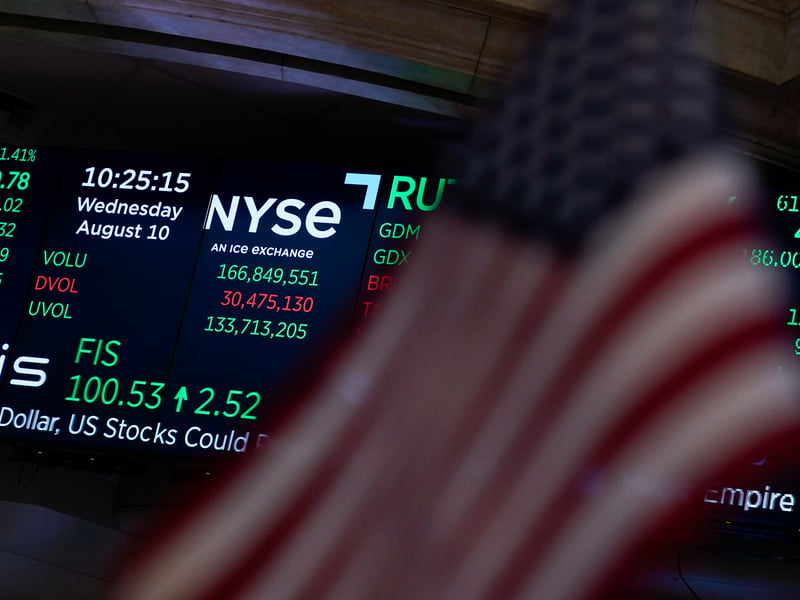
MANHATTAN (CN) — Markets had a relatively quiet week, as beneficial jobs reports kept markets from floundering, but two of the three major U.S. indices managed to set new records.
Equities had started shedding value early in the week, though after the positive ADP employment report on Wednesday and then later with the surprising federal jobs report on Friday markets righted themselves.
By the closing bell on Friday, the Dow Jones Industrial Average lost 118 points, while the Nasdaq and S&P 500 set fresh records: the former closed up 793 points higher than last week to settle at 19,859 points, while the latter increased 87 points this week to hit 6,090 points.
The Federal Reserve’s survey of economic conditions, known as the Beige Book, also boosted Wall Street, with nine of the 12 Fed districts reporting at least some growth in economic activity. The report also noted businesses “expressed optimism that demand will rise in coming months.”
However, the looming threat of tariffs — promised by the incoming Trump administration — loom large over equities.
“Tariffs will boost margins for manufacturers who compete against imports, but they will raise prices and squeeze margins for service-providing businesses, which account for a majority of U.S. employment and GDP,” said Bil Adams, chief economist at Comerica Bank.
He added that “businesses are likely to boost purchases of foreign goods in December and January to attempt to front-run higher tariffs.”
Manufacturing and services surveys released this week by the Institute of Supply Management showed a contracting landscape. The group’s services index came in at 52.1% for November compared with the 56% seen in October, while the group’s manufacturing index registered 48.4% last month, a slight increase over the previous month.
“U.S. manufacturing activity contacted again in November, but at a slower rate compared to last month,” Timothy Fiore, chair of ISM’s manufacturing business survey committee, said in a statement. “Demand continues to be weak but may be moderating.”
Tarriff worries also were reflected in Friday’s preliminary consumer sentiment survey reading by the University of Michigan. While the main survey reading increased from 71.8 to 74, the year-ahead inflation expectations increased from 2.6% to 2.9% and the “consumer expectations” index fell to its lowest reading in five months.
Grace Zwemmer, an economist at Oxford Economics, wrote in a note that “the improvement was driven by consumers’ belief that now is a better time to buy durable goods because they will be more expensive later,” adding that inflation expectations for the year ahead are at their highest level in six months.
 Follow @NickRummell
Subscribe to our free newsletters
Our weekly newsletter Closing Arguments offers the latest about ongoing trials, major litigation and rulings in courthouses around the U.S. and the world, while the monthly Under the Lights dishes the legal dirt from Hollywood, sports, Big Tech and the arts.