
 Search Articles


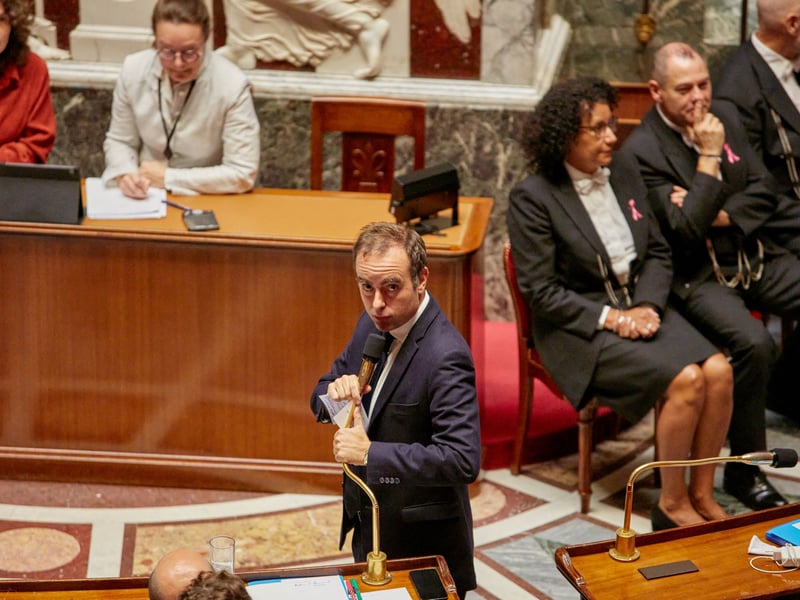
(CN) — A proposal from newly reappointed French Prime Minister Sébastien Lecornu’s to suspend controversial pension reform — which raised the national retirement age from 62 to 64 and sparked massive nationwide protests in 2023 — could be his saving grace when he fends off two motions of censure on Thursday.
“Is the government ready for a new debate on the future of our pension system?” Lecornu said in his general policy address to the lower chamber of a deeply divided Parliament on Tuesday night. “The answer is yes.”
The move was seen as a major concession to the Socialists — to them, this was a deal-breaking issue. Lecornu may be able to narrowly avoid a government collapse with their support. Both the far-left France Unbowed and extreme-right National Rally have already put motions of censure forward, and other parties have vowed to join in.
“We call on all the courageous deputies who don’t wish to merge into Macronism to vote for the motions of censure, regardless of where they come from,” Jordan Bardella, the leader of the National Rally, posted on X Tuesday. “What will unfold during the vote on the motion of censure is a moment of truth.”
Lecornu looks to have enough votes to scrape by. But even if he survives another day in the role, it’s uncertain how long his balancing act can hold — since the National Rally and France Unbowed are angling for new legislative elections, which they expect would boost their seats in Parliament, they’ll be quick to jump on a no-confidence vote.
“It’s now clear that France Unbowed and the National Rally will try to censure him at all costs, and his survival depends on his ability to prevent the [right-wing] Republicans and the Socialists from doing so,” Olivier Costa, a political scientist and director at the Center for Political Research at Sciences Po, told Courthouse News.
“The problem is that the more he shows goodwill towards the Socialists, the angrier the Republicans become, and vice versa,” Costa said.
One of the pain points is the income tax. The Socialists support increasing taxes on the extremely wealthy, while the Republicans fear such a move would drive billionaires and businesses elsewhere. Social security is another point of contention.
“Mr. Lecornu’s problem is that any issue can create very strong tensions with the Socialists or the Republicans and put him in danger,” Costa explained. “All it takes is for the Socialists or the Republicans to say at any moment, “Well, the government is doing things or taking positions that are unacceptable to us, we’ll vote for the next vote of no confidence, and the Lecornu government will be finished.”
Considering that these two groups have largely opposing agendas, Lecornu has pretty much been given mission impossible.
Pierre Allorant, historian and political scientist at the University of Orléans, told Courthouse News, “It’s going to be complicated because, obviously, it’s not at all the same measures that one side or the other is calling for. I’ll give an example: The austerity measures regarding the social security budget, the non-reimbursements for long-term illnesses, etc. That, for the left and even the centrists, is very difficult to swallow, and that’s what the right is demanding.”
In Lecornu’s general policy address Tuesday, he was careful to avoid stepping on toes — and experts view the speech as a success overall.
“He really gave the impression of being helpful, giving the thumbs up, leaning in,” Ludovic Renard, a political scientist at Sciences Po Bordeaux, told Courthouse News. “It was convincing — he showed humility, he was clear, he was concise.”
France has been in a state of political chaos since June 2024. When the extreme-right National Rally — led by Marine Le Pen and her protegée Bardella — made unprecedented gains in the European Elections, President Emmanuel Macron sent shock waves through the country when he announced the immediate dissolution of the government and called for snap legislative elections.
The move sent political parties into turbo drive, scrambling to establish coalitions that could hold a majority in Parliament. When elections were held two weeks later, three roughly equal blocs emerged with theleft-wing New Popular Front coalition at the top, followed by Macron’s centrists and the right. Each is resistant to compromise.
After former Prime Minister Gabriel Attal resigned following snap elections, the right-wing Michel Barnier was appointed and ousted three months later. Then, the centrist François Bayrou took the helm, and was booted out in a confidence vote he called in September. His replacement, Lecornu, resigned the morning after appointing his cabinet on Oct. 5. He was reappointed five days later.
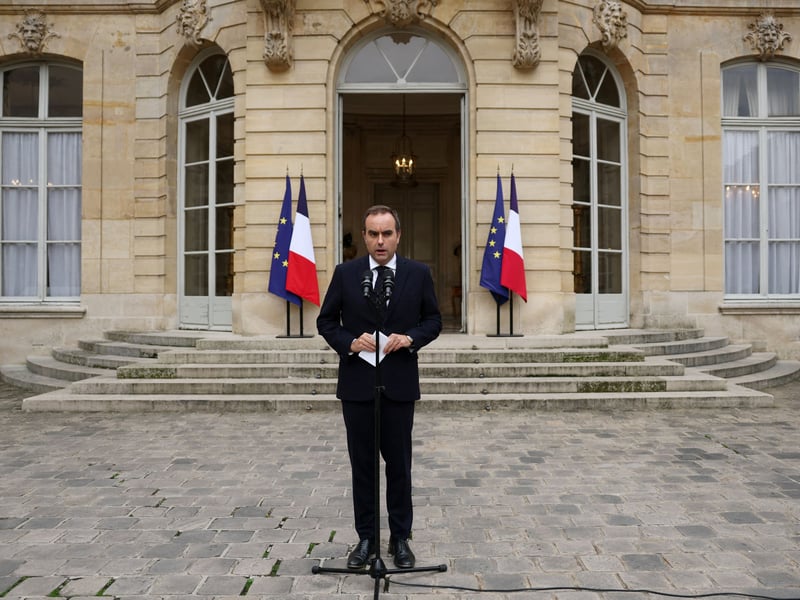
The constant rotation of prime ministers, cabinets and overall political incertitude has deadlocked France’s government as the country faces a mounting debt crisis. No bloc seems willing to compromise on austerity measures. The 2024 government deficit was roughly $227 billion, or 6% of the country’s GDP. The EU’s target level is 3%.
But politicians and citizens are fed up with what is commonly being called a circus. Both sides of the spectrum are calling to dissolve the National Assembly, or for Macron’s early resignation. The popular National Rally is confident that a new legislative election would give the party more seats in Parliament, and perhaps even a majority. The far-left France Unbowed is calling for Macron to resign.
And Macron’s own camp is turning against him. On Oct. 6, just after Lecornu resigned, his former Prime Minister Edouard Philippe called for early presidential elections. That same day, Attal went on the French TV station TF1 with his own take.
“Like many French people, I no longer understand the decisions of the president of the republic,” he said. “There is the dissolution and decisions since then that give the impression of a form of determination to keep control.”
 Follow @lilyradz
Subscribe to our free newsletters
Our weekly newsletter Closing Arguments offers the latest about ongoing trials, major litigation and rulings in courthouses around the U.S. and the world, while the monthly Under the Lights dishes the legal dirt from Hollywood, sports, Big Tech and the arts.