
 Search Articles


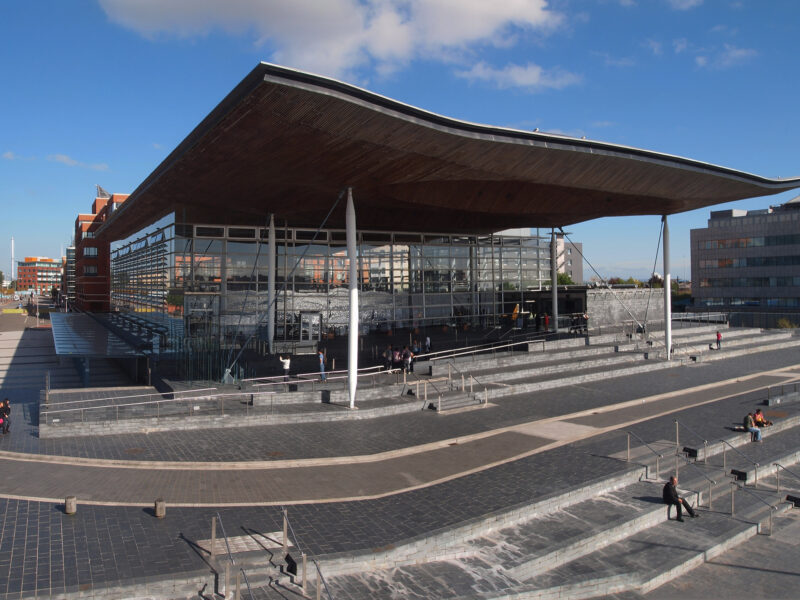
MANCHESTER, England (CN) — Wales looks set to become the first country in the world to make it a crime for politicians to lie during election campaigns, under legislation now moving through the Welsh Parliament — known as the Senedd.
The bill, approved at its first legislative stage last month, would ban candidates and elected lawmakers from making false or misleading statements in the run-up to elections.
It is currently in the amendment phase, with cross-party committees reviewing its wording throughout February.
Rebuilding trust
If enacted, the law would apply only during election periods and would not create a general ban on politicians lying while in office.
Separate standards already exist for conduct outside campaigns, enforced through the Welsh Parliament’s disciplinary system.
Supporters argue the legislation could transform political culture and rebuild trust in democracy, at a time when public confidence in politicians is at historic lows.
Polling by Opinium found that 73% of voters support criminalizing politicians who lie to the public. A separate Ipsos survey shows just 9% of people in the U.K. trust elected officials to tell the truth — a 40-year low — while 45% say they “almost never” trust governments of any party to put the country ahead of political interests.
Adam Price, former leader of the nationalist Plaid Cymru party and a longtime advocate of the bill, called the proposals unprecedented.
When the Welsh government committed to bringing forward the bill in July 2024, Price called it “truly historic, in fact it is globally pioneering.”
The Senedd is currently controlled by the center-left Labour Party, which governs without an overall majority. Plaid Cymru and the Conservatives are the main opposition parties.
There is cross-party support for the principle of improving honesty in politics, though divisions remain over how far the law should go.
Tension in the details
The bill builds on recommendations from the Senedd’s Standards of Conduct Committee in February 2025, which examined three options for restoring trust: creating a criminal offense, introducing civil penalties through the public ombudsman or strengthening internal disciplinary rules.
Lawmakers opted for a narrow criminal approach focused on elections, while keeping non-election behavior within existing procedures.
Critics argue the legislation risks politicizing the courts and could be used to suppress legitimate political debate.
Conservative lawmakers have raised concerns about how “truth” would be defined and who would ultimately decide whether a statement crossed the line.
Experts warn of risks
Civil liberties groups and experts have also warned of a chilling effect on free speech, particularly in campaigns where data is evolving and political claims are often contested rather than provably false.
Vian Bakir, a professor in journalism and political communications at Bangor University, said politicians are widely seen as major sources of online misinformation, but regulating their speech carries risks.
“When people in the U.K. and other countries are surveyed on sources of false information online, they consistently say that politicians are the main drivers,” she said. “However, you also can’t discount the role of politicized mainstream press outlets as well as political influencers and commentators online.”
Bakir, whose research includes disinformation and propaganda, added that also to blame are “social media platform algorithms that have consistently prioritized and pushed posts that are both highly engaging and false.”
However, she said a legal ban could discourage open debate.
“A ban on false or misleading statements by politicians does risk chilling effects,” she said, adding that, “politicians should be allowed to get things wrong.” For Bakir, “many issues don’t have clear-cut answers, and statistics and qualitative research can be interpreted in all sorts of ways.”
A healthier alternative, Bakir says, is to “allow politicians free reign on speech, but ensure that the public sphere ecosystem is healthy enough to enable politicians’ false statements to be carefully scrutinized and factual errors to be pointed out, so that politicians are held to public account for their statements.”
Mark Frankel, head of public affairs at the fact-checking organization Full Fact, said determining whether a statement is legally false is often harder than it appears.
“Although it can sometimes be relatively straightforward to determine whether a statement is false or misleading, this isn’t always the case,” he said. “Many statements can be partially true or simply missing context and then it’s also important to be able to demonstrate intent.”
Frankel warned the law could push disputes into the criminal justice system.
“We are particularly exercised by the fact that this legislation is likely to put added pressure on the police and the courts,” he said, which would lead to less rather than more transparency from politicians.
While welcoming proposals to strengthen standards and greater accountability in public office, Frankel worried that elements of the bill could “deliver the opposite.”
Despite there being momentum behind the reforms, the legislation is being put through scrutiny in Parliament, with amendments expected.
It won’t become legislation before May, when voters go to the polls for elections to the Welsh Parliament, the Scottish Parliament and local councils across much of England.
Courthouse News reporter James Francis Whitehead is based in England.
 Follow @jayfranklinlive
Subscribe to our free newsletters
Our weekly newsletter Closing Arguments offers the latest about ongoing trials, major litigation and rulings in courthouses around the U.S. and the world, while the monthly Under the Lights dishes the legal dirt from Hollywood, sports, Big Tech and the arts.