
 Search Articles


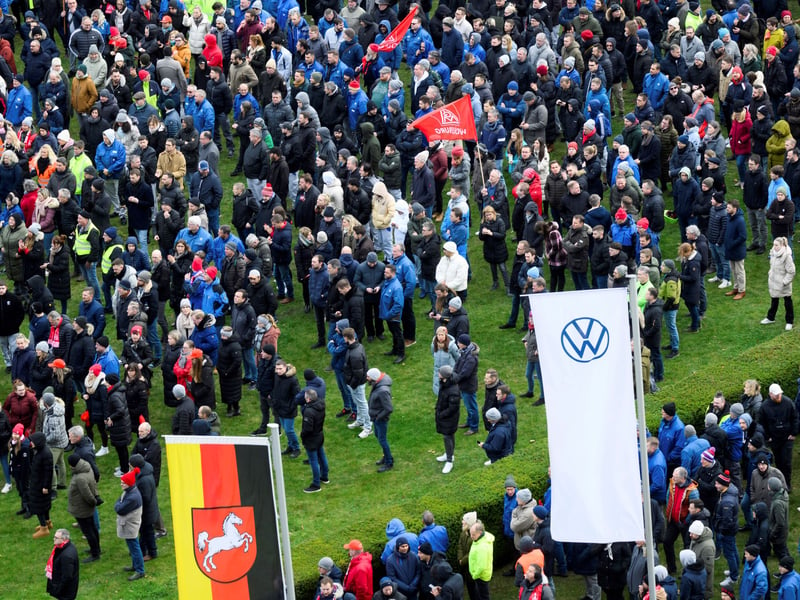
BERLIN (CN) — With crisis-struck Volkswagen calling for mass layoffs and the unprecedented closure of German factories as the company struggles in a changing market, workers are ratcheting up the pressure during a tense battle for their futures.
Workers enter the fourth round of negotiations with VW Monday ready to call more strikes, after about 100,000 of the company’s 120,000 employees in Germany walked out of nine factories for rolling waves of two-hour “warning strikes” earlier this week.
On Wednesday, CEO Oliver Blume was booed as he spoke during a gathering of around 20,000 workers at the company’s main plant in Wolfsburg.
IG Metall, Europe’s largest industrial union, is representing workers in the protracted collective bargaining negotiations covering all VW workers in Germany except for those at a lone plant with a separate contract.
“If we have to, we’ll push through a labor battle that fits the VW workers’ family: United, with a strong will to persevere and a certainty it will be worth it,” Daniela Cavallo, the head of the company’s works council, told a crowd of striking workers outside of the Wolfsburg plant.
VW has proposed widespread wage cuts and slashing thousands of jobs as part of a company-wide restructuring plan to save €4 billion ($4.2 billion). The union’s initial counter proposal, which offered €1.5 billion ($1.59 billion) in concessions, was rejected in late November.
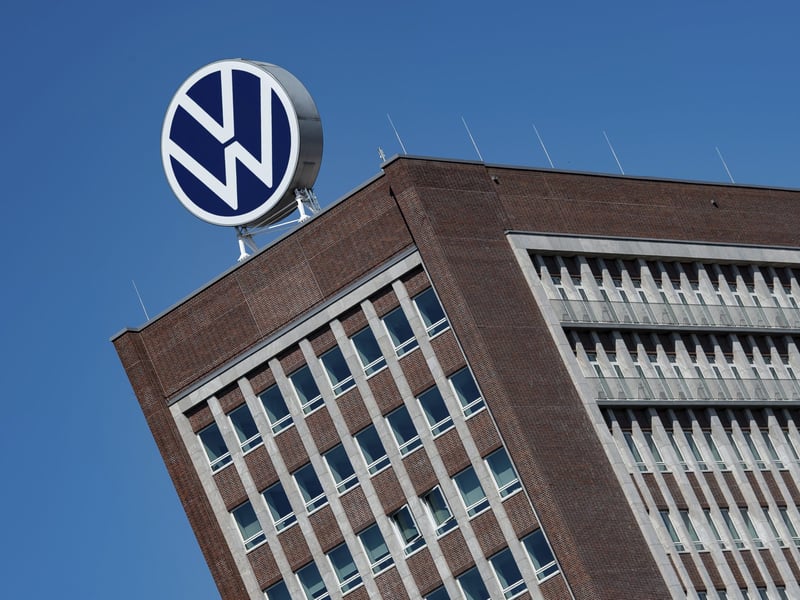
Thorsten Gröger, IG Metall’s chief negotiatior, told Courthouse Newsin a written interview that the stalled discussion “creates uncertainty, frustration, and anger among employees.” He said, “We don’t want this conflict, but Volkswagen continues to insist on their maximalist demands.”
Though the Volkswagen Group, which owns 10 brands including Audi and Porsche and employs nearly 300,000 people in Germany alone, reported €18 billion in profit and paid out €4.5 billion in dividends last year, management is deeply concerned about the company’s future.
VW recently announced a 64% drop in profits and is [struggling to maintain](http://(https://www.reuters.com/business/autos-transportation/vw-toyota-saw-china-market-share-shrink-2023-industry-association-2024-01-10/) its foothold in its biggest market, China. In Europe, electric vehicle sales in particular have slumped as VW lags behind more affordable competition.
“The planned cuts aren’t the beginning of the end for the German automotive industry. The transition to e-mobility will be a long and arduous process,” Anita Wölfl, an automotive industry specialist at Munich’s ifo Institute for Economic Research, told Courthouse News.
“Electric cars require less production capacity and cheaper models are unlikely to be built in Germany,” she went on.
VW’s embattled workers have stressed that adapting the company’s strategy is a must, and that catching up in the EV race is key to securing the company’s future.
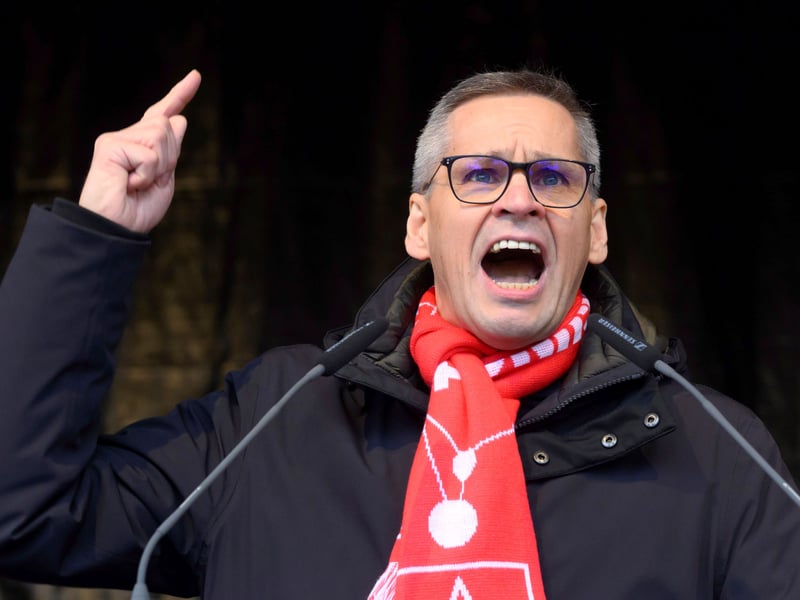
“VW has to boldly invest in its own future — in new models, innovative production processes, and a robust value chain. We firmly believe that Volkswagen, with its workforce, can also translate this into the era of electro-mobility and once again be at the forefront if the transformation is successful,” said Gröger.
Auto manufacturing is central to the country’s economy. According to the German Association of the Automotive Industry, nearly 800,000 people work in factories making cars and car parts. Volkswagen’s struggles are both emblematic of a flagging sector and Germany’s wider economic malaise.
Wölfl said, “The German automotive industry is in the midst of a deep structural change as it moves towards e-mobility. All of this is happening in the context of wider structural economic change: Decarbonization, digitalization, demographic shifts and stronger competition, particularly from China. All of this has triggered structural adjustment processes in Germany that are dampening growth prospects for the economy.”
Ford and auto suppliers Bosch, Continental andZF have all recently announced layoffs in Germany.
Concerns about the economy will dominate Germany’s upcoming elections, and politicians are weighing a potential bailout for VW to save jobs. Göger argues investment needs to be wider than in any one company.
“We need more than pretty election posters and nice promises. Germany needs a boost in infrastructure, education and energy,” he said.****
 Follow @braneck
Subscribe to our free newsletters
Our weekly newsletter Closing Arguments offers the latest about ongoing trials, major litigation and rulings in courthouses around the U.S. and the world, while the monthly Under the Lights dishes the legal dirt from Hollywood, sports, Big Tech and the arts.