
 Search Articles


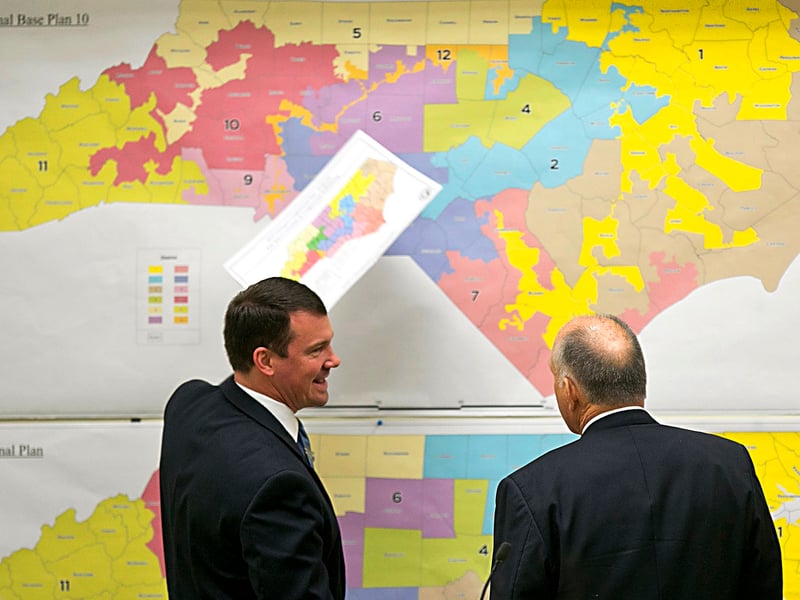
RALEIGH, N.C. (CN) — Voting rights groups got the green light Thursday to bulk up their North Carolina election map challenge with claims over the newly-enacted 2025 congressional map.
A panel of federal judges granted on Thursday the groups’ requests to file supplemental complaints over the 2025 maps pushed through by Republican lawmakers last week in an attempt to secure an additional GOP seat in the U.S. House — even though the parties were awaiting a judgment from the panel on a June trial over the 2023 version of the maps.
The new map changes two congressional districts, moving additional Republican voters from Congressional District 3 into Congressional District 1, a seat currently held by Democratic U.S. Representative Don Davis.
The North Carolina State Conference of the NAACP filed an additional challenge, calling the redistricting process rash, without disregard for public participation and “undertaken with precision to target Black voters in North Carolina’s northeastern Black Belt region.”
The General Assembly unlawfully targeted Black voters, the NAACP said, in retaliation for their political speech, making the racial dilution the voters initially sued over worse.
“The General Assembly’s actions in unilaterally initiating the redistricting process solely to punish voters will set a dangerous precedent and incentivize regularized, retaliatory redistricting following every federal election,” the plaintiffs said. “It foreshadows a relentless game of whack-a-mole against voters, in which even a hint of dissent will cause the hammer to come down through targeted line-drawing against communities whose voters dare differ from the views of those in power.”
Unless the court interferes, the 2025 map will be used during the 2026 midterm elections and again through 2030. The normal redistricting process has the state redistrict every 10 years. The 2025 map is the fifth congressional map in six years.
The plaintiffs claim the 2025 redistricting process was unprecedented in its speed, manner, and disregard for public input, as it was the first time North Carolina undertook mid-decade redistricting without the release of a new U.S. Census or a court order.
The map was passed within a week of its disclosure, was drawn by one lawmaker without input from any others, and no hearings to solicit public feedback were held, depriving the public of meaningful opportunities to weigh on, the NAACP said.
The Black voting population was “perfectly cracked” between the two congressional districts, the plaintiffs claimed, placing 26.7% of the Black population in both CD-1 and CD-3 and lowering the Black voting population in CD-1 by around 8%.
“The 2025 redrawing of Congressional Districts 1 and 3 will make it extremely unlikely for either one of these districts to perform for Black-preferred candidates,” the NAACP said. “The performance results over five election cycles illustrate the overwhelming likelihood that the redrawn configurations of these districts will completely shut Black voters out from any representation from the U.S. Congress in this area of the state.”
The Constitution forbids the government from redrawing electoral district lines in order to punish or suppress speech, they said, but the lawmakers moved groups of voters out of districts because of how they voted in 2024.
The redistricting also violates the First Amendment’s petition clause, the plaintiffs say, as the redistricting process frustrates their legal case by changing the district lines before the judges issue their judgment.
They say the legislature is attempting to create an “infinity loop” where it changes the electoral lines again and again to avoid a final judgment on any one plan, preventing the plaintiffs’ grievances from being redressed.
The new map also attempts to dilute the voting power of Black voters in violation of the Voting Rights Act and the 14th and 15th Amendments, the plaintiffs say. They asked the court to issue a declaratory judgment in their favor and prevent the state from holding or certifying any elections under the new election map.
Republican map author Senator Ralph Hise repeatedly told lawmakers that no racial data was used to draft the 2025 map, and that the process largely used the 2024 election results.
The case began as two consolidated challenges to North Carolina’s 2023 election maps: one by Black and Latino voters claiming the maps diluted minority votes and another by voters and voting rights groups claiming the maps targeted and hindered Black voters’ ability to elect candidates of their choice.
However, Republican defendants Speaker of the House Destin Hall and Senate President Pro Tempore Phil Berger insist the changes are not due to racial motivations, but political ones. They maintain that lawmakers did not factor in racial data in drawing the 2023 maps.
In North Carolina, the legislature can engage in political gerrymandering, even when the “most loyal Democrats happen to be Black Democrats and even if the state were conscious of that fact,” they said.
Because the case initially involved two separate plaintiffs, the Black and Latino voters who first filed suit will also be allowed to file a supplemental complaint. A potential complaint filed as an exhibit earlier this week suggests that they will also argue the new plan is racially discriminatory in violation of the Voting Rights Act and 14th and 15th Amendments.
Representatives for Hall and Berger did not reply to a request for comment.
 Follow @SKHaulenbeek
 Follow @shaulenbeek.bsky.social
Subscribe to our free newsletters
Our weekly newsletter Closing Arguments offers the latest about ongoing trials, major litigation and rulings in courthouses around the U.S. and the world, while the monthly Under the Lights dishes the legal dirt from Hollywood, sports, Big Tech and the arts.