
 Search Articles


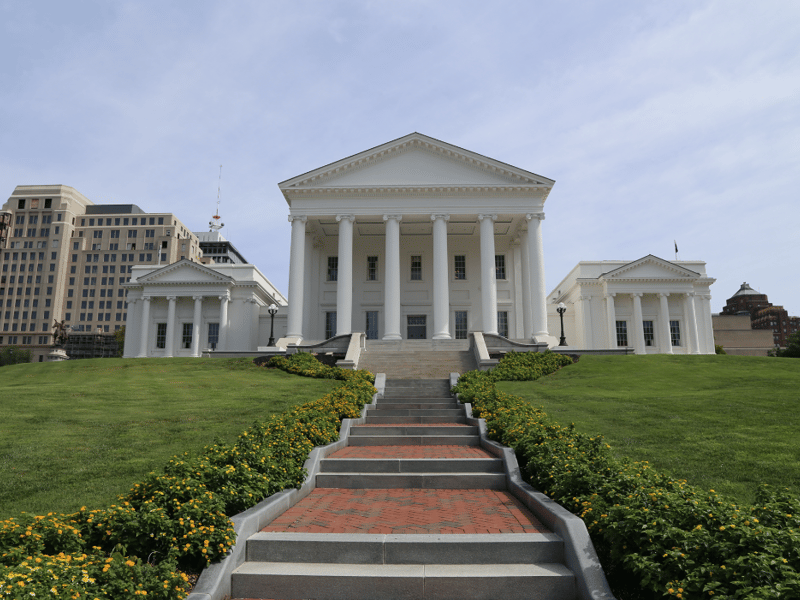
RICHMOND, Va. (CN) — The Virginia National Association for the Advancement of Colored People spoke of its priorities on the eve of the 2025 state legislative session.
“Virginia cannot truly progress until all Virginians have equal and equitable access,” Rev. Cozy Bailey, the president of the Virginia NAACP, said in a press conference. “This can only be done by keeping Black people at the top of every agenda.”
Protecting access to voting and abortion care, addressing maternal health challenges and prison conditions and climate justice are all top priorities for the Virginia NAACP as legislators return to Richmond.
Virginia NAACP political action chair Gaylene Kanoyton said the organization supports Democratic Delegate Elizabeth Bennett-Parker’s effort to change Virginia’s status as one of three states with a constitution that permanently disenfranchises citizens with past felony convictions but grants the state’s governor the authority to restore voting rights. More than one in seven Black Virginia men lack the right to vote.
“We want to expand voting rights, not limit it,” Kanoyton said. “This is about access to voters so they can vote.”
Under a Democratic governor in 2020, Virginia passed a 45-day early voting period, a permanent absentee voter list, recognized Election Day as a state holiday and opened up same-day voter registration. Kanoyton warned of efforts from conservative legislators to roll back the state’s recent expansion of voting access.
“This is about access to voters,” Kanoyton said. “This is not about staffing. This is not about funding. This is not about these localities wanting to cut it back to 10 days.”
Voting restoration, guaranteeing a right to abortion care, and formally legalizing same-sex marriages are all constitutional amendments the Virginia NAACP said it supports. After laying them on the table last spring, the General Assembly continued the measures. All three measures have passed the initial hurdle and will go through the legislative process in 2025.
The General Assembly must pass the resolutions to change the state’s constitution, in two sessions. If the amendments pass in 2025 and 2026, voters will have their say during the 2026 election.
When asked by Radio IQ report Brad Kutner about the division in the Black community on the topics of same-sex marriage and abortion rights, Bailey said it was overblown.
“We are well aware that the people who oppose these types of policies would purport that there are divisions within the Black community,” Bailey said. “But, what really is going on is that the Black community, and I can speak confidently about this, is united in that people need to have their own personal choice."
Virginia made headlines in the fall after a blogger incarcerated at Red Onion State Penitentiary reported inmates electrocuting themselves in protest of racist abuse and inhumane conditions at the prison. Valerie Slater, the Virginia NAACP’s criminal justice chair, said they hope to support legislation limiting the time inmates spend in solitary confinement. Slater said the organization is also concerned with the quality of maternal health care for incarcerated women.
Slater also laid out concerns regarding minors in the system. Slater said the organization supports prohibiting shackles on youth inside court facilities.
“Another way that we will be looking at that particular outcome for young people is ensuring that we are not criminalizing our elementary school students by instituting a minimum age of criminal culpability of 11,” Slater said. “We want to bring congruence and ensure that young people are not placed before the court on delinquency charges before the age of 11.”
Environmental justice chair Karen Campblin spoke on how climate change particularly affects minority communities.
“It is undeniable that Black communities, low-resource neighborhoods and communities of color continue to bear the brunt of environmental and climate challenges,” Campblin said. “Our communities often face the concentration of disruptive and polluting facilities, limited access to affordable resources and a lack of quality of life amenities.”
Campblin outlined a myriad of suggestions for legislators to ponder.
“This includes investing in clean energy jobs, particularly in underserved communities, enhancing Virginia’s public transportation network, sensible, comprehensive planning, land use and zoning requirements, ensuring our public engagement processes are accessible and transparent and ensuring access to clean spaces,” Campblin said.
The organization was critical of Republican Governor Glenn Youngkin’s recent moves, including his second attempt to eliminate the state’s car tax. Bailey called the effort eye candy. Kanoyton said that any tax cuts come with a cost.
“Is it going to cut into education? Is it going to cut into our Medicaid, any programs, especially that affect minorities?” Kanoyton asked. “We are very concerned about this elimination of the car tax and how it would affect other programs from not getting funded.”
Kanoyton also criticized Youngkin’s recent plan to add $25 million to the state’s budget to partner historically Black universities and colleges with state-owned lab schools. Lab schools offer specialized education opportunities for select public school students.
“Although that sounds great, it is not fair to our Virginia families to put a Band-aid on early childhood education,” Kanoyton said. “We need to have a long term plan to keep lab schools at an HBCU not just a short-term plan.”
Other priorities include creating an equitable retail cannabis market, preserving African American history through the preservation of cemeteries and other historical sites and ensuring minority-owned businesses have fair access to government contracts.
Subscribe to our free newsletters
Our weekly newsletter Closing Arguments offers the latest about ongoing trials, major litigation and rulings in courthouses around the U.S. and the world, while the monthly Under the Lights dishes the legal dirt from Hollywood, sports, Big Tech and the arts.