
 Search Articles


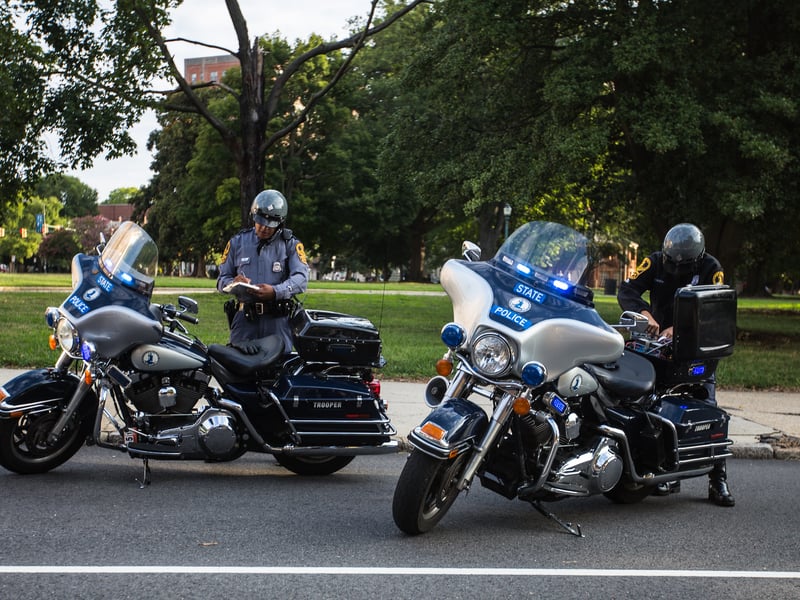
RICHMOND, Va. (CN) — Virginia lawmakers are renewing efforts to provide an affirmative defense for those with neurocognitive disorders who assault police officers during stressful interactions.
Those found to have intended to assault a police officer in Virginia, no matter the severity, are automatically charged with a class 6 felony and must spend a minimum of six months in jail. The bill introduced by Democratic state Senator Jennifer Boysko would provide a way to avoid jail time for those with a mental illness or neurocognitive disorder, including dementia, an intellectual disability or a developmental disability such as autism spectrum disorder.
“Right now, they don’t have a decision. It is a mandatory minimum, and they don’t have the flexibility,” Boysko said an in interview. “This gives them that ability to be more thoughtful and perhaps, you know, save the future of this individual.”
Advocates say people with neurocognitive disorders can struggle with triggers and can easily find themselves in high-stress situations when dealing with law enforcement.
“The class of people that’s intended to be protected by this bill can present to police officers in a very different way than others in the population can,” Colleen Miller, the executive director of the disAbility Law Center of Virginia, said in an interview.
Brian Kelmar, president of Decriminalize Developmental Disabilities and the father of an autistic son, agreed that the introduction of law enforcement during a crisis or a sensory overload can exacerbate the issue.
“Now you’ve introduced new sensory overloads, a stranger, a police car, a siren or lights,” Kelmar told Courthouse News. “Now you have taken that situation from, I would say, a level 5 to level 50.”
Miller said police officers typical approach when dealing with neurotypical people doesn’t work with those experiencing a mental health crisis or sensory overload.
“It’s a police officer’s training and response to be big, to occupy the space, to get close — to really be in command of the situation,” Miller said. “And all of those things can be overstimulating to a person with autism, can be threatening … can be the exact wrong response to somebody with autistic behaviors.”
There is no severity requirement, so judges can convict someone for something as minor as brushing past a police officer, moving their hand away, tossing a crumpled-up paper at them or tapping their shoulder.
As Teresa Champion of the Virginia Autism Project said in a press release last April, “I can never call the police for aid when my 30-year-old son is in crisis.”
Champion’s son is autistic and has an uncontrollable spitting tic.
“When he is in a fight or flight panic attack, those episodes are intense and, in his mind, he is being attacked by anyone around him. A law enforcement officer can be completely calm, and my son could misinterpret words or movements and see them as threatening, and then he responds defensively,” she said.
Virginia is the only state in the country where physical contact isn’t needed for an assault against a police officer conviction, according to Rob Poggenklass, executive director of Justice Forward Virginia.
In 2022, Virginia State Police reported that there were 2,903 reports of assault on a protected person. In 1,912 of those reports, there was no injury at all; 703 of those reports cited a minor injury.
Lawmakers have been trying to address the issue for four legislative sessions. The bill introduced last session initially made those who qualify immune from arrest. Last spring, Republican Governor Glenn Youngkin vetoed the bill after it passed the Democratic-controlled legislature. Youngkin’s office did not respond to a request for comment.
“A new, loosely defined, and excessively broad affirmative defense is unnecessary because Virginia laws already provide protections for individuals who are not criminally responsible due to mental illness. The proposal significantly reduces the protections afforded to law enforcement and erodes the commonwealth attorney’s discretion in evaluating cases, needlessly introducing logistical and procedural challenges that further burden our strained court system,” Youngkin said in his veto explanation.
“This bill sends the wrong message at precisely the wrong time,” the governor concluded.
Until 2021, Virginia was one of a few states that didn’t allow mens rea defenses, wherein the defendant argues his mental state at the time of the offense negates their ability to intend to commit the crime.
Kelmar of Decriminalize Developmental Disabilities said that despite there being laws regarding those with mental illnesses, there are few that concern developmental disorders. Poggenklass explained that the bill would allow a judge to dismiss the charge even if the defendant intended the assault.
Parents of those with autism often call 911 when a crisis is occurring. Kelmar said he hopes Virginia can join other states like Oregon that deploy psychiatrists and social workers in these situations. Kelmar compared police responding to these calls to firefighters performing heart surgery.
“You call someone for help — and they end up now in jail, when all they really needed was to have someone who is trained in autism to defuse the situation,” Kelmar said.
Miller said prison time can further harm those with developmental disabilities.
“We’ve known of people who were imprisoned for behaviors that were probably related to autism, and the stimulus doesn’t go away in prison. It gets worse in prison,” Miller said. “It can be a very damaging thing for their lives.”
The bill passed out of the state senate on a 23 to 17 vote. Kelmar said that the unemployment rate amongst those with autism is 85%, while those with autism and a criminal record virtually never find work. He said he worried for those who lose access to social benefits and programs.
“We can take care of our son and support him, do things like that, and get him the right services because we have the means,” Kelmar said. “But what happens when we’re gone?"
Subscribe to our free newsletters
Our weekly newsletter Closing Arguments offers the latest about ongoing trials, major litigation and rulings in courthouses around the U.S. and the world, while the monthly Under the Lights dishes the legal dirt from Hollywood, sports, Big Tech and the arts.