
 Search Articles


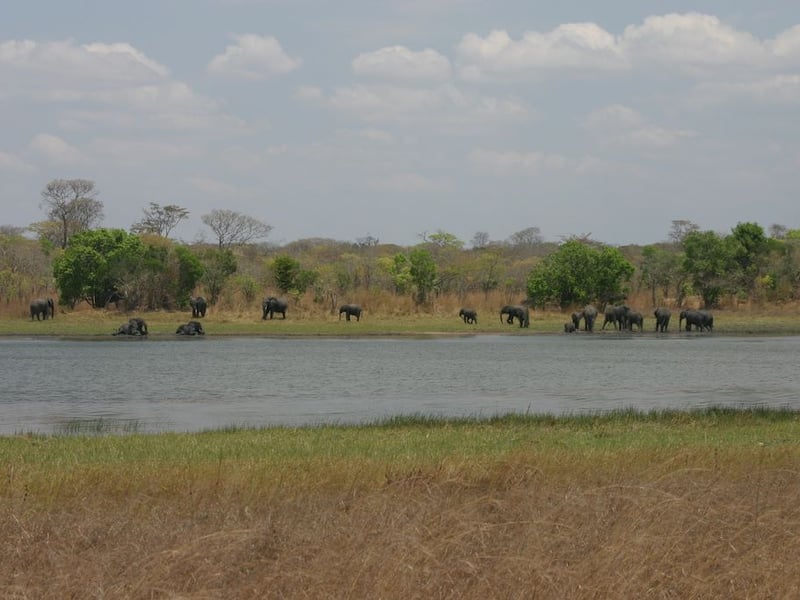
KASUNGU, Malawi (AFP) — As dawn breaks over Malawi, Rodwell Chalilima gazes at his flattened maize field, the rising sun casting long shadows over the chaos left behind.
Torn stalks lie broken like matchsticks. Elephant footprints, as wide as dinner plates, pock the soil.
“They came in the night again,” said Chalilima, a 45-year-old father of six, his voice barely above a whisper and thick with grief and anger.
“We counted nearly 200 elephants. We just watched from our homes. We can’t stop them. We’re powerless,” he told AFP at Chisinga village outside the Kasungu National Park.
The trouble started around three years ago when 263 elephants were transferred to the park on the border with Zambia from an overpopulated Malawi reserve in a multi-million-dollar collaboration between the government and wildlife NGOs.
Conservationists hailed the translocation a success but for locals on both sides of the border it has been a nightmare.
Some have joined legal action against the U.K.-based International Fund for Animal Welfare, which helped the government move the animals, seeking millions of dollars in compensation.
At least 12 people have lost their lives, said British law firm Leigh Day representing 10 claimants in Zambia and Malawi in a case being prepared for U.K. courts.
Locals allege that the lack of adequate fencing around the park allows the animals to enter human settlements where they destroy crops and break into buildings in search of food.
In nearby Chifwamba village, 35-year-old Kannock Phiri mourns his wife, who was trampled to death by elephants in 2023 while collecting vegetables.
The youngest of their five children was flung from her back and barely survived, he said.
“The park officials brought a coffin and some food for the funeral,” he said. “Then they disappeared. No support. No compensation.”
‘Fantasy for donors’
The relocation was “based on the idea that elephants and humans could happily coexist, wandering freely across people’s farmland,” said Mike Labuschagne from a foundation working with affected families.
“That’s not true. It’s a fantasy designed for donors in America, Britain and Europe who know elephants from movies, circuses or zoos,” said Labuschagne, who worked at the International Fund for Animal Welfare until early 2022.
He said the looming legal action would seek millions of dollars in compensation for thousands of people affected through damages, deaths or injuries.
Leigh Day said clients also want to compel the fund to take action to prevent further elephant invasions, such as through providing adequate fencing.
The firm had started pre-action correspondence which may result in the matter being resolved out of court, solicitor Rachel Bonner told AFP.
“Given the urgent and ongoing nature of the allegations, our clients have requested urgent early engagement from IFAW and are keen to avoid lengthy court proceedings,” she said.
Lives, homes destroyed
The fund acknowledged nearly a year ago, when media reports of the conflict surfaced, that clashes between elephants and communities since the relocation had led to “the deaths of several individuals, causing trauma.”
However, its role was only to support the government, including through finance and advice, it said at the time. “IFAW does not manage any national parks or decide on the actions taken,” it said.
The Malawi government had completed 84% of an 84-mile fence to contain the elephants, wildlife ministry spokesman Joseph Nkosi told AFP.
It also had offered affected communities assistance on a case-by-case basis, he said, adding the government had yet to receive notice of any legal action.
Kaston Nyirenda, 66, headman of Mbuluunde village on the front line of the conflict, said communities had made several appeals to the park and the government for help.
“We’ve lost lives, homes and food,” he said. “My own aunt was killed. My children almost died when an elephant collapsed our house at night.”
“We support conservation,” Nyirenda said. “But not at the cost of our lives.”
—
By JACK McBRAMS Agence France-Presse
Subscribe to our free newsletters
Our weekly newsletter Closing Arguments offers the latest about ongoing trials, major litigation and rulings in courthouses around the U.S. and the world, while the monthly Under the Lights dishes the legal dirt from Hollywood, sports, Big Tech and the arts.