
 Search Articles


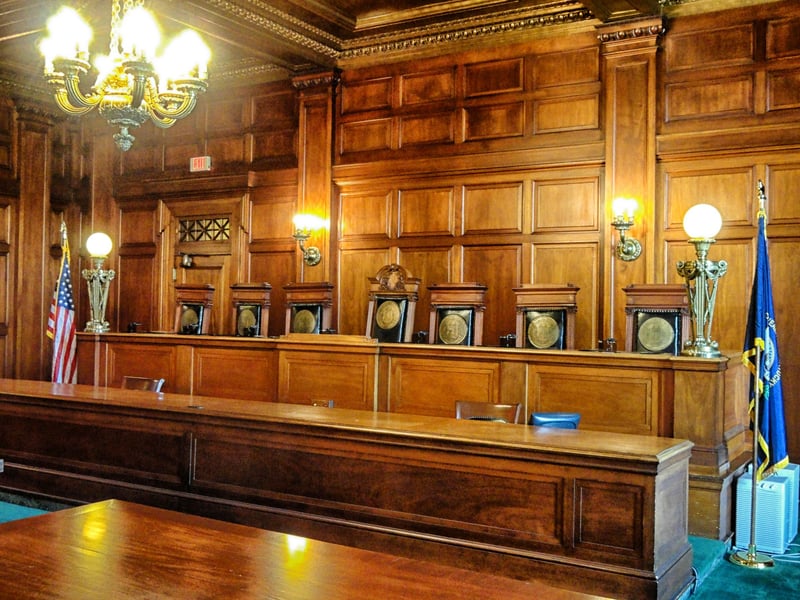
FRANKFORT, Ky. (CN) — The Kentucky Supreme Court on Thursday weighed the fate of a victims’ rights law that opponents say must be struck down because it was not properly put before voters.
After being passed by ballot referendum in November 2020 with 63% of the vote, Kentucky’s version of Marsy’s Law granted crime victims constitutional protections including the right to be present at trials and other proceedings, the right to consult with an attorney, the right to be notified of all hearings and the right to be reasonably protected from the accused.
The law was named after Marsalee Ann Nicholas, a 21-year-old woman who was stalked and murdered by her ex-boyfriend in California in November 1983. A week after the murder, Marsy’s family was shopping when they were confronted by the murderer, who had been released on bail without the family being notified.
According to the Marsy’s Law advocacy group’s website, the measure has been passed in 13 states, including Kentucky.
A challenge to Kentucky’s version of the law was heard Thursday before the state’s high court, where opponents argued it must be struck down because of vague legal definitions.
During the hour-long hearing, the details and specifics of the law were scantly discussed. Instead, arguments centered almost entirely on whether the plaintiffs had legal standing to challenge the law.
Arguing on behalf of the challengers, attorney J. David Niehaus claimed that his clients – lawyer David M. Ward and the Kentucky Association of Criminal Defense Lawyers – have standing.
“We think any citizen of Kentucky, in this particular type of action, has standing to stop what is ostensibly an election, but which is not,” Niehaus said.
In response questions from the justices on if his clients had suffered an injury in this case, Niehaus argued that voters have a right to challenge measures that should not have been placed on the ballot.
In his brief to the court, Niehaus said the law never defines what a “victim” is and therefore the entirety of the law was not put before the voters and should be considered void.
The Kentucky Supreme Court struck down an earlier version of Marsy’s Law in 2019 based upon a similar theory. It that ruling, the justices found that the law was too vague and was not placed on the ballot in its entirety.
“This will be the second time that the people have voted for something that did not exist, as a matter of law.” Niehaus said. “And it damages the confidence of the people in their government when it’s done that way.”
Kentucky Solicitor General Matthew Kuhn appeared on behalf of the state and argued that the plaintiffs in the case lack standing because they cannot point to a specific harm caused to them by the law.
“To be clear, this is not to say that no one has standing to challenge the constitutionality of Marsy’s Law,” Kuhn said. “There surely are Kentuckians, criminal defendants being the prime example, who could raise a proper challenge to Marsy’s Law.”
Justice Michelle Keller pressed Kuhn further on this issue, asking who could actually challenge this or a similar law if these plaintiffs don’t have standing.
Kuhn replied that a voter may have standing if they were confused by the wording of a ballot measure or in a case where the text of a ballot measure was not provided.
Also arguing in favor of the law on behalf of Marsy’s Law for Kentucky LLC was attorney John Roach, who echoed the Kuhn’s arguments by saying that someone who is specifically harmed by the law would have standing, but not someone who lacks a concrete injury.
“It seems to me our system is designed to treat it the way we treat everything else. When you’re hurt, come to court. When you’re injured, come to court,” Roach said. “We’re not here settle the great philosophical debates.”
The Kentucky Attorney General’s Office addressed the vagueness argument in its brief to the state’s high court, claiming the General Assembly met all the requirements to place the measure before voters on the 2020 ballot.
“It did precisely as the Constitution and this Court have instructed by publishing every single word of the proposed amendment at least 90 days before the election and then printing every single word again on the ballot,” the brief states.
The justices did not indicate when they would issue a ruling.
Subscribe to our free newsletters
Our weekly newsletter Closing Arguments offers the latest about ongoing trials, major litigation and rulings in courthouses around the U.S. and the world, while the monthly Under the Lights dishes the legal dirt from Hollywood, sports, Big Tech and the arts.