
 Search Articles


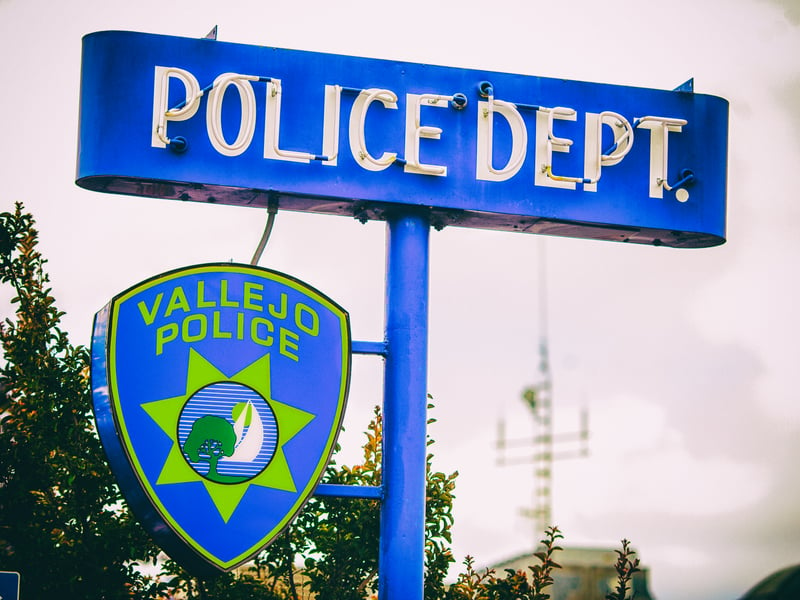
SACRAMENTO, Calif. (CN) — Vallejo police officer Jarrett Tonn will stand trial for the supposed use of excessive force and other constitutional violations in the 2020 shooting of an unarmed 22-year-old Latino man, a federal judge found Monday.
U.S. District Judge Dale A. Drozd denied Tonn and the city of Vallejo summary judgment on his family’s claims that Sean Monterrosa was denied his Fourteenth Amendment rights, citing discrepancies of testimony and facts about what happened at the scene.
The Barack Obama-appointed judge said it was reasonable for a jury to decide the civil case, given that the facts surrounding if Monterrosa made a “furtive movement” toward Tonn that caused the officer to open fire through the windshield of his unmarked police pickup truck are still unresolved.
“Viewing this evidence most favorably for plaintiffs, defendants have failed to carry their burden of showing that there is no genuine dispute of fact regarding whether decedent Monterrosa was reaching for his waistband when he was shot, since various witnesses have described his hands as being in different positions including possibly over his head,” Drozd wrote.
The judge noted that paramedics at the scene testified that Moterrosa’s hands may have been on top of his head, while other officers said he may have already have been brandishing a firearm.
The June 2020 shooting occurred shortly after midnight, with Tonn firing a single round from an AR-15 semi-automatic rifle eight seconds after arriving on the scene, according to body-cam footage. The shot hit Monterrosa in the back of his head, opposite the direction in which Tonn claimed Monterrosa was standing and turning toward a police truck at the scene.
Tonn claimed because Monterrosa moved to grab something which he perceived to be a gun in his waistband — Monterrosa had a wooden hammer handle protruding out of his waistband — his reasoning was justified in why he opened fire, as he considered it an immediate threat.
Monterrosa’s family argued that based on evidence presented, a reasonable jury could conclude Monterrosa was turned away from the officers and fleeing when he was shot in the back of the head, said Drozd.
“The Ninth Circuit has repeatedly recognized that ‘summary judgment should be granted sparingly in excessive force cases,’” Drozd said.
Attorneys representing the plaintiffs could not be reached for comment.
Drozd said the use of deadly force against a fleeing suspect did not “further a legitimate law enforcement objective,” concluding the plaintiffs had a Fourteenth Amendment claim worthy of a jury trial. Tonn’s trial was originally planned for earlier in September, but was canceled pending the summary judgment ruling. A new trial has not yet been scheduled.
The judge also denied summary judgment to the city, determining that the claim the department failed to investigate excessive force cases and adequately train officers in the use of force needs to be decided by a jury.
The Vallejo Police Department had “developed an ‘us against the world’ mindset, an ‘apparent reticence when it came to finding fault’ regarding excessive use of force, and that even where the internal review system identified specific concerns regarding officer performance there was a lack of ‘concrete actions [sic] items and subsequent corroboration,’” Drozd wrote, citing an evidentiary report.
The plaintiffs claimed the department’s lack of concern regarding the use of force was illustrated by “bending badges” — a practice among officers where one would push down a prong of another officer’s badge after they used deadly force.
Vallejo City Manager Greg Nyhoff testified he understood the officers on the force would bend badges to “celebrat[e the] killing of a human being,” Drozd noted.
A Vallejo police spokesperson couldn’t immediately be reached for comment.
In 2023, California Attorney General Rob Bonta said there was “insufficient evidence” to criminally charge officer Tonn for Monterrosa’s death.
Subscribe to our free newsletters
Our weekly newsletter Closing Arguments offers the latest about ongoing trials, major litigation and rulings in courthouses around the U.S. and the world, while the monthly Under the Lights dishes the legal dirt from Hollywood, sports, Big Tech and the arts.