
 Search Articles


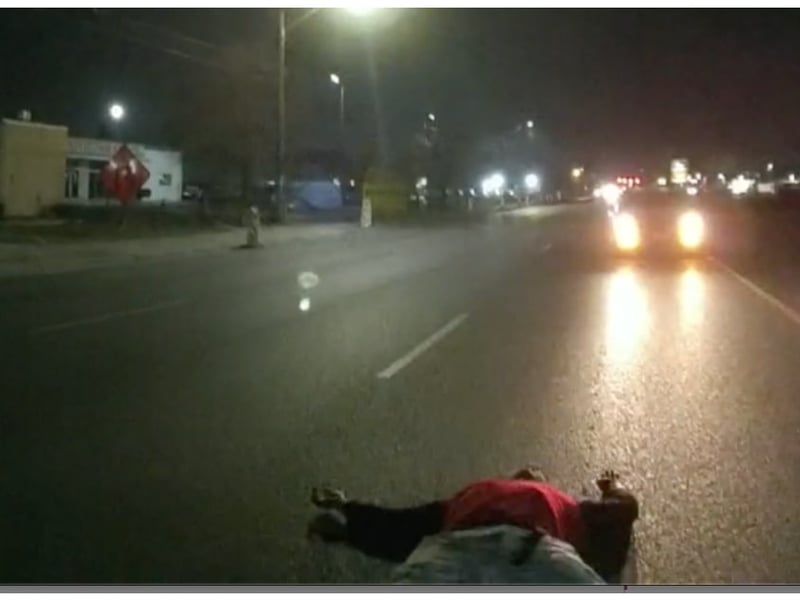
(CN) — A federal judge on Wednesday dismissed a case brought by a Utah man who suffered a traumatic brain injury after police shocked him with a Taser and told him to stay in the road, where he was hit by a car.
In his decision, U.S. District Judge David Barlow said the case is best decided in Utah’s state courts.
“In short, there are no more federal claims in this case,” the Donald Trump appointee wrote. “The remaining state claims raise some novel issues of state law, and at the very least would require the court to interpret the Utah constitution in undeveloped areas of law.”
These “novel issues,” in part, refer to the Utah state constitution, which includes a clause that protects people who have been arrested or incarcerated from “unnecessary rigor” from authorities, such as police officers. Citing a lack of Utah case law related to the unnecessary rigor claims, Barlow wrote the federal courts would be left without guidance if they chose to take up the case regarding a state matter.
The plaintiffs have 30 days to file their claims in Utah state courts.
The case stems from an incident dating back to Dec. 6, 2020, when a police officer responded to a man, Atonio Sivatia, who was causing a disturbance late at night in West Valley City, Utah, a suburb of Salt Lake City.
Sivatia saw Officer Ammon Fox, a defendant in the lawsuit, arrive on the scene and began to walk away from him, at which point Fox fired a Taser at Sivatia. Sivatia fell to the ground in the middle of the street and was told to remain there or else he would be shocked again.
In a complaint filed by Sivatia’s mother, Nonnie Masaniai Pea, the plaintiffs argue Fox knew that leaving Sivatia on a dark, busy roadway could result in him getting hurt. Another West Valley City Police officer, James Williams, also a defendant, arrived on the scene shortly after, the plaintiffs wrote.
Neither officer attempted to block traffic, the plaintiffs wrote. A white sedan driving toward Sivatia soon struck him and dragged him for about 15 feet and was eventually stopped by Sivatia’s body, coming to a rest on his head and chest.
Police had to remove the driver and reverse the vehicle before rendering first aid, according to the plaintiffs.
Sivatia suffered traumatic brain injuries and can no longer walk, talk, use his limbs normally, or perform simple tasks such as preparing food or bathing as a result of the injuries that night, the plaintiffs write.
Barlow initially dismissed most of the claims that West Valley Police officers violated Sivatia’s Fourth and 14th Amendment rights in July of 2024.
In dismissing those claims, Barlow stated Fox’s actions were reasonable when he shocked Sivatia with the Taser. Although Sivatia’s crimes were likely only minor, he posed an imminent risk to the public, the judge wrote.
However, other claims remained against the police officers and West Valley City, including the unnecessary rigor claim, misconduct against West Valley City police officers and a claim that the state created danger surrounding Sivatia’s injury.
Barlow ultimately decided those claims were not for the federal courts to decide.
“On this record, the interests of federalism compel the court to defer such interpretations to Utah state courts, who can speak on the matter with greater experience and authority,” Barlow wrote.
Attorneys for both Sivatia and Fox did not respond to requests for comment on Wednesday.
Subscribe to our free newsletters
Our weekly newsletter Closing Arguments offers the latest about ongoing trials, major litigation and rulings in courthouses around the U.S. and the world, while the monthly Under the Lights dishes the legal dirt from Hollywood, sports, Big Tech and the arts.