Search Articles


(CN) — Is it a crime to use psychedelic mushrooms for religious reasons?
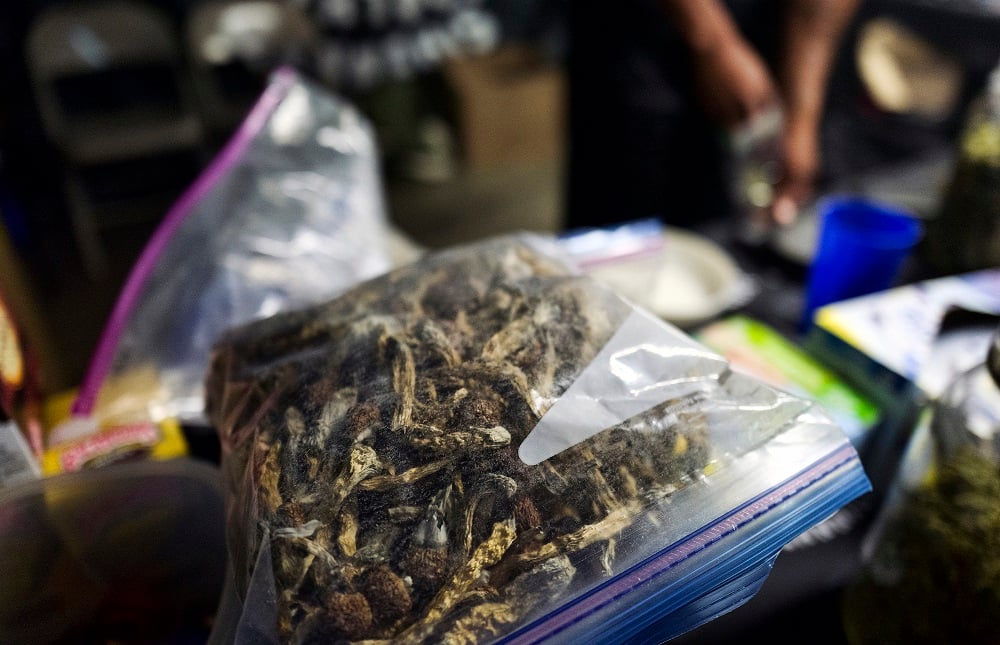
The state of Utah sure thinks so. It’s asking the 10th Circuit to reverse a lower court’s ruling preventing state authorities from targeting religious groups that use psilocybin, the naturally occurring psychedelic compound found in some mushrooms.
Attorneys representing the state argue that the state’s laws around drug use apply to everyone — even to religious organizations using psilocybin for spiritual reasons. They say the district court erred when it prevented the state from pursuing criminal prosecution.
Speaking to the panel on Tuesday, attorneys for the Beehive State laid out their arguments. The case focuses in particular on Senate Bill 266, passed in 2024, which allowed for a limited medical study of the therapeutic effects of psilocybin.
Utah attorney Caroline Olsen of the firm Zimmerman Booher argued that the psychedelic research bill did not undermine Utah’s general ban on psilocybin and did not entitle the plaintiff — Singularism, a spiritual organization in Provo, Utah — to a religious exemption.
“The purpose of the research exception is just that: research into determining whether psilocybin is even safe to use and whether there are any potential therapeutic benefits,” Olsen said. “Singularism is essentially skipping that step, assuming its safety and therapeutic benefits and using it without any oversight or regulation.”
In contrast, Olsen said, hospitals approved for psychedelic research are subject to numerous regulations governing hygiene, sourcing, dosage and safety.
Singularism claims to be the largest psychedelic spiritual center in the country. It uses a sacramental, psilocybin-based tea so that its practitioners — dubbed “voyagers" by the group — can participate in what it describes as a private, controlled and comfortable environment.
In a complaint filed in 2024, Singularism founder Bridger Jensen says that he invited law enforcement and other local officials to the center and informed them about what he was doing. In spite of this, Jensen says in his complaint, authorities sent an undercover police officer and ultimately cracked down on the facility.
In November 2024, police raided Singularism’s center and seized its psilocybin. Jensen said that the center was also threatened with eviction.
That same month, Jensen sued Utah County, county attorney Jeffrey Gray and the city of Provo, Utah, arguing they were violating his religious liberties. The case was initially filed in state court but ultimately removed to federal court by the state defendants.
U.S. District Judge Jill Parrish, a Barack Obama appointee, largely sided with Singularism in 2025.
Parrish issued an order that prevented Utah officials from interfering with Singularism’s use of psilocybin for spiritual practices. She also barred the state from prosecuting criminal charges against Jensen.
But at the 10th Circuit on Tuesday, Olsen argued Parrish had run afoul of the Younger abstention, a Supreme Court ruling which generally bars federal courts from interfering with ongoing state cases.
Arguing on behalf of Jensen, Tanner Bean of the firm Fabian VanCott, told the panel that defendants had waived the Younger abstention when they moved the case to federal court.
Bean described the psilocybin use similar to peyote usage in Native American traditions, which is protected under federal and Utah law.
“They believe this is a God-given tool,” he told Courthouse News in a phone conversation after the hearing.
Bean also argued in court that Olsen was mischaracterizing Senate Bill 266 as a highly controlled and regulated medical exemption. The medical centers and universities studying psilocybin have broad control over their activities, he said.
“It is the creation of a standalone, independent and unique behavioral health treatment program,” Bean told the court. “There is significant discretion vested in these organizations.”
The question, then, is whether the activities at these research facilities are comparable to those at Singularism.
Because the state made secular exceptions for psilocybin use, it may have to extend similar treatment to comparable religious uses under the First Amendment, Bean said.
Bean contended they are. He also emphasized that religious groups have freedom of religious expression, even to an extent when it comes to controlled substances.
But if that were the case, U.S. Circuit Judge Richard Federico asked what would prevent a supposed religious organization from choosing to use harder substances in its religious practices.
“Here, we’re talking about psilocybin," the Joe Biden appointee said. “Why couldn’t it be morphine or fentanyl?”
Bean argued that it’s about comparing the level of risk involved.
“Many organizations, insincere and sincere believers alike, could make claims like this, and of course, there are other threshold factors they’d have to get through, such as sincerity [and] religiosity, which are not at issue in this appeal,” he said. “They’d also have to conduct a risk analysis. There might be many circumstances in which the risks are not comparable, but here they are."
Updates to the 2024 psilocybin law — including the studying of the substance for the treatment of post-traumatic stress disorder — could also affect the outcome of the case.
Federico suggested sending the case back to the district court for new consideration. Bean said he would support such a decision.
Bean also argued the state’s prosecution of Jensen was brought in bad faith and constituted harassment of Singularism. He asked the panel to affirm the lower court’s decision.
If the state wins the appeal, it could refile criminal charges against Jensen. The case could also be removed from federal court to state court.
In addition to Federico, the panel also included U.S. Circuit Judge Robert Bacharach, a Barack Obama appointee, and Senior U.S. Circuit Judge David Ebel, a Ronald Reagan appointee.
Subscribe to our free newsletters
Our weekly newsletter Closing Arguments offers the latest about ongoing trials, major litigation and rulings in courthouses around the U.S. and the world, while the monthly Under the Lights dishes the legal dirt from Hollywood, sports, Big Tech and the arts.
Additional Reads

 Altman testifies Musk wanted control of OpenAI May 12, 2026