Search Articles


MILWAUKEE (CN) — The United States filed a lawsuit Thursday to toss a city of Milwaukee ordinance prohibiting federal officers from wearing face coverings and requiring them to wear prominent identification.
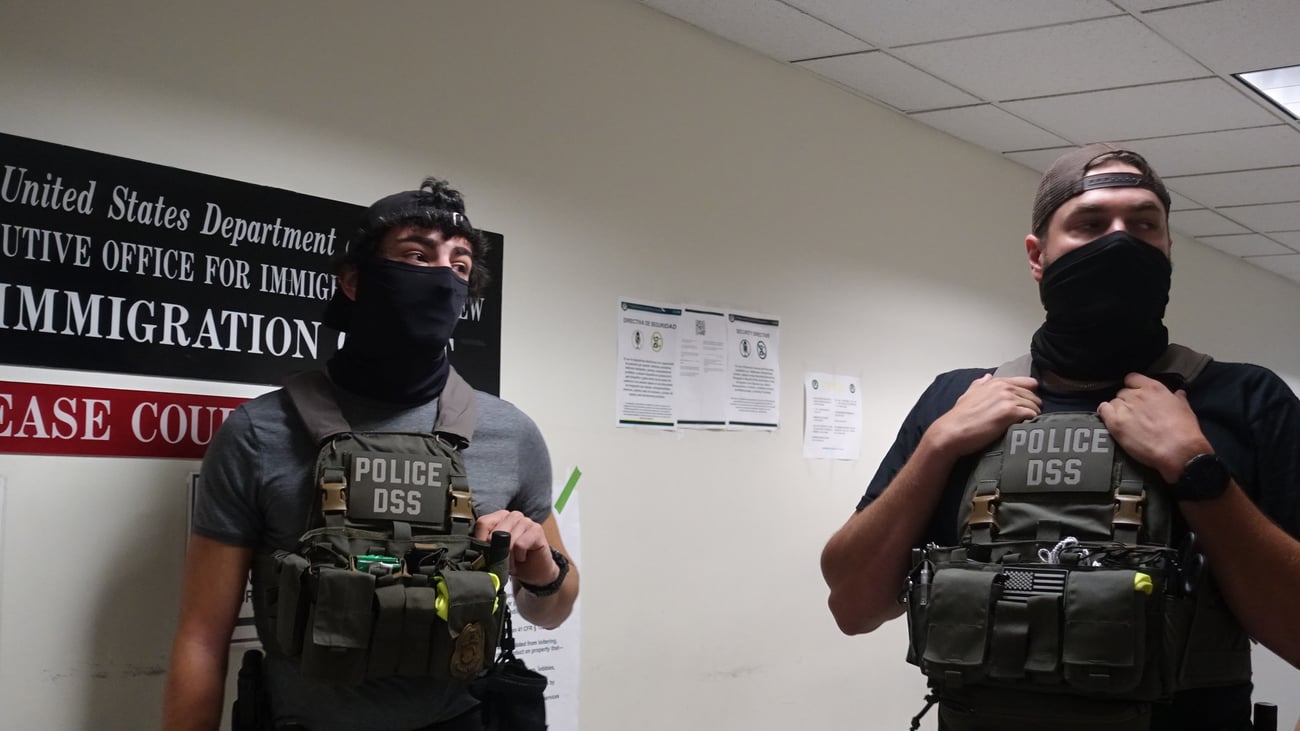
The Milwaukee Common Council passed the “Law Enforcement Identification” ordinance in April in response to an influx of Immigration and Customs Enforcement agents making arrests and interacting with the public while obscuring their faces and badges.
The ordinance prohibits local, state and federal law enforcement officers from concealing their faces, requires them to display their agency name and badge number, requires law enforcement vehicles to be marked with the agency name and imposes fines from $5,000 to $10,000 for noncompliance.
Federal government officials previously sent a letter to city leaders warning the ordinance violates the Constitution, which does not give states authority to regulate federal agents, and that federal agents will not comply.
In response, City Attorney Evan Goyke said he will not exempt federal law enforcement officers from the ordinance and will prosecute properly cited offenders.
“Unable to cite any federal statute or regulation authorizing masked and unidentified officers, the federal government claims that any state or local measures that impact this unrestrained personal discretion violate the supremacy clause … however, the supremacy clause was not intended to be a shield for ‘anything goes’ conduct by federal law enforcement officers,” Goyke said.
On Thursday, the federal government filed suit in U.S. District Court for the Eastern District of Wisconsin against the city as well as Mayor Cavalier Johnson, Chief of Police Jeffrey Norman and Goyke.
The government asked the court to strike down the law and enjoin the city from enforcing it against federal law enforcement, arguing it improperly regulates federal officers by requiring they comply with municipal uniform standards.
It argued federal officers require flexibility to determine when to announce their identities, and agencies alone have discretion over whether officers and agents will wear facial coverings or identifiers.
Requiring federal law enforcement to identify themselves would put them in danger, according to the government, and chill federal law enforcement.
“State and local leaders cannot tell federal officers how to do their job,” said Associate Attorney General Stanley E. Woodward Jr. in a statement. “And they certainly cannot prohibit them from ensuring their own safety in safeguarding our communities and enforcing federal law. We will never tolerate the doxxing or harassment of federal officers, or any law like Milwaukee’s that enables violent behavior against law enforcement and their families.”
The Milwaukee Common Council found facial coverings affect the public’s perception of law enforcement and accountability. Citizens experience fear and intimidation when approached by masked officers, escalating every interaction.
The council also found lack of identification increases the risk of impersonation of an officer, creating fear of complying and confusion about who has authority to give orders.
The ordinance was not intended to inhibit the normal duties of local, state or federal law enforcement, according to the text of the law. Instead, it is intended to promote public safety, prevent impersonation and ensure transparency and accountability.
Goyke pointed out in a July letter to federal authorities that the ordinance does not directly regulate the federal government or interfere with enforcement operations. He also scolded the author, Assistant Attorney General Brett Shumate, for failing to consider the safety of Milwaukee residents and visitors.
“We should all be able to agree that the residents and visitors of the city of Milwaukee deserve at least some consideration for their well-being from their Department of Justice…the city and the public have a right to know if masked, armed and unidentified men seizing people on our streets are who they say they are,” Goyke said.
The government has filed similar suits in other states with moderate success.
In California, a ban on masked ICE agents was tossed despite the judge admitting they have no legitimate reason to hide their faces. Similar bans have also been taken off the books in Virginia and are in choppy waters in New York.
California’s No Secret Police Act applied to federal law enforcement officers but not their state-level counterparts, forcing Senior U.S. District Judge Christina A. Snyder to apply the intergovernmental immunity doctrine of the U.S. Constitution.
The doctrine is rooted in the supremacy clause, which establishes federal law as the supreme law of the land.
In Milwaukee’s case, the law applies equally to all law enforcement officers operating within city limits, charting a possible path through the minefield of related court orders in other states.
The law also makes exceptions in cases of extreme weather and undercover operations.
Johnson could not be immediately reached for comment on the lawsuit.
 Follow @desdev5
Subscribe to our free newsletters
Our weekly newsletter Closing Arguments offers the latest about ongoing trials, major litigation and rulings in courthouses around the U.S. and the world, while the monthly Under the Lights dishes the legal dirt from Hollywood, sports, Big Tech and the arts.
Additional Reads
 Oregon logging project clears legal challenge July 23, 2026
 Homelessness in LA is once again on the rise July 23, 2026