
 Search Articles


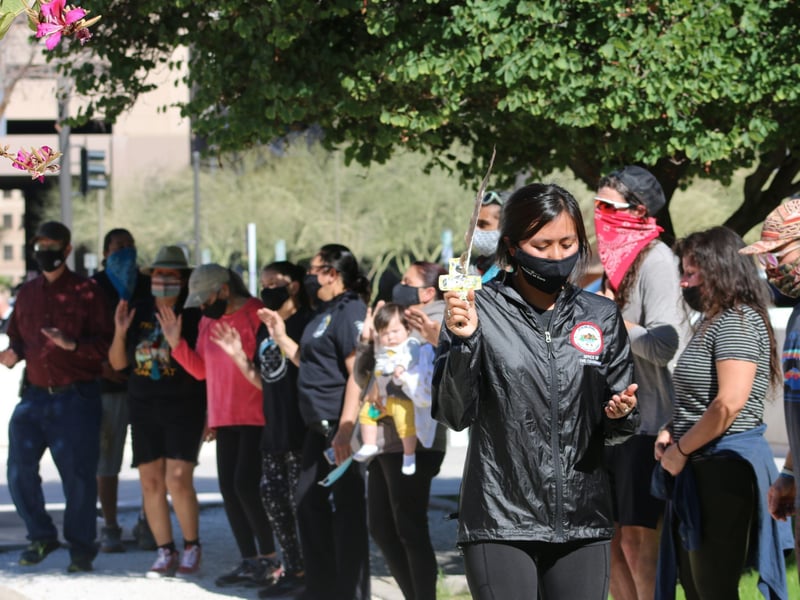
PHOENIX (CN) — On the heels of heavy court losses, Western Apaches and environmentalists will get another chance to stop the construction of a copper mine set to swallow large swaths of sacred Apache land in Arizona.
Across three lawsuits since 2021, advocates have fought to protect Oak Flat, a sacred site in the Tonto National Forest. The federal government plans to transfer it to a mining company, Resolution Copper.
Conservationists argue that construction of the mine and destruction of Oak Flat would violate the National Environmental Policy Act, National Historic Preservation Act and Religious Freedom Restoration Act. They say it would also infringe on the Apache’s First Amendment rights to free exercise of their religion, by trouncing on historic and cultural sites and denying the Apaches access for prayers.
The parties have faced numerous legal setbacks — but on Friday, U.S. District Judge Dominic Lanza said he would give the San Carlos Apache Tribe and the Arizona Mining Reform Coalition opportunities to file new injunction motions. He’d suggested he might in a tentative ruling a day prior.
In his tenative ruling, the Donald Trump appointee noted the federal defendants had previously agreed to conduct a final environmental impact statement. He barred the feds from conveying the land until after one is completed.
In its final impact statement, the Forest Service must show that the land transfer would have no significant impact on any religious, historical or environmentally protected sites.
The Forest Service rescinded its initial impact statement in 2021, soon after the lawsuits were filed. It agreed to give the plaintiffs time to challenge a new impact statement before it completed the land transfer.
In May, though, the government told Lanza it intended to complete the land transfer immediately upon issuance of the new impact statement — going back on a four-year-old promise that the government claims it never agreed to.
On that point, Lanza tore into government attorneys at a May hearing.
“It frankly sounds to me like the government changed its position, and now you’re pretending like you didn’t,” he said. “Please take another run at reconciling your current position.”
In his tentative ruling Thursday, Lanza said the government must keep its promise and delay the land transfer until 60 days after the impact statement, set to be released by June 16. He reiterated his conclusions after hearing oral arguments in a Phoenix courtroom on Friday.
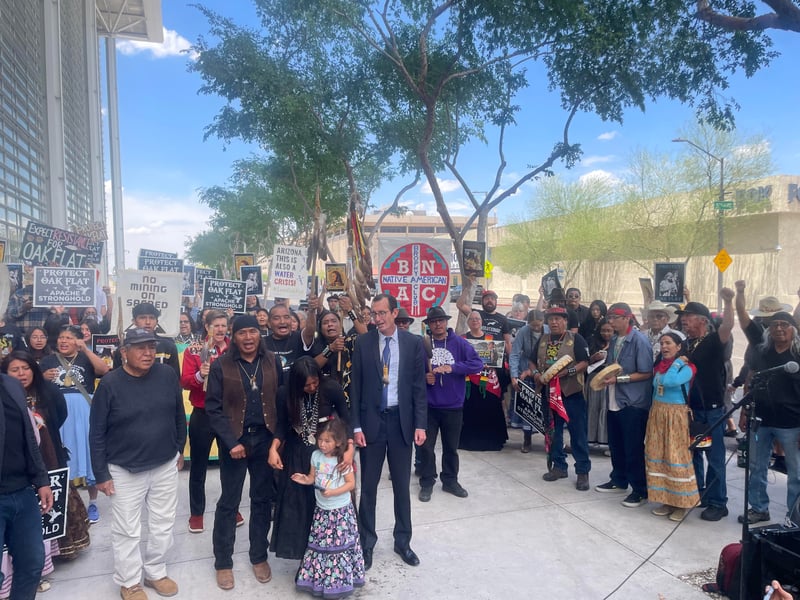
Still, it wasn’t all wins for the San Carlos Apache Tribe. Although Lanza delayed the land transfer, he also denied preliminary injunctions in the case, finding they were premature.
Representing the tribe, attorney Bernardo Velasco argued that while the new final environmental impact statement isn’t out yet, it is still ripe for challenge because of certain legal deficiencies that he says he knows will be present.
For example, Velasco said, the Forest Service still has not consulted with local tribes to identify historic and cultural sites — meaning the statement is guaranteed to be insufficient on that front.
Velasco also asked for a 90- rather than 60-day pause after the impact statement, to give the tribes more time to review it.
Lanza’s hands were tied. The 2014 Land Transfer Act, which authorized the transfer of Oak Flat, stipulates that a transfer must be completed within 60 days of a final environmental impact statement, so long as legal prerequisites are covered.
“Congress has made that crystal clear,” Lanza said. “It created this timeframe that I’m very hesitant to start altering."
Department of Justice attorney Angela Ellis reiterated that the government never intended to give the plaintiffs time to challenge after publication of the impact statement. Nonetheless, she agreed to the 60-day timeframe.
Friday’s hearing comes in the wake of a larger suit filed by Apache Stronghold, a coalition of Western Apaches fighting for religious freedom.
Their challenge, dismissed twice by the Ninth Circuit, pended before the U.S. Supreme Court for months before it refused to hear the case two weeks ago. That makes the case in Lanza’s court probably the last best chance for Apaches and environmentalists to save this holy site.
 Follow @JournalistJoeAZ
Subscribe to our free newsletters
Our weekly newsletter Closing Arguments offers the latest about ongoing trials, major litigation and rulings in courthouses around the U.S. and the world, while the monthly Under the Lights dishes the legal dirt from Hollywood, sports, Big Tech and the arts.