
 Search Articles


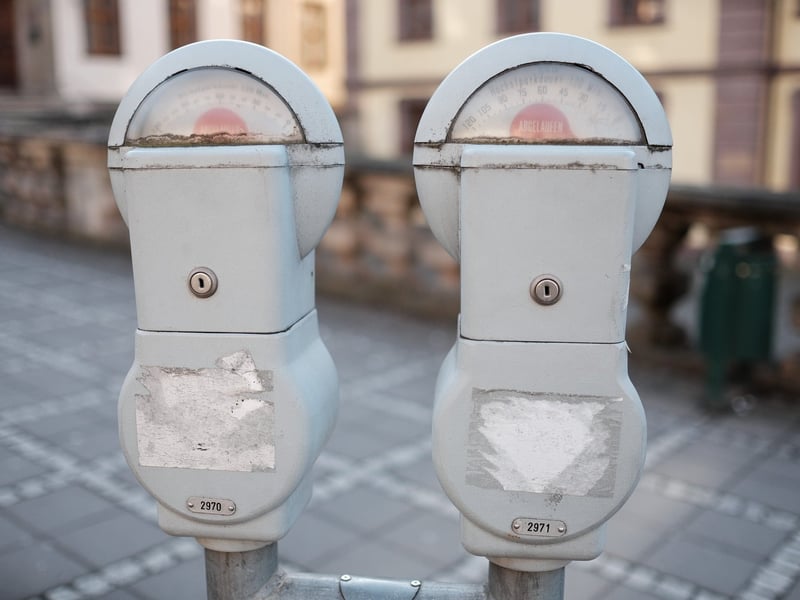
CHICAGO (CN) — The Seventh Circuit on Monday struck down a class action from a group of Chicago drivers who say the city illegally impounded and sold their cars over unpaid parking tickets.
A three-judge panel disagreed with the drivers’ argument that the city’s practice of impounding and selling vehicles over unpaid parking tickets amounts to unconstitutional taking. The takings clause is a provision of the Fifth Amendment that prohibits the government from taking private property without just compensation.
The Seventh Circuit judges instead found that the ordinance is well in line with the city’s power to enforce its traffic code.
“Instead of continuing to issue unanswered tickets, the city institutes a different form of punishment: hindering offenders’ ability to drive by immobilizing, impounding, and potentially even disposing of their vehicles,” U.S. Circuit Judge Thomas Kirsch, a Donald Trump appointee, wrote in the eight-page order. “Without this graduated forfeiture scheme, vehicle owners who repeatedly violate the traffic code could evade punishment. The threat of impoundment and disposal forces them to internalize the consequences of their behavior and, accordingly, deters those violations in the first place.”
Chicago municipal code grants the impoundment and sale of any car registered to someone who has three or more unpaid parking tickets. It does not require that the vehicle towed was the same one used to commit the violation — rather, it permits the immobilization and sale of any vehicles registered to the ticketed person.
Jacie Zolna, an attorney with Chicago-based firm Myron Cherry, argued before the Seventh Circuit panel in September that the statute boils down to an unconstitutional taking because Chicago keeps the proceeds from the car sale and doesn’t offset the underlying debt.
U.S. Circuit Judge Michael Scudder Jr., a fellow Trump appointee, said he was troubled by the facial aspect of the case during the oral arguments in September. He brought up a hypothetical example of a $75,000 Mercedes being taken from someone with only $1,000 in parking tickets and then sold to a car dealership for $50,000 — that might very well signify unconstitutional taking.
“But if we change the fact pattern, and we have a car that is worth hardly anything $200 or $300, $500 and they owe $1,000 in parking tickets. I think in that as-applied hypothetical, the takings claim weakens substantially," Scudder said.
Zolna rebutted that the practice is unconstitutional no matter which way you slice it.
“You’re still left with $1,000 in ticket debt and you don’t have your car,” he said. “You’re still losing. The government is still taking property from you.”
Zolna maintained that the ordinance is a debt collection mechanism that punishes the inability to pay, rather than a law enforcement measure. But the panel of judges wasn’t so sure.
“Indeed, it’s a feature, not a bug, that [the ordinance] both ‘raises money and improves compliance with traffic laws,’” the panel’s order reads. “And while some forfeitures may result from an inability to pay, that’s not necessarily true in every case.”
Much of Zolna’s argument relied on the precedent from 2023 Supreme Court case Tyler v. Hennepin County, which found that the state determines property rights. The Supreme Court ultimately agreed with the plaintiff in that case that Hennepin County unconstitutionally retained the excess value of plaintiff’s home above her underlying tax debt.
The Seventh Circuit panel, however, wasn’t quite sure that Zolna’s argument squares with “the principle at work in Tyler — that the government ‘may not take more from a taxpayer than she owes,’” because the government is enforcing laws pursuant to its police power.
U.S. Circuit Judge Doris Pryor, a Joe Biden appointee, joined Kirsch and Scudder on the Seventh Circuit panel.
 Follow @RosenCaitlyn
Subscribe to our free newsletters
Our weekly newsletter Closing Arguments offers the latest about ongoing trials, major litigation and rulings in courthouses around the U.S. and the world, while the monthly Under the Lights dishes the legal dirt from Hollywood, sports, Big Tech and the arts.