
 Search Articles


(CN) — More than 80 countries — though not the United States, Canada, Russia and others — are now bound by a new global treaty to protect marine biodiversity in the vast ocean stretches beyond national waters.
On Jan. 17, the High Seas Treaty — formally known as the Agreement on Marine Biodiversity of Areas Beyond National Jurisdiction, or BBNJ — took effect as the United Nations’ first legal framework to conserve the marine environment in international waters and ensure benefits from scientific discoveries in the open ocean are shared among nations.
“The high seas have been left pretty open,” said Pamela Chasek, an environmental policy expert and executive editor of Earth Negotiations Bulletin at the International Institute for Sustainable Development, a Canada-based think tank. “There was a big void in how countries address the pressure on biodiversity in the high seas."
The treaty was long in the making, taking more than 20 years of talks before a final text was adopted in June 2023. Within the next year, the treaty’s members will convene at a first conference of parties summit and begin implementing the new accord.
Establishing marine protected areas is a core goal.
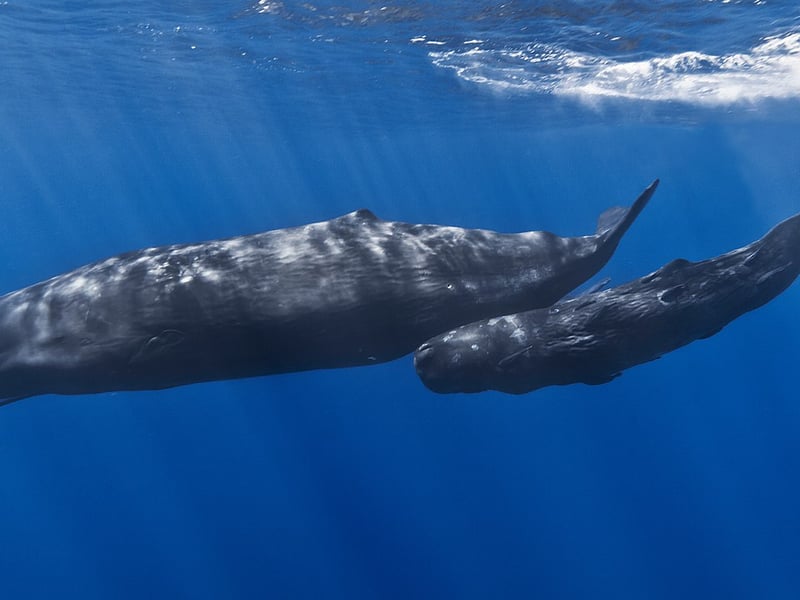
“It may be a breeding area for whales and then you might want to restrict the noise that ships can make,” said Tom Pickerell, an oceans expert at the World Resources Institute, a non-profit research group, speaking by telephone.
Companies and countries also could be forced to conduct environmental impact studies to ensure their activities aren’t damaging marine species in international waters.
However, many activities already regulated by other international agreements and agencies — among them fishing and deep-sea mining — were left out of the new accord. The treaty also does not apply to military activities and to government vessels engaged in non-commercial activities.
So far, at least 83 nations, including China, have ratified the agreement, though several major countries, among them the U.S., Canada, Russia, India, the United Kingdom and Italy, have not done so,according to the High Seas Alliance, a coalition of non-government groups backing the treaty.
Pickerell expects more nations to join the treaty because the stakes are so high.
“If you haven’t ratified it, you don’t get to be part of writing the procedures, writing the rules,” he said. For many countries interested in the high seas, he said they would likely decide it’s better to be “a rule-maker rather than a rule-taker.”
But the prospects of the U.S. and Russia adopting the treaty anytime soon are unlikely, experts said, and that reality may undermine the treaty’s effectiveness.
About two-thirds of the ocean, or roughly 50% of Earth’s surface, falls under the definition of international waters, or the high seas. Under maritime law, a nation’s claim over an adjacent sea is limited to a 200-nautical-mile boundary and anything beyond that is considered the high seas.
“That’s a huge amount of space and most of the resources, the life, the biodiversity, within that area is poorly regulated or underregulated,” Pickerell said.
“This is probably one of the most important and impactful developments in international law of the last decades,” said Daniel Kachelriess, an ocean law specialist who helped steer negotiations as part of the High Seas Alliance.
In an era of intensifying geopolitical rivalry, Kachelriess called it “an amazing development” that world governments were able to agree on a set of “detailed and quite technical rules” to regulate activities in the high seas.
Still, huge uncertainties loom over whether the treaty can actually do much to protect oceans suffering from mounting damage caused by worsening climate change and acidification, increasing ship traffic, overfishing, rising pollution and oil and natural gas drilling.
The pact also will be tested by potential future activities, such as schemes to use the oceans for renewable energy projects like floating solar panels and for capturing carbon emissions, for instance by stimulating algae blooms.
“It’s not meant to stop things from happening,” Pickerell said. “What it’s meant to do is ensure that they’re not damaging and it’s protecting the biodiversity. It’s kind of like an insurance policy.”
Chasek, though, sees huge hurdles ahead.
“When you have a process that takes so long to come to terms with, it has me worried about how long it will take for it to be effective,” Chasek said, referring to the two decades it took to get the agreement over the line.
The treaty puts conservation at its heart by pledging to hold polluters accountable and stating that the high seas must be managed as an interconnected ecosystem.
It also states the oceans are the “common heritage of humankind” and that their resources must be shared among all nations.
To this end, researchers from nations under the treaty will be required to share detailed genetic information about material taken from the high seas in public databases. A system also will be set up to track how marine samples are used.
The treaty then calls for a “fair and equitable sharing of both monetary and nonmonetary benefits” from activities and discoveries from the high seas — a provision meant to ensure landlocked and less developed nations can reap a share of the benefits gleaned from the high seas.
Genetic material sourced from the high seas — such as bacteria, corals or deep-sea sponges — may find applications in medicine, cosmetics, food, and biotechnology and yield huge profits.
Kachelriess said this provision was “one of these key issues to unlocking” the treaty.
“We would never have gotten a treaty if states had not come to an agreement on this,” he said.
Chasek is skeptical that benefit-sharing provisions will end up helping developing countries. She pointed to disappointing results from similar mechanisms in other international treaties — including the 2010 Nagoya Protocol of the Convention on Biological Diversity and the International Treaty on Plant Genetic Resources for Food and Agriculture.
“From both of these treaties, the expected funds or modalities for benefit-sharing just have not materialized as many developing countries would have liked,” she said, speaking by telephone. “I fear we’re going to end up with a similar issue here.”
She said researchers from richer companies may end up going into the high seas unchecked and collecting materials that turn into highly profitable products.
“Poor countries don’t have the technological capacity and human capacity to do the same thing,” she said.
As with other international agreements, enforcing the High Seas Treaty will be difficult, especially against countries like the U.S. which are not bound by it, experts said.
“That’s always an issue in international law,” Kachelriess said. “It’s not self-enforcing.”
Chasek said, “As I tell my students, you can’t put a country in jail for violating international law."
Nonetheless, Chasek saw the treaty’s passage as a critical step for ocean conservation.
“Part of the hope of this is that we’re not going to destroy the high seas because they’re the equivalent of a Wild West where there’s no laws and whoever wants to claim it can claim it,” she said.
She said the new rulebook was particularly important for the little-known species in the depths of the seas.
“We just don’t know what’s out there,” she said. “We don’t know those species that could be at risk if there’s continued pollution of the high seas.”
Courthouse News reporter Cain Burdeau is based in the European Union.
 Follow @cainburdeau
Subscribe to our free newsletters
Our weekly newsletter Closing Arguments offers the latest about ongoing trials, major litigation and rulings in courthouses around the U.S. and the world, while the monthly Under the Lights dishes the legal dirt from Hollywood, sports, Big Tech and the arts.