
 Search Articles


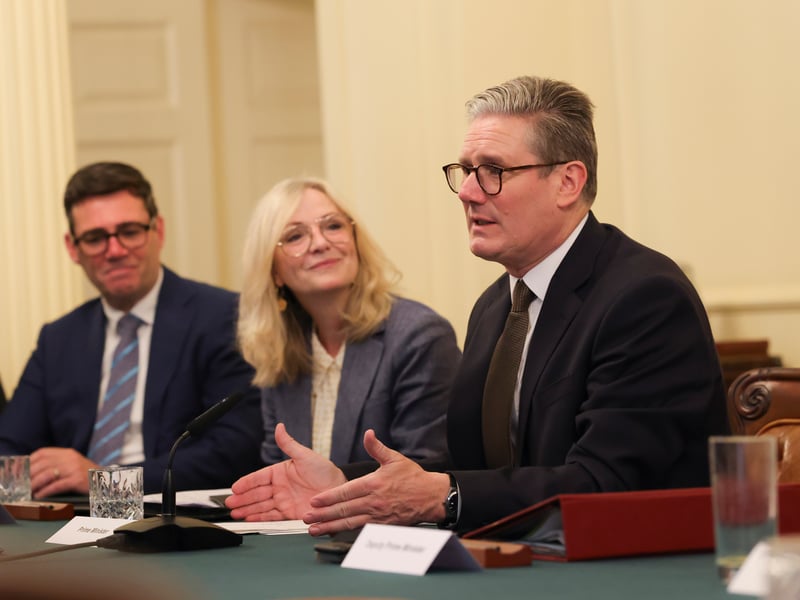
MANCHESTER, England (CN) — Deeply unpopular British Prime Minister Keir Starmer is under growing pressure from within his own party, with Greater Manchester Mayor Andy Burnham sounding warnings over Labour’s direction and calling for debate rather than demands for loyalty.
At a fringe event during the Labour Party conference in Liverpool on Sunday, Burnham told delegates those calling for “simplistic statements of loyalty are underestimating some of the peril the party is in in those elections next year.”
A September Ipsos poll found 79% of respondents were dissatisfied with Starmer and 82% with the government. Labour would take only about 22% of votes if a general election were held now, compared with the far-right Reform UK’s 33%. Though a vote isn’t mandated until 2029, the prime minister can call one at any time or a no-confidence vote in Parliament can trigger an election.
More than 4,000 local council seats are up for grabs next May in a vote seen as a key test for the Labour government and a measure of how much more ground the anti-immigration Reform party can gain after its successes earlier this year.
Burnham spoke about a “climate of fear within our party” and the way it’s being run, with Labour politicians privately urging him to challenge Starmer.
He added: “How do you get an open debate about the direction that we need to take to reconnect with the public if a party member is suspended for liking a tweet by another political party, or a member of Parliament loses the whip for trying to protect disability benefits or the two-child cap?”
What’s fueling tension within Labour?
Starmer faces mounting problems on several fronts. His personal approval rating has slumped to 13%, the lowest recorded for any British prime minister.
Since taking office last summer, the Labour government has been hit by a steady flow of resignations and sackings.
These have included Deputy Prime Minister Angela Rayner, who resigned for underpaying property tax, while Ambassador to the U.S. Peter Mandelson was sacked following new revelations about his relationship with the disgraced financier Jeffrey Epstein.
The government has also struggled to define the direction of its agenda and hold a steady course.
They have U-turned on policies such as cutting winter fuel payments made to pensioners and disability benefits, while policies like funding military spend through international aid cuts, maintaining a cap on child benefits, and its stance on the war in Gaza have angered its traditional support base.
The government’s focus on immigration has become the focal point of British politics, attempting to appease the rising nationalist sentiment in the country by announcing tighter immigration controls.
Starmer used his conference speech to call Reform UK firebrand Nigel Farage’s policies “racist,” but hours earlier his administration unveiled tougher settlement rules for migrants, doubling the time it takes to secure permanent residence to 10 years, not being able to claim state benefits and requiring people to carry out volunteer work to prove their right to stay.
Underlying all this is the government’s promise to make economic growth its top priority, yet output remains sluggish. GDP slowed to 0.3% in April to June, down from 0.7% in the first three months of the year.
The mixed messages have left voters and long-time Labour supporters confused and unclear what the party now stands for.
‘King of the North '
Burnham has built his reputation in Manchester, England’s third-largest city, where he has served as mayor since 2017.
First elected with 64% of the vote, he ran on promises to end rough sleeping and expand public transport under local control. He was returned with an even bigger majority in 2021 and won a third term in 2024.
His victories reflect the transformation of Manchester. Once a declining industrial hub, the city is now one of the fastest-growing in Europe.
Its economy has grown faster than any U.K. city outside London and has outpaced the national average. Between 2004 and 2023, the region recorded the highest rise in productivity of any city region, a 31% increase.
The success of the region has helped fuel Burnham’s nickname, “the King of the North.” He pitches himself as a defender of northern interests against what he calls an overly London-centric political system.
Burnham served in Parliament and twice ran unsuccessfully for Labour leader, in 2010 and 2015, before turning to local government.
On the streets of Manchester, many said they would back a national bid.
Jane, a local resident, said she believed Burnham could “lead a broad coalition against Reform, who will destroy British social democracy.”
Margaret, from Greater Manchester, said she wanted him back in Westminster: “He’s done a great job as mayor — but it’s time for him to go for prime minister.”
Chris from Stockport said: “Anyone who lives in Greater Manchester knows how much positive change has happened since Burnham came in as mayor. He’d make a good PM if he can adopt a similar approach to the premiership.”
If Burnham did seek to challenge Starmer, he would face a long road.
He would first need to win a seat in the House of Commons before gathering the support of a large number of parliamentarians to trigger a leadership contest.
This makes mounting an immediate challenge to Starmer unlikely. Yet Burnham’s intervention highlights the unpopularity of the prime minister and a desire among previous Labour voters and current politicians for a clearer left-wing alternative to the current government.
Courthouse News reporter James Francis Whitehead is based in England.
 Follow @jayfranklinlive
Subscribe to our free newsletters
Our weekly newsletter Closing Arguments offers the latest about ongoing trials, major litigation and rulings in courthouses around the U.S. and the world, while the monthly Under the Lights dishes the legal dirt from Hollywood, sports, Big Tech and the arts.