
 Search Articles


MANCHESTER, England (CN) — British Home Secretary Shabana Mahmood set out plans Monday to reshape the country’s asylum system, outlining measures that would delay settlement for decades, step up asset seizures and pressure foreign governments to accept deported nationals.
On Monday in Parliament, Mahmood said the “current policy environment is about to very significantly change” as she seeks to overhaul the asylum process.
She said she has a “moral duty” to fix the “broken asylum system” and “unite what is today a divided country.”
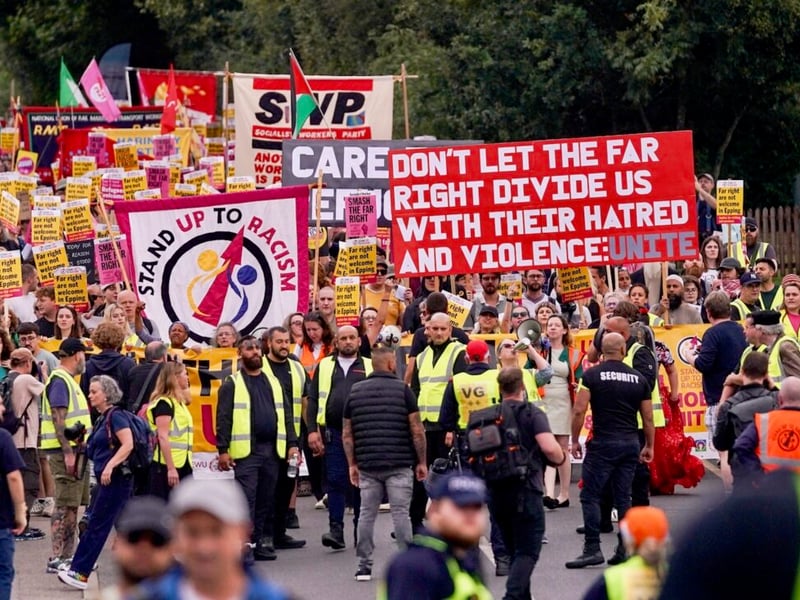
In recent months, anger over the use of asylum hotels has spilled into the streets, with several towns seeing protests turn violent.
Under the plans, asylum-seekers would need to wait 20 years before applying for permanent settlement. Their refugee status would be reviewed every 2 1/2 years, not every five under the current system, creating repeated checks on whether their home country has become safe for return.
The Home Office would also gain broader powers to seize valuables, including jewellery, to cover the costs of accommodation and case processing.
People with assets would be expected to contribute to their own housing and support.
Those who break the law could lose government accommodation or payments, and ministers may consult on options to withdraw support from families with children under 18 who have been refused asylum.
Mahmood also threatened to stop granting visas to nationals of Angola, Namibia and the Democratic Republic of Congo unless their governments cooperate more with deportations.
The Denmark comparison
Mahmood has drawn some of her inspiration from Denmark, which tightened its rules over the past decade.
Denmark has some of the strictest asylum policies in Europe and receives far fewer asylum claims than the U.K., just over 2,000 last year compared with more than 108,000 in the U.K., though its population is much smaller.
One Danish policy allows the authorities to confiscate asylum-seekers’ valuables such as jewelry in order to pay for their stay in Denmark. Another policy returns people once their country of origin is deemed safe, though in reality few have been sent back.
A study by the Netherlands Institute of International Relations found that of 30,000 Syrian refugees in Denmark, only 1,200 cases had been reassessed, a few hundred had their status revoked and none were returned.
Despite this, the model is viewed as a deterrent, and is now likely to be implemented across the North Sea in the U.K.
But some Labour MPs say the proposals betray party values.
Nadia Whittome called the plans “dystopian” and said it is “shameful” that ministers are “ripping up the rights and protections” of asylum-seekers.
Another Labour lawmaker Tony Vaughan said the language around the changes fuels racism, while Stella Creasy said the approach is “performatively cruel” and “economically misjudged.”
Reform UK leader Nigel Farage agreed with the proposals. “The home secretary sounds like a Reform supporter. It’s a shame that the Human Rights Act, ECHR and her own backbenchers mean that this will never happen," he said, referring to the European Court of Human Rights.
Proposals clash with human rights
Legal experts warn the proposals could clash with international obligations.
Alan Desmond, a professor of law at the University of Leicester, said: “The proposal to make people wait 20 years before they can apply for settlement conflicts with the U.K.’s international obligations under Article 34 of the Refugee Convention, which requires states to make it as easy as possible for refugees to acquire the citizenship of their host state.”
He said that plans for reviewing the refugee status every 2 1/2 years, “apart from the precarity it will bring for refugees, is the administrative burden it will impose on the Home Office, a government department that is already infamous for caseload backlogs, administrative error and poor quality first-instance decision-making.”
Desmond said repeated reviews of refugee status reflect a wider “temporary turn” in refugee policy seen in parts of Europe and the U.S. “We’ve seen this in Nordic countries like Denmark, and in the U.S. during the Biden administration when country-specific, time-limited humanitarian parole programs were operated for people from Afghanistan, Ukraine, Venezuela and Cuba.”
He also noted visa restrictions have increasingly been weaponized by wealthier states to pressure others on deportation cooperation. “We saw this most recently and most egregiously in the case of the U.S. in June this year when the Trump administration introduced visa restrictions for nearly 20 countries.”
Public reaction has been mixed.
A survey by YouGov immediately after Mahmood’s announcements found that 51% believed it was correct that refugees should only be allowed to stay in the U.K. until their home country is considered safe. Only 29% thought that they should be allowed to permanently settle.
Social media comments on news posts about the asylum changes underscored the national divide YouGov revealed.
Dave from Yorkshire said: “Legal migration is OK; illegals should be stopped from coming here or sent straight back from where they came from.”
Jacqueline from Scotland said the changes don’t go far enough. “I want our borders closed and everyone here seeking asylum or who has received permanent settlement to be reviewed,” she said.
However, John from Derby asked: “Why are Labour going down the false narrative peddled by the far right?,” adding that “asylum-seekers get very little.”
Ben from Suffolk agreed. “We voted out the Conservatives, right? Doesn’t feel like it,” he said. “I wish they would focus on more important things.”
Sarah echoed many Labour supporters’ disappointment at the government’s continued move to the right. “Sadly Labour still seem to be trying to out-reform Reform,” she said. “Get off the immigration agenda and focus on the cost of living and improving ordinary people’s lives.”
MPs will need to approve the asylum changes before they become law, setting up a likely fight in Parliament between the government and its Labour lawmakers.
Courthouse News reporter James Francis Whitehead is based in England.
 Follow @jayfranklinlive
Subscribe to our free newsletters
Our weekly newsletter Closing Arguments offers the latest about ongoing trials, major litigation and rulings in courthouses around the U.S. and the world, while the monthly Under the Lights dishes the legal dirt from Hollywood, sports, Big Tech and the arts.