
 Search Articles


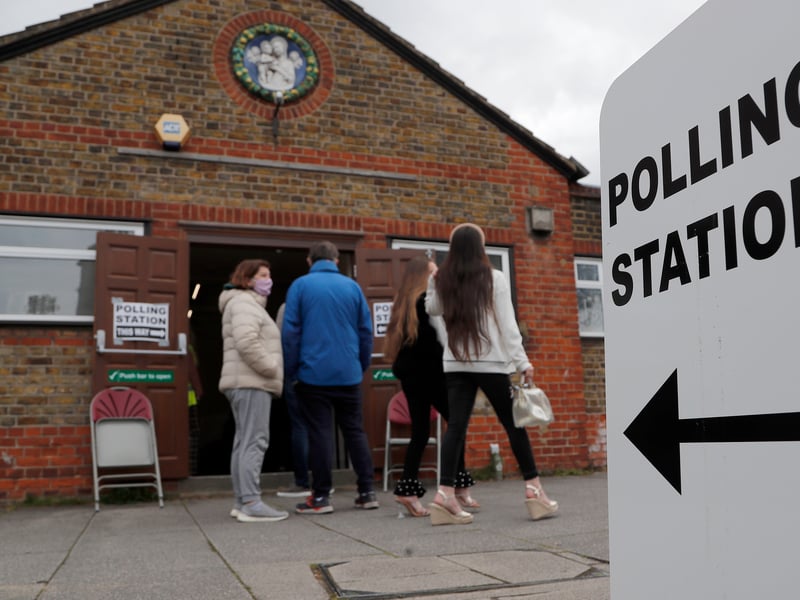
MANCHESTER, England (CN) — Student leaders and campaigners are celebrating the United Kingdom’s decision to lower the voting age to 16, calling it a long-overdue fix to a political system they say leaves young people behind.
The U.K. government’s plan to lower the age of voting, part of the party’s manifesto commitment, will add 1.5 million new voters to national elections. It will bring England and Northern Ireland in line with Scotland and Wales, where the age of voting is already 16.
“This is a major victory for young people,” said Qasim Hussain, a vice president for the National Union of Students. “It has been achieved by the tireless campaigning of generations of 16- and 17-year-olds who missed out on their chance to have a say in major democratic moments.”
Having the vote is only the beginning of the process for Qasim. “At the moment young people are hugely, disproportionately, unheard,” he said. “So it is crucial that all young people and students are registered to vote.”
Broader policy changes like introducing an automated voter registration system and promoting political literacy in schools are essential steps “in renewing our democracy and making it work better for young people,” urged Qasim.
The student-led campaign group, Vote16 UK, also welcomed the policy, adding in a statement: “We must rebuild trust between young people and political institutions.”
Public remain unconvinced
Despite the enfranchisement of younger people, public support for lowering the age limit is weak. A YouGov poll found that 32% of adults back lowering the voting age, with opposition strongest among those over 50.
Men and women across all regions of Britain shared this view. Supporters of every major party opposed the change — except Labour voters. Only 18- to 24-year-olds backed it.
Some Conservative MPs called the change self-serving, saying younger voters are more likely to support Labour. “This is a brazen attempt by the Labour Party whose unpopularity is scaring them into making major constitutional changes without consultation," said Paul Holmes, the party’s communities spokesman.
Young politics shift
Young voters have traditionally supported left-leaning parties. At last year’s general election, 75% of 18- to 24-year olds voted for the Labour Party, Green Party or Liberal Democrats.
But this picture is becoming more complex.
While both young men and women tend to lean left, young men are increasingly being drawn to right-wing and populist parties. According to research from the Political Studies Association, 22% of young men support the Conservatives or Reform, compared to 12% of young women.
For Rosalind Shorrocks, professor of politics at the University of Manchester, the growing gender divide may be overstated. “Although young men in the 2024 election were more likely to vote Reform than young women, this was still a clear minority.”
The challenge for young people is voter turnout.
Since 1997, turnout for those over age 65 has been at least 20% more than those ages 18-24. At the last general election, around half of young people didn’t cast their vote.
Generational imbalance
Political apathy from U.K. youth is swaying power toward older voters.
“Older people have significant political influence because they are more likely than any other age group to vote,” wrote Tim Vlandas, a professor of comparative social policy at the University of Oxford.
In a democracy dominated by older voters, policies lead to an economy that is reorganized around the needs of the elderly, “namely good pensions and low inflation,” he said.
Vlandas believes that while the effects of lowering the voting age would be limited, deeper reforms are required to rebalance the political power between generations. He recommends introducing “compulsory voting” and “realigning the interests of the elderly with the working age population, for instance by reforming the pension system to better track economic performance.”
While voter turnout among 18- to 24-year-olds is the lowest of all age groups, research finds that voting at 16 can increase long-term turnout.
“There is some evidence that suggests if 16- and 17-year-olds experience their first election during the time when they are still at home and in school, this can raise their turnout in the long run,” according to Shorrocks.
For example in Scotland, seven years after lowering the voting age, turnout among those who first voted at age 16 and 17 remained higher than among those who first voted at age 18.
Jana Birke Belschner is a researcher in youth political participation at the University of Bergen. “Interestingly, although the number of newly enfranchised voters, i.e., 16- and 17-year olds, tends to be very low — about 2-4% of the whole electorate — there is indication for shifts in policy and the composition of elected bodies," she said.
For example, lowering the voting age affects spending on education. Belschner’s own research also finds that more young politicians are elected when the voting age is lowered. “This, in turn, might lead to higher spending on areas of interest for young people, as younger politicians behave differently.”
She cited how lowering the voting age in Germany and Japan followed increases in government spending on child care.
Preparing first-time voters
Lowering the voting age would increase pressure on schools to better prepare students for democratic life.
Currently, the U.K.’s current approach to political literacy is unequal, varying by region, school type and curriculum.
Belschner said schools play a vital role in closing gaps in turnout.
She pointed to the Norway model: “For instance, here, we have mock school elections a couple of weeks before the proper elections. The media broadly cover these, party representatives go into the schools and the students participate in a week of discussions and debates about current political issues.”
Advocates for early enfranchisement say similar measures in the U.K. would help ensure young people get out to cast their votes.
The level of civic education often relies on whether students live in wealthier or poorer areas, with voter turnout closely tied to social background.
At the last general election, turnout among working-class voters was 47%, compared to 67% among higher social grades.
“As evidence from Germany suggests, the effect of education and social class is a strong predictor of voting at 16,” said Belschner. “It matters more than for 18-year-olds.”
The U.K., which was the first country to lower the national voting age from 21 to 18 in 1969, is the latest country to lower it further, following Austria, Argentina, Brazil, Cuba, Ecuador, Malta and Nicaragua.
 Follow @jayfranklinlive
Subscribe to our free newsletters
Our weekly newsletter Closing Arguments offers the latest about ongoing trials, major litigation and rulings in courthouses around the U.S. and the world, while the monthly Under the Lights dishes the legal dirt from Hollywood, sports, Big Tech and the arts.