
 Search Articles


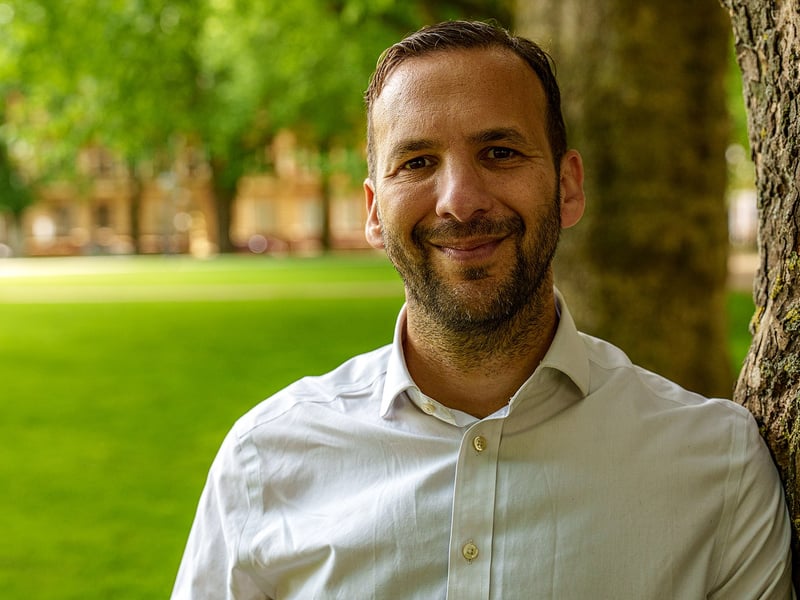
MANCHESTER, England (CN) — The Green Party of England and Wales has elected Zack Polanski as its new leader in a landslide vote, installing the party’s first populist figurehead looking to build a mass movement to counter the right.
Polanski, a former actor and hypnotherapist self-described as an “eco-populist,” won almost 85% of the votes behind promises to sharpen the party’s tone and visibility, echoing the media-driven style of Nigel Farage and his Reform UK party.
In his victory speech Tuesday, Polanski promised to “take on power and wealth” in the country. He pointed to the “broken” two-party system, which has created space “for charlatans like Nigel Farage and Reform, millionaires who are pretending to serve working-class communities but are actually backed by the same billionaires who are destroying our democracies, our communities and our planet."
He has already launched a weekly podcast, the first by a U.K. party leader, in an effort to build a direct audience.
The Green Party currently hold four seats in the House of Commons, the same number as Reform. Yet Farage and his party have received significantly more media coverage over the years.
A study by Loughborough University conducted in the run-up to the general election last year found that Reform was the third most prominently featured party, with Farage dominating media appearances.
This is a gap Polanski is looking to close.
Professor Alistair Clark, a political scientist at Newcastle University, said this historical imbalance reflects the issues each party emphasizes.
“Reform UK are typically talking about an issue which has a greater level of public concern,” he said. “Immigration is often top of voters’ concern according to polling."
In Farage, Reform has a leader who is much more adept at giving broadcasters what they want, and unafraid to make big statements to get that coverage, whether those are deliverable or not.”
Clark added: “The Greens are much less adept at gaining media coverage. They have had the added complication of having a complex and seemingly less salient message in the public mind. The Greens have tended to build support locally, while Reform UK’s media campaigning has tended to build support nationally.”
Another issue has been the party’s previous dual leadership, which “has also been a hindrance in getting wider media recognition,” according to Clark. “Although this may change with the Green Party’s new leader.”
Polanski’s strategy comes as the party seeks to expand beyond its traditional environmental platform, expanding into class-based politics and cost of living as it looks to appeal to the vacuum left by the Labour Party’s move to the right.
Clark warned that approach could be double-edged. “While populist parties can come from the left as well as the right, it’s difficult to see an eco-populist approach breaking through further than the Greens already have.”
By breaking out of its traditional green focus, the party is “in danger of diluting their focus on environmental issues, which will have attracted many of the party’s current voters to begin with.”
Polanski’s aim to broaden the party’s appeal will face competition from the new left-wing party set up by Zarah Sultana and Jeremy Corbyn, the former Labour leader.
Much of the Green’s base are hoping for a loose alliance with Corbyn, in the hope of working together to stem the rise of the far right.
Richard, a former Labour and Green member who has signed up to Corbyn’s new party, is looking forward to an electoral pact between the parties. “It’s either that or Reform barbarism.”
Another Green voter, Showe, voiced concern about a split on the left. “I always vote Green,” she said, but is also interested in the new left-wing party. “I’d hate to see a split vote meaning that Farage gets in. I would be devastated.”
Barry from Leicester said Polanski’s win was why he joined the party: “Forward-thinking, no-nonsense and speaking passionately about how a leftist agenda can actually be important for our current world.”
Political barriers line the road for the Green Party to become a main contender for power.
“The key obstacle is the electoral system,” said Clark. “Where smaller parties have done well, it’s typically been under proportional representation systems, not first past the post. This would seem to limit the potential for growth of both Reform UK and also the Green Party.”
In much of Europe, Green parties have been able to break through under proportional representation systems, which award seats according to vote share. In Germany, for example, the Greens became part of a governing coalition in the late 1990s and again from 2021 to 2024.
The U.K.’s first-past-the-post system instead rewards concentrated local support, making it far harder for smaller parties to convert national backing into seats.
Farage has sidestepped those barriers by mastering the media. Polanski is betting that an eco-populist style, backed by his own direct channels, can do the same.
Courthouse News reporter James Francis Whitehead is based in England.
 Follow @jayfranklinlive
Subscribe to our free newsletters
Our weekly newsletter Closing Arguments offers the latest about ongoing trials, major litigation and rulings in courthouses around the U.S. and the world, while the monthly Under the Lights dishes the legal dirt from Hollywood, sports, Big Tech and the arts.