
 Search Articles


MANCHESTER, England (CN) —The United Kingdom could be legally responsible for U.S. military strikes on suspected drug-smuggling boats in the Caribbean if British intelligence contributed to the operations, two international law experts said, as the U.K. quietly stopped sharing some intelligence with Washington.
The U.K. paused intelligence flows for counternarcotics missions after the U.S. began using airstrikes to sink small vessels in the Caribbean and Pacific.
U.S. forces have killed at least 80 people in multiple attacks since early September. President Donald Trump has said smugglers can be targeted as “combatants,” a claim international lawyers reject.
Liability for extrajudicial killings
Professor Marko Milanovic, who teaches public international law at the University of Reading, said the U.K. would face legal risk if any shared intelligence helped choose targets.
Milanovic, who has served as counsel or advisor in cases before the International Court of Justice, said the U.K. “could be complicit in what are effectively extrajudicial executions.”
Providing intelligence while knowing it could enable the strikes would be no different from “selling a gun to someone while knowing they would use it to kill another person,” he said.
Professor Ben Saul, a United Nations specialist on human rights and counterterrorism, said international law bars states from assisting partners when wrongful acts are anticipated.
“All states must refrain from aiding or abetting an internationally wrongful act,” Saul said. Sharing actionable intelligence in this context “would breach this obligation given its foreseeable use by the U.S. to militarily target traffickers.”
Saul and two other UN experts warned in a press release last week that the U.S. attacks “appear to be unlawful killings carried out by order of a government, without judicial or legal process.”
Five Eyes alliance at risk
The U.K. government declined to comment on the pause, repeating that it does not speak about intelligence matters. It stressed that it maintains a broad intelligence relationship with the U.S. through the Five Eyes partnership.
The pause marks a significant break from longstanding cooperation in the region.
The U.K. has a permanent presence in the Caribbean, overseeing British territories such as Anguilla and Montserrat. It has long shared intelligence with the U.S. Coast Guard about movements of suspect vessels.
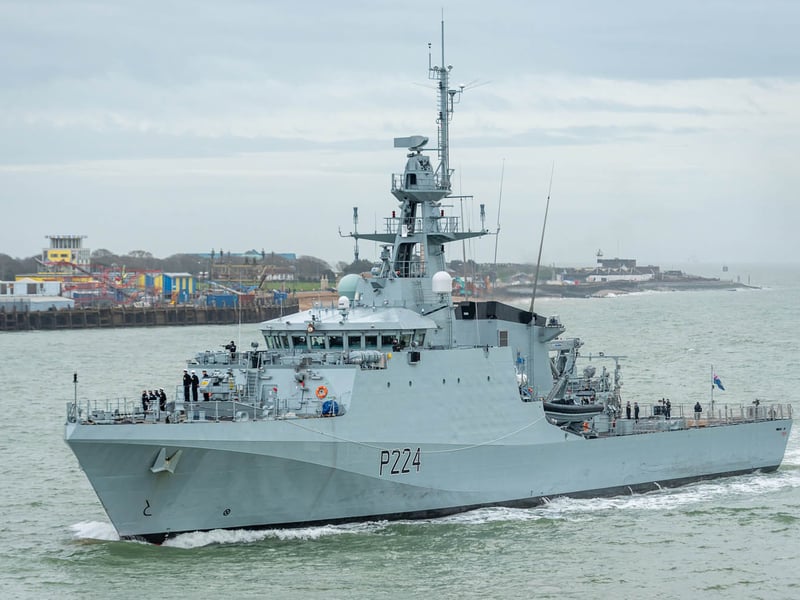
Last year, the HMS Trent Royal Navy ship assisted in seizing nearly $1 billion in narcotics.
The legal concerns now reach beyond bilateral ties.
Milanovic said Washington’s actions threaten the stability of the Five Eyes intelligence alliance.
Other members — Canada, Australia and New Zealand — could reconsider cooperation if their intelligence also risks enabling unlawful killings.
“It is very worrying to see how the U.S. is putting this intelligence sharing alliance at risk,” said Milanovic, “an alliance that has or can save many thousands of lives, all in pursuit of a manifestly unlawful policy that actually brings the U.S. very little practical benefits. The whole thing is simply irrational, in addition to being illegal.”
Saul said states inside the alliance must carry out “rigorous international law and human rights due diligence” before sharing information that could be used to detain, torture or disappear people.
Drug traffickers as terroris ts
The Trump administration argues it is acting within the law, saying smugglers are linked to “narco-terrorist” groups.
In late October, President Donald Trump clarified the U.S. strategy. “We’re going to kill them,” Trump said at a White House event.
On Sunday, U.S. Defense Secretary Pete Hegseth said a strike on two boats killed six “male narco-terrorists.”
He dismissed legal concerns.
The legal scholars say the U.S. stance has no basis. “There is no remotely plausible way of arguing that the U.S. is currently engaged in an armed conflict” with drug traffickers, Milanovic said.
“The persons on board those vessels may be criminals, but that does not mean that using lethal force against them is justified,” he added.
Human rights law, not the law of armed conflict, governs the use of force in this context, he said, and lethal force is lawful only to stop an imminent threat to the lives of others when nonlethal options are unavailable.
Saul said that by mislabeling drug traffickers as terrorism, it is “calculated to delegitimize and dehumanize them so that the public more readily acquiesces in their murder and so raise the political price of opposing the administration’s policy.”
This is not the first time the U.K. has paused intelligence sharing with its closest ally.
After the terrorist attacks on Sept. 11, 2001, British agencies withheld information in some cases over concerns about the rendition of terrorist suspects and use of black sites, widely considered a violation of international law.
The latest pause comes amid a U.S. military buildup in the Caribbean, including the deployment of the USS Gerald R. Ford, as tensions rise with the government of Venezuelan President Nicolás Maduro.
Courthouse News reporter James Francis Whitehead is based in England.
 Follow @jayfranklinlive
Subscribe to our free newsletters
Our weekly newsletter Closing Arguments offers the latest about ongoing trials, major litigation and rulings in courthouses around the U.S. and the world, while the monthly Under the Lights dishes the legal dirt from Hollywood, sports, Big Tech and the arts.