Search Articles


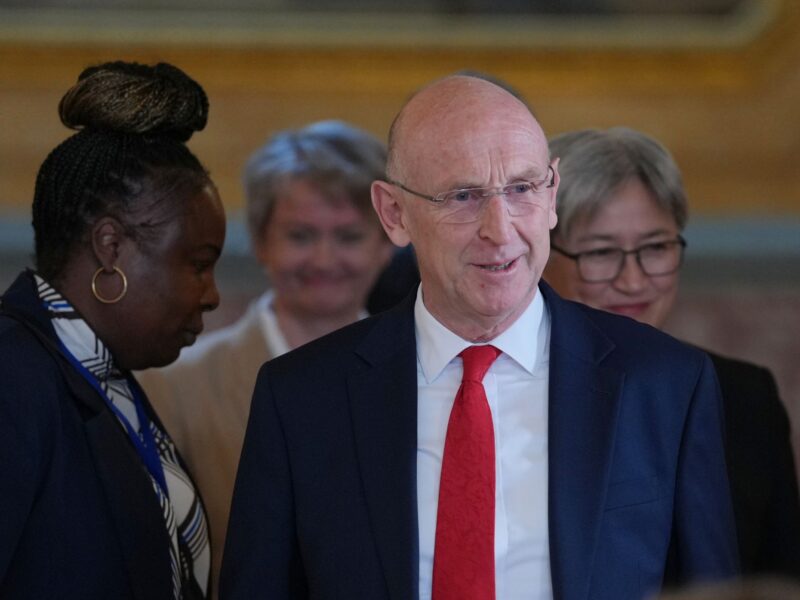
MANCHESTER, England (CN) — British Defense Secretary John Healey resigned Thursday after a dispute with Prime Minister Keir Starmer over military spending, warning that the government’s long-delayed defense investment plan leaves the country underprepared for mounting security threats.
Healey, who has been one of Starmer’s closer allies, said he could no longer remain in office after ministers failed to commit the resources he believes are “required for defense and the country at this dangerous time."
The resignation marks one of the most serious cabinet departures of Starmer’s premiership and comes just one week before a closely watched by-election in Greater Manchester that may lead to a Labour leadership challenge to Starmer.
Healey: Spending fails to match threats
Healey argued in his resignation letter that Britain’s military faces a rapidly deteriorating security environment, pointing to ongoing Russian aggression against Ukraine, increased Russian activity directed toward NATO countries and conflict in the Middle East.
He also noted Britain’s commitment to deploy forces to Ukraine following any future ceasefire agreement.
“The demands on defense have increased still further, as have the U.K. commitments you have rightly made to allies,” Healey wrote.
The departing minister warned the government’s spending settlement would have forced him to make decisions that could reduce military readiness and leave the country less secure.
His departure is particularly damaging because it strikes at one of Starmer’s signature arguments since taking office: that Britain must rebuild its military after decades of decline while confronting the most dangerous security environment since the Cold War.
Starmer has repeatedly argued that Europe has entered a more dangerous era.
Announcing a defense spending increase in February 2025, he committed to the “biggest sustained increase in defense spending since the end of the Cold War.”
That announcement committed Britain to spending 2.5% of GDP on defense by 2027, funded partly through cuts to foreign aid. Starmer also set a goal of reaching 3% of GDP during the next Parliament.
At a NATO summit in The Hague last year, Britain joined other alliance members in agreeing to target defense spending equivalent to 3.5% of GDP by 2035.
But Healey said the latest government proposal failed to provide a path to those goals.
He wrote that the spending package presented to him would raise defense spending to only 2.68% of GDP by 2030 and did not include the 3% target date that Healey had repeatedly demanded.
“As we have regularly discussed, I am certain that a headmark date for 3% of GDP on defense in 2030 is what Britain must set,” he wrote.
Finding additional money for defense has become one of the biggest challenges for the government. Any further increase would likely require spending cuts elsewhere, including from welfare programs that make up roughly one-quarter of government spending.
But Starmer abandoned major welfare reforms after facing a backlash from Labour lawmakers and the threat of a large rebellion in Parliament, narrowing his options to increase military spending without raising taxes or borrowing more.
Limits of Starmer’s defense pledge
The dispute centers on the Defense Investment Plan, a document that will lay out how the government’s military ambitions are to be funded.
The plan was supposed to follow publication of Britain’s Strategic Defense Review in June 2025, which outlined how the armed forces should prepare for future conflicts.
The investment plan would explain how military equipment and infrastructure projects would be financed over the next decade.
Its publication has been repeatedly delayed amid disagreements between the Ministry of Defense, the Treasury and Downing Street over costs, with defense officials seeking additional financing.
Addressing the prime minister, Healey said that despite agreements with Starmer and Chancellor Rachel Reeves over the scale of the challenge and rising demands on defense, “you have been unable, and the Treasury has been unwilling, to commit the resources that the nation needs to defend the country at this time of rising threats.”
Since the end of the Cold War, the number of soldiers in the British Army has fallen from about 153,000 to fewer than 74,000.
Army reserve numbers have also dropped from roughly 76,000 to about 26,000.
The Royal Navy’s fleet of warships has shrunk from 48 to 13, while the Royal Air Force operates fewer than half the aircraft it fielded in the early 1990s.
Government resignations rise to 19
Healey’s departure also adds to growing political turmoil inside the Labour government.
He becomes the sixth minister to resign from Starmer’s administration in the past month and the 19th minister to leave government since Labour returned to power in July 2024.
Among the most significant departures were former Health Secretary Wes Streeting, ex-Deputy Prime Minister Angela Rayner and former safeguarding minister Jess Phillips.
Streeting has increasingly been viewed as a potential leadership challenger to Starmer, who is seeing some of the worst approval ratings on record.
Discussions of a leadership challenge have intensified ahead of next week’s by-election in Makerfield, where Greater Manchester Mayor Andy Burnham is seeking to return to Parliament.
Burnham, who currently polls as the most popular politician in the U.K., is expected to launch a leadership challenge if he wins the seat.
Healey’s resignation is the latest setback for a prime minister facing growing unrest within his own party and renewed questions about his authority.
Courthouse News reporter James Francis Whitehead is based in England.
 Follow @jayfranklinlive
Subscribe to our free newsletters
Our weekly newsletter Closing Arguments offers the latest about ongoing trials, major litigation and rulings in courthouses around the U.S. and the world, while the monthly Under the Lights dishes the legal dirt from Hollywood, sports, Big Tech and the arts.