
 Search Articles


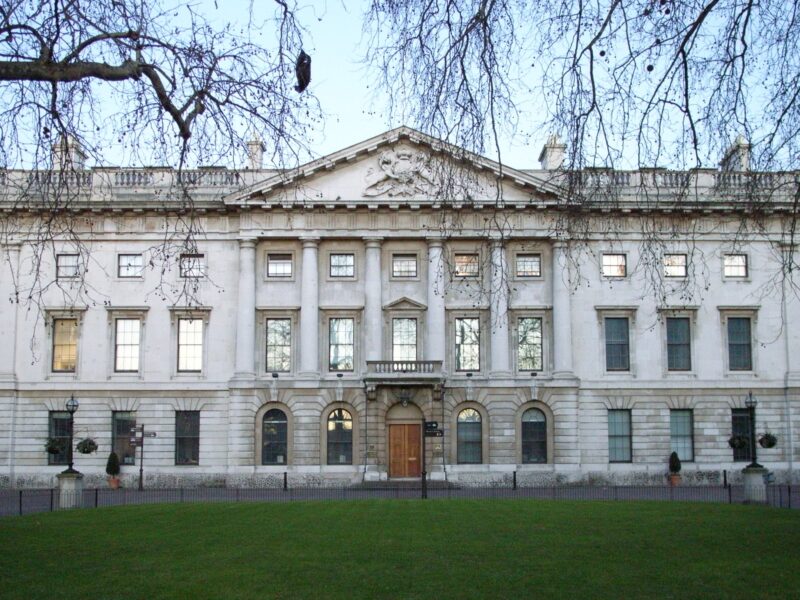
MANCHESTER, England (CN) — The U.K. on Tuesday approved China’s plans for a vast new embassy complex in central London, ending a seven-year planning dispute that drew warnings from lawmakers and activists about espionage risks.
The government said intelligence agencies were involved throughout and that bringing China’s scattered diplomatic sites into one location would make the capital safer.
Opponents said the decision puts sensitive infrastructure at risk and sends the wrong signal as the country grapples with recent spying cases linked to Beijing.
A government spokesperson said: “National security is our first duty. Intelligence agencies have been involved throughout the process and an extensive range of measures have been developed to manage any risks.”
Following negotiations in recent months, “the Chinese government has agreed to consolidate its seven current sites in London into one site, bringing clear security advantages,” the spokesperson added.
The green light smooths the way for Prime Minister Keir Starmer’s expected visit to Beijing at the end of January, the first prime minister to go since Theresa May in 2018.
A long-delayed decision
China bought the Royal Mint Court opposite the Tower of London in 2018 for $343 million. The site once housed the Royal Mint from 1809 to 1967 and sits in the heart of the capital.
The embassy project stalled after the local Tower Hamlets council rejected planning permission and the government declined to step in.
China reapplied soon after Labour entered government, and ministers called in the decision, taking it out of the council’s hands.
Beijing has made the embassy a priority, with President Xi Jinping raising it directly with Starmer during their first phone call in August 2024. British officials have said the dispute also blocked the U.K.’s own plans to redevelop its embassy in Beijing.
Security fears
Members of Parliament from across parties opposed the plan, pointing to the site’s proximity to cables carrying sensitive data and to China’s intelligence record.
On Jan. 12, a group of nine Labour MPs urged the government to reject the proposal, warning it would be used to “step up intimidation” against dissidents.
One signatory, Sarah Champion, who sits on a parliamentary committee for national security, has previously said Chinese spyware was found on her work computer.
In the letter, the lawmakers point to “the recent track record of Chinese espionage cases, interference activities and issuing of bounties against U.K.-based Hong Kongers.”
Priti Patel, a leading Conservative lawmaker, said the prime minister had “sold off our national security to the Chinese Communist Party,” calling the new embassy “a colossal spy hub in the heart of our capital.”
Last February, more than 1,000 protesters gathered outside Royal Mint Court, including Uyghur, Tibetan and Hong Kong activists, expressing concerns that the new embassy could be used to monitor dissidents.
London’s Metropolitan Police had earlier objected to the embassy plans over space for safe protests but later withdrew that objection.
The Royal Mint Court Residents Association, which represents about 100 leaseholders next to the site, has been raising money to fund an urgent legal challenge.
Luke de Pulford, cofounder of the Inter-Parliamentary Alliance on China, said the decision will be felt most acutely by Hong Kongers “who fled repression and surveillance,” and risks “reinforcing the very fears they came to the U.K. to escape.”
Those concerns have been sharpened by past clashes involving Chinese premises in England.
In October 2022, a protest outside the Chinese consulate in Manchester became violent when a number of men believed to be consulate staff came out of the building, tore down protest signs and clashed with demonstrators. One protester was dragged inside the consulate and beaten.
Greater Manchester Police opened up an investigation into the incident, but no charges were filed.
A collapsed spy case
The British government’s approval follows a spying case that collapsed weeks before going to trial.
Last September, prosecutors dropped charges against Christopher Cash, a former parliamentary researcher, and Christopher Berry, an academic, who were accused under the Official Secrets Act of passing sensitive information to a Chinese intelligence agent.
Both men have denied wrongdoing.
The head of the Crown Prosecution Service said the case fell apart because the government had not formally designated China a “national security threat” at the time of the purported conduct.
Starmer stated that he was disappointed the case was dropped, adding that the government had no role in the decision and blamed the previous Conservative government, which was in office at the time.
Current Conservative leader Kemi Badenoch rejected this, listing examples of Conservative government documents describing China as a “threat” at the time.
Separately in November, MI5, the country’s domestic intelligence agency, warned lawmakers that Chinese agents were making “targeted and widespread” efforts to recruit them through LinkedIn and front companies.
Beijing denied the claims, calling them “pure fabrication.”
While the embassy’s approval is likely to ease tensions between the two countries, a judicial review may be lodged even before the prime minister boards his plane to Beijing.
Courthouse News reporter James Francis Whitehead is based in England.
 Follow @jayfranklinlive
Subscribe to our free newsletters
Our weekly newsletter Closing Arguments offers the latest about ongoing trials, major litigation and rulings in courthouses around the U.S. and the world, while the monthly Under the Lights dishes the legal dirt from Hollywood, sports, Big Tech and the arts.