
 Search Articles


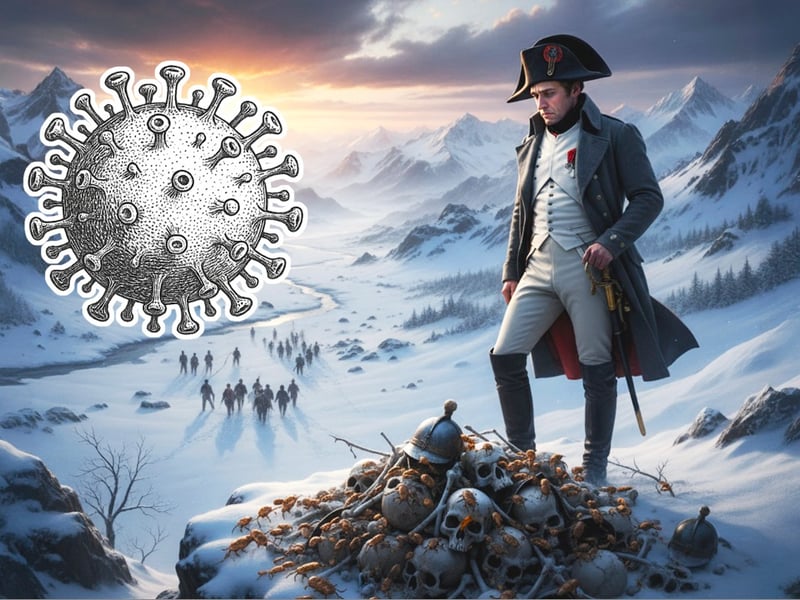
(CN) — In June 1812, French leader Napoleon Bonaparte led his troops into the calamitous Russian campaign in the “Patriotic War of 1812.” The French retreated, partly due to what was previously thought of as a widespread typhus outbreak among the troops. It would almost deplete his entire army.
However, new research by scientists working at the Institut Pasteur’s Microbial Paleogenomics Unit finds two previously undetected pathogens may have led to the beginning of the end of the Napoleonic Wars, a series of battles, coupled with disease and famine, that killed an estimated 2.5 to 3.5 million soldiers.
A study published Friday in the journal Current Biology reveals evidence of the genetic signatures of two infectious agents, Salmonella enterica subsp. enterica serovar Paratyphi C, a rod-shaped bacterium responsible for paratyphoid fever, and Borrelia recurrentis, a spirochaete bacterium that causes relapsing fever.
Paratyphoid fever causes high fever, fatigue and digestive problems, with the bacteria growing in the intestines and blood, while relapsing fever causes vomiting, chills, muscle aches and rashes, along with a high fever. Relapsing fever was commonly transmitted through body lice due to poor hygiene.
Thirteen Napoleonic soldiers were exhumed in Vilnius, Lithuania, to study the pathogens, with the teeth of four of the soldiers testing positive for paratyphoid fever and two for relapsing fever. These two diseases were not on the radar of the current understanding of what caused massive disease-related death of the soldiers, as most historians and scientists chalked it up to a typhus epidemic.
“The historical records were repeatedly and consistently mentioning typhus by army doctors and officers, so it was the expected disease to find,” Rémi Barbieri, an ancient DNA and proteins researcher at the University of Tartu and one of the authors of the study, said in an email.
“Our findings do not change this picture of the presence of typhus during Napoleon’s Russian campaign. What our study reveals, however, is that typhus was likely not the only disease circulating among Napoleon’s troops, but that these soldiers were infected by multiple different infectious diseases and pathogens," he said.
The scientists used state-of-the-art genetic technology to find the new culprits, along with more evidence from a 2006 study of the previously found bacteria responsible for typhus and trench fever.
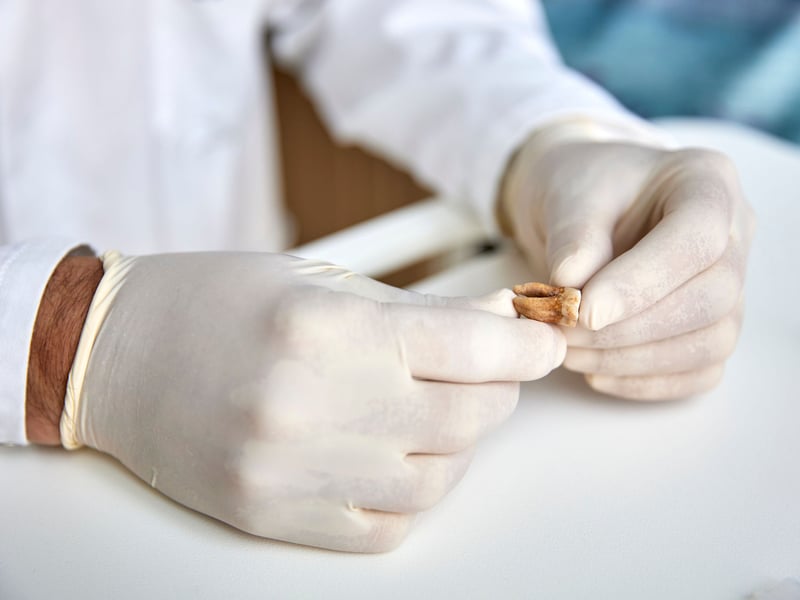
Barbieri and his colleagues utilized “a metagenomic approach known as shotgun sequencing, based on the latest generation of high-throughput DNA sequencing technologies."
“This method allowed us to extract and sequence randomly over 20 million DNA fragments preserved in the tooth of each of the 13 Napoleonic soldiers analyzed in this study, whether they came from the human host, environmental sources, or pathogens that may have infected them 200 years ago,” he said.
Once sequenced through sequencing libraries on machines using Illumina HiSeq and NovaSeq platforms — which “read” or sequence tens of millions of short DNA fragments per sample, transforming DNA molecules into text files composed by four letters, A, C, T, G — according to Barbieri, the millions of fragments were compared against databases of all known species’ genomes and then filtered to identify the presence of potential pathogenic species.
“Ancient DNA gets highly degraded into pieces that are too small for polymerase chain reaction (PCR) to work,” said Nicolás Rascovan, a metagenomic scientist with the Institut Pasteur’s Microbial Paleogenomics Unit and lead author of the study, in a press statement.
“Our method is able to cast a wider net and capture a greater range of DNA sources based on these very short ancient sequences,” he said.
And the results give a broader understanding and update to the historical record.
“The army was weakened by starvation, exhaustion and freezing conditions, creating a perfect environment for multiple diseases to spread simultaneously,” said Barbieri.
“This paints a much more complex and fascinating picture of one of history’s most infamous military disasters, a convergence of overlapping epidemics rather than a single, simple cause,” he said.
“It’s very likely that even more infectious agents were involved.”
Subscribe to our free newsletters
Our weekly newsletter Closing Arguments offers the latest about ongoing trials, major litigation and rulings in courthouses around the U.S. and the world, while the monthly Under the Lights dishes the legal dirt from Hollywood, sports, Big Tech and the arts.